Autonomy News is a reader-funded, independent publication. Our reporting isn't possible without your support. Please consider becoming a paid subscriber or making a tax-deductible gift today.
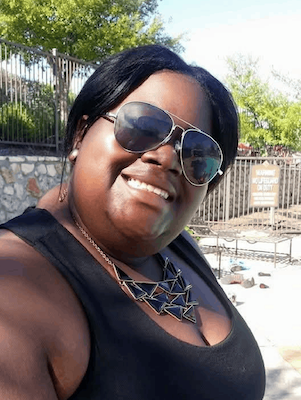
The Texas Supreme Court ruled in May 2024 that the state’s abortion ban permits doctors to perform medically necessary abortions. Seven months later, Tierra Walker died from preeclampsia at 20 weeks pregnant.
Walker’s preventable death came after dozens of doctors refused to offer her an abortion during multiple trips to the ER, even though two physicians wrote in her chart that pregnancy complications put her life at risk. Last week, her family sued the state and her doctors for violating her right to life enshrined in the state constitution—and arguing that Texas’ abortion bans should be struck down.
It is the first lawsuit over a death from an abortion ban, and it’s one of several lawsuits challenging abortion restrictions under state constitutional rights to life and liberty. “People should not lose their fundamental constitutional rights just because they are pregnant,” said Molly Duane, the litigation director of Amplify Legal, which represents Walker’s family. Amplify Legal is the litigation arm of Abortion in America, an advocacy group that shares patient stories and was co-founded by the late Cecile Richards, a former Planned Parenthood president.
“It is so clear why [Tierra] died. It's because she was poor, she was Black, and she lived in a state with an abortion ban,” Duane told Autonomy News. “That is not how medical care should work in this country.”
Anti-abortion advocates have claimed for decades that fetuses and even embryos are people with legal rights. No one can stop them from making that argument, Duane said, but reproductive rights and justice advocates can and should highlight the people without whom that potential life wouldn’t exist.
“The thing we don't hear about enough, in my opinion, is the lives and humanity of pregnant people,” she said. “We cede that ground to them when we don't plant our feet firmly on the ground and say what our values are, which is that pregnant people should not lose their rights just because they're pregnant.”
Amplify Legal is making a similar right to life claim in a case it filed against Arkansas' abortion ban. The first hearing in the lawsuit is on Monday. These kinds of challenges not only seek to overturn state-level bans, but could be used as part of a larger argument that the Dobbs decision that overturned Roe v. Wade is itself unworkable and should be reversed.
The humanity of pregnant people
The prioritization of the fetus over the person carrying it was painfully clear in Walker’s case. Several of Walker’s doctors told her “your baby is fine” when the pregnancy was causing her to have seizures, headaches, and persistent vomiting, according to the complaint. Her medical records also show that she was not offered effective treatments for high blood pressure and blood clots because they’re contraindicated in pregnancy. While she did have surgery in October 2024 for a blood clot in her leg, she was back in the emergency room two months later. Doctors diagnosed her with preeclampsia, but sent her home. Two days later, her son found her unresponsive in bed. It was his 15th birthday.
The maternal mortality rate in Texas is higher than the national average, and is highest for Black women due to medical and structural racism. Walker did not have insurance and had to seek prenatal and emergency care at a public hospital. Her family is asking for a jury trial to award damages under state and federal law, and to strike down Texas’ bans for violating the state constitution.
Previous lawsuits asking for clarity on medical exceptions didn’t work in Texas. Duane knows that firsthand: She litigated the landmark case Zurawski v. State of Texas while an attorney at the Center for Reproductive Rights. By contrast, the new suit from Walker’s family makes a flurry of claims against healthcare workers and Attorney General Paxton. It argues that they are liable for wrongful death, that they violated Walker’s state and federal right to life, and that the state’s overlapping abortion bans are too vague to be workable and should be struck down. The lawsuit also claims that state medical malpractice law needs to be amended.
During arguments in Zurawski, Texas Supreme Court justices said that patients should sue their doctors when denied medically necessary abortions. But Duane told Autonomy News the law only allows for medical malpractice claims against public hospitals in very limited circumstances.
The complaint also notes that Paxton, the Republican nominee for Senate this fall, has tried to directly interfere with the medical care of pregnant people. He threatened a physician with criminal charges in 2023 after a lower court said her patient, Kate Cox, qualified for a medically necessary abortion. And last month, he notified a Texas hospital of its “legal obligations” to provide medical intervention to a baby at the center of a surrogacy fight. In the weeks that Walker was deteriorating, however, the suit argues that Paxton ignored at least three other deaths related to the state’s abortion ban, and failed to remind hospitals of their obligations to provide life-saving care for those patients.
The risks to the lives of women and pregnant people after the Dobbs decision were grimly predictable. Importantly, many patients were similarly harmed while Roe v. Wade was still on the books. That’s because Roe and a subsequent case, Planned Parenthood v. Casey, said states could ban abortion after fetal viability and enact a slew of restrictions throughout pregnancy, Duane said, under an “amorphous benefit to the state in potential life.” Plus, Catholic hospitals have long refused to provide abortion and miscarriage care under their religious directives.
She said advocates now have an opportunity to guarantee full autonomy to pregnant people. “If I were rewriting everything—which is where we are now, there is no more Roe, there is no more Casey—why is it that abortion bans are unconstitutional?” Duane said. “The real reason is because they take away constitutional rights from people who are pregnant and only people who are pregnant.”
University of Pittsburgh law professor Greer Donley, an expert on reproductive rights, said this is a promising strategy to pursue. “I love this theory,” Donley told Autonomy News. “It is so critical to the future of the movement in general to talk about ‘what does the right to life’ mean?”
Powerful state constitutions
The promise of life, liberty, and the pursuit of happiness appears in the Declaration of Independence, but it’s not in the U.S. Constitution. That language is, however, codified in multiple state constitutions—including, perhaps most famously for abortion purposes, in Kansas. The state Supreme Court ruled in 2019 that the constitution’s “inalienable natural rights” language protects the right to abortion. Even after Dobbs, abortion is still legal until 22 weeks in Kansas because the court’s holding means other bans cannot take effect.
Last year, three of five justices on the North Dakota state Supreme Court agreed that the state’s ban violated the liberty rights of pregnant people. But the ban remains in effect because the constitution also says state laws can’t be overturned without a supermajority of four votes.
The Arkansas lawsuit, initially filed in January, was the first challenge to the state’s abortion ban, which took effect in 2022. The plaintiffs include women who were forced to carry doomed pregnancies or denied miscarriage care. More joined the case in April, including a woman who simply didn't want to be pregnant and had to travel out of state. She got her abortion in Kansas. “Every Arkansan has a fundamental right to the enjoyment and protection of their right to life, liberty, and the pursuit of happiness,” Duane said. “That is real, those are not just words on a page.”
Another suit filed earlier this month by Planned Parenthood of Wisconsin is challenging two restrictions in that state, where care resumed after a court ruled that an 1849 abortion ban couldn’t be enforced. The laws in question require that only physicians provide abortion care—banning other qualified practitioners—and force patients to wait 24 hours between a consultation with a doctor and their abortion, which must be done by the same physician. The complaint argues that the constitution’s liberty language means courts should acknowledge an affirmative right to bodily autonomy and strike down these laws.
In Oklahoma, the Center for Reproductive Rights argued in 2022 that the state’s bans should be struck down in their entirety under liberty language. The state Supreme Court didn’t agree, but it did rule in 2023 that Oklahoma’s constitution protected abortions necessary for health reasons. Last week, the group filed a new lawsuit on behalf of two women who were denied abortions of their nonviable pregnancies. The case asks the courts to apply the same right in cases of fatal fetal diagnoses because patients are risking their health and lives to carry pregnancies only to deliver babies unlikely to survive birth or to leave the hospital.
A federal right to life—and abortion
The Walker family is also suing for damages under a federal civil rights law, alleging that Paxton and Texas hospital officials “deprived Ms. Walker of her right to life as guaranteed by the Fourteenth Amendment to the United States Constitution.” The complaint succinctly notes that "the fundamental right to life does not cease to exist simply because a person is pregnant."
An active case in Idaho case zeroes in on that amendment as well: A maternal-fetal medicine specialist sued the state arguing that his patients have a constitutional right to medically necessary abortion care. In the suit, Dr. Stacy Seyb argues that banning such care for his patients violates the due process clause of the Fourteenth Amendment, which says states can’t deprive “any person of life, liberty, or property, without due process of law.”
A district court judge ruled in August that doctors couldn’t be prosecuted for providing abortions in these circumstances, with Judge Lynn Winmill writing that “a pregnant woman’s health is not a state resource to be allocated at the legislature’s whim. The Fourteenth Amendment exists precisely to prevent subjugation like this.” But the state appealed, and the Ninth Circuit Court of Appeals held a hearing Tuesday to decide whether Idaho doctors can provide abortions to preserve the physical and mental health of pregnant people. Judge Winmill also wrote that “longstanding protections for health-preserving abortions exist within a deeper right to self-protection that is essential to the American tradition of justice.”
Challenging vague medical exceptions and getting courts to recognize this right to self-preservation could be used as part of a long-term strategy to take down abortion bans, as Donley argued in a 2025 paper coauthored with law professor David Cohen. Once courts recognize a “constitutional floor,” she explained, litigators can go back and argue for more. For example, they can argue that mental health isn’t different from physical health, and that all pregnancies carry a risk of death, and people have a broad right to defend their health by choosing abortion.
“The right would say, ‘See, that's exactly what we're talking about. You give them an inch, they'll take a mile!’ And for me, it's not some strategic lawyering bullshit we're doing. This is actually what it means to be able to protect someone's life,” Donley said. “I believe deeply in the underlying principle that the right to protect yourself has to include the right to abortion.”
Creating a record to attack Dobbs
Donley said current litigation is echoing history in a way, as lawsuits challenging state abortion bans are what led to the Roe decision in the first place. “All the cases from the 60s, they sound like they were written today,” she said. “The court is literally like, ‘How do you decide? At what point is the life threat enough, and does mental health qualify? And if someone already has 14 children, does that count?’”
The anti-abortion movement then spent the next few decades “overwhelming the courts” with challenges to Roe, she said. “It helped to create the record to show that, in their words, Roe was unworkable, because you had all these different cases and the courts were reaching different conclusions,” Donley said.
That tactic was successful in getting the Supreme Court’s far-right supermajority to overturn Roe in 2022, and Donley’s paper argues that it could work to get a future court to overturn Dobbs.
Liked this story?
There’s now a visceral record of post-Dobbs harm that lawyers can cite in court: People forced to carry doomed pregnancies, travel out of state, and lose their fertility or even their lives. States are interpreting similar provisions differently, and “workability” is an actual doctrine that litigators use to challenge laws and precedents. And right now, what we have is “this insane free-for-all, with women's lives on the line,” Donley said.
Lawsuits asserting that pregnant people can’t have their liberty rights curtailed are pursuing the same fundamental theory, Donley said, and it’s one that makes sense to a lot of people. “For people to be able to protect their health and their life—whatever you mean by that—they have to be able to access abortion.”
This story was edited by Garnet Henderson and copy edited and fact checked by Hannah McAlilly.
Follow Autonomy News on Instagram, Bluesky, TikTok, Threads, and LinkedIn.