Table of Contents
Welcome to the latest edition of our weekly roundup. Every Monday, we’ll send you a summary of the biggest stories about bodily autonomy. We’ll also include links to pieces that Garnet or Susan have published.
If you’d prefer to receive a single email every week, you can do that—we love autonomy. You can manage your subscriptions by navigating to the site, clicking on “Account” in the upper right, then under “Emails,” select “Manage.” You can toggle off “Autonomy News” to receive only the roundup, or vice versa.
Let’s dive in.
On Autonomy News
“Baby Olivia” bills, which require public schools to show a biased, inaccurate video produced by the anti-abortion group Live Action, or something similar, are spreading like wildfire. But something about Ohio’s version stands out: Its lead sponsor runs a crisis pregnancy center. Garnet dug into whether this poses a conflict of interest. (Share this story on Instagram, Bluesky, or TikTok.)
 Garnet Henderson
Help keep our journalism paywall-free in 2026! Make a tax-deductible gift to our end-of-year campaign, upgrade to a paid subscription, drop a little something in our Tip Jar, or shop our merch.
Federal news
The Attorney General of Louisiana, alongside lawyers from Alliance Defending Freedom, asked a federal judge to immediately restrict access to the abortion drug mifepristone nationwide. Louisiana previously sued the Food and Drug Administration in October, seeking to roll back telemedicine prescriptions of the drug and once again require unnecessary, in-person appointments. But after reporting that FDA Commissioner Marty Makary was slow-walking a needless “review” of mifepristone until after the midterms, Louisiana and ADF lawyer Erin Hawley swooped in to demand that the judge in the case restrict abortion pills ASAP. The judge, Trump appointee David Joseph, set briefing deadlines on Friday and will hold a hearing on the request on February 24. Nothing changes until then. Mifepristone manufacturers Danco and GenBioPro have also joined the case.
Congress left town for the year without extending enhanced Affordable Care Act subsidies, meaning millions of people will face higher insurance premiums starting on January 1. However, four vulnerable House Republicans signed a discharge petition to force a vote on a bill to extend the tax credits for three years. A vote could happen in January, but the bill faces an uncertain future in the Senate. Anti-abortion group Susan B. Anthony Pro-Life America is very mad that these Republicans support a proposal that doesn’t add additional restrictions to insurance coverage of abortion.
After Speaker of the House Mike Johnson blocked a provision of the National Defense Authorization Act that would have guaranteed in-vitro fertilization coverage for active-duty military families, lawmakers have introduced a standalone IVF for Military Families Act with bipartisan support.
The American Academy of Pediatrics has lost several multi-million dollar grants from the Department of Health and Human Services after it dared to criticize the decisions of agency head Robert F. Kennedy Jr. One of these grants was dedicated to early detection of autism—ironic, given Secretary Bear Carcass’ apparent obsession with the condition. The grants were also meant to fund programs to prevent fetal alcohol spectrum disorders, improve access to children’s health services in rural areas, and more. HHS said it terminated the grants because they no longer aligned with the department’s priorities, criticizing the AAP’s use of “identity-based language,” such as mention of racial disparities and terms like “pregnant people.” AAP is just the latest major medical organization to fall out with HHS: In July, the American College of Obstetricians and Gynecologists told members it would stop accepting federal funding, citing changes to federal policy.
The Senate confirmed anti-abortion lawyer Thomas “March” Bell to a key HHS post. He’ll serve as the agency’s inspector general—in other words, its official watchdog. Bell previously served as chief of staff in the HHS Office of Civil Rights during the first Trump administration. In 2015, Bell headed up a Republican-led Congressional investigation into bogus claims that Planned Parenthood sells fetal tissue for profit, following the release of doctored videos by the Center for Medical Progress. Decades earlier, he served as deputy director of Virginia’s Department of Environmental Quality, but was forced to resign after an investigation found he misused taxpayer funds.

State news
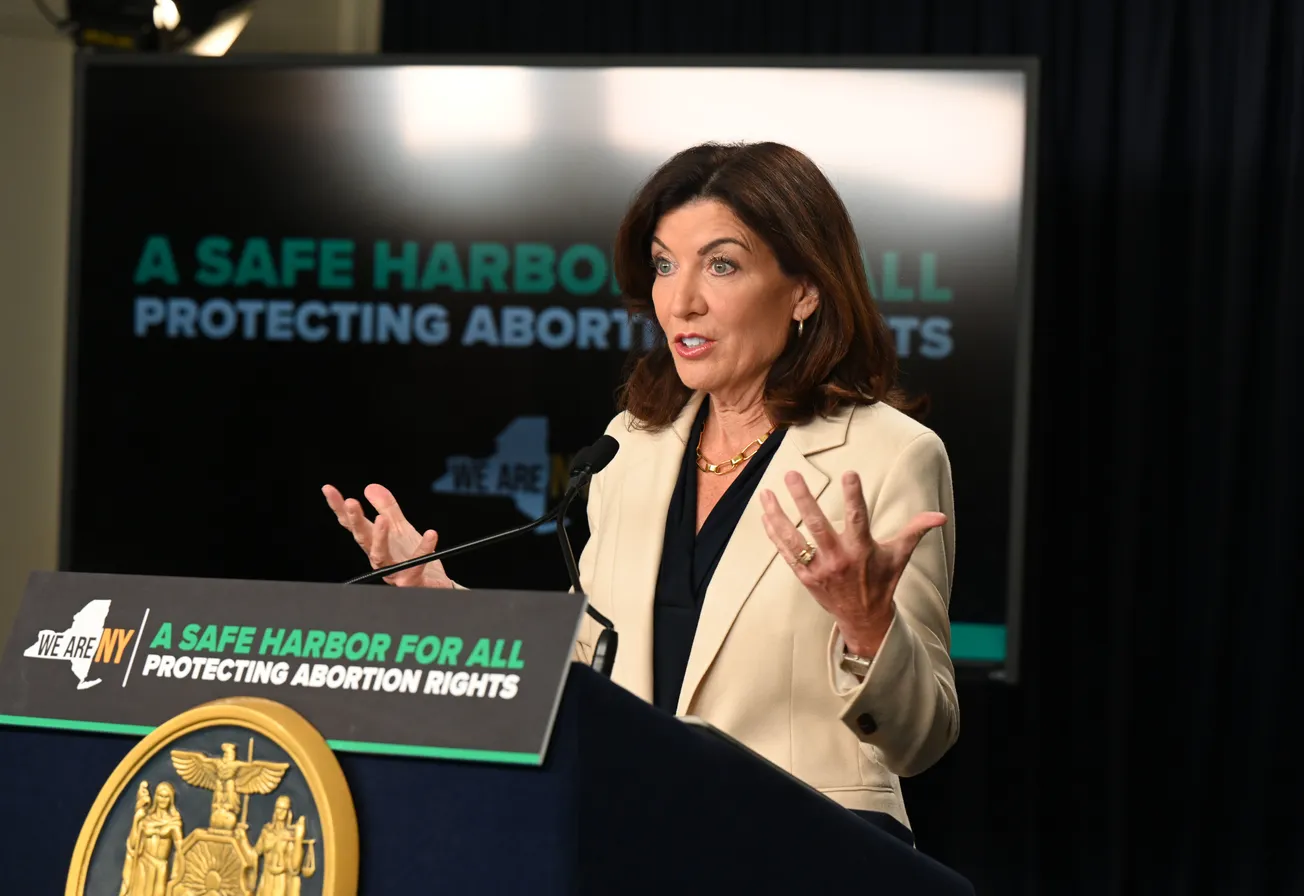
As it turns out, New York advocates’ concerns were justified. Late last week, Governor Kathy Hochul signed an updated version of the state’s “shield” law, strengthening protections for providers of abortion and gender-affirming care. However, she vetoed two other bills intended to protect people seeking these forms of care in New York. The New York Health Information Privacy Act would have ensured that electronic health data—the kind collected by health apps and period trackers—couldn’t be shared without a user’s consent. The Hospital Transparency Act would have required hospitals to disclose information about what kinds of care they do and don’t provide, so that patients aren’t surprised to learn they’re at a Catholic hospital that won’t give them an abortion even in an emergency, for example. Hospitals and tech companies lobbied hard against the bills. The New York Civil Liberties Union called Hochul’s vetoes “ill-advised” and “disappointing.”
In a new report produced in collaboration with the advocacy organization Reproductive Equity Now, the Massachusetts Department of Public Health says that abortion care “is a common medical practice that can and should be integrated into primary care,” rather than siloed away from the rest of the medical system. People have, in fact, been saying this!
Eight current and former employees of Planned Parenthood North Central States—the affiliate serving Minnesota, Iowa, Nebraska, North Dakota, and South Dakota—accused the organization of mismanagement and a “toxic” culture. Sounds oddly familiar.
The Pennsylvania House of Representatives passed a bill that would put an abortion rights referendum on the ballot, but the Republican-controlled Senate has vowed to prevent it from even getting a hearing. House Bill 1957 would send an amendment to voters that would codify a right to abortion until fetal viability. Abortion is legal until that point in the state, but heavily restricted. An amendment could be used to try to overturn some existing regulations that interfere with access. In Pennsylvania, constitutional amendments must be approved by the legislature in two consecutive sessions before voters can weigh in, so even if the Senate were to pass the measure in the coming year, it would need to be considered again in the 2027-2028 session.
Personhood watch
Rep. Ashley Hinson (R-Iowa) introduced a federal bill that might sound good at first glance, but would actually further enshrine the concept of fetal personhood. The “Supporting Healthy Pregnancy Act” would require states to ensure that biological fathers pay at least 50% of the out-of-pocket medical costs of pregnancy and delivery, including health insurance premiums. Currently, single moms can request child support payments at birth, but Hinson’s bill would allow pregnant people to seek reimbursement during pregnancy. Abortions are excluded, naturally. (In possibly related news, Hinson is running for Senate in 2026.) Seems to us like a better way to support healthy pregnancies would be to guarantee healthcare and paid parental leave to every person in the U.S. instead of granting legal status to fetuses, but what do we know?
An Ohio hospital system argued in legal filings that Brittany Watts’ lawsuit against them for reporting her 2023 stillbirth to the police is meritless. Mercy Health claimed they were required to report her pregnancy loss because the fetus was at least 20 weeks’ gestation, after which point state law requires a fetal death certificate and an autopsy. However, the law requires fetal deaths to be reported to a local registrar—not the police. They also said a local judge had determined there was probable cause to believe a crime had been committed. A federal judge is considering whether to allow Watts’ case to go to trial.
The case against a South Carolina woman arrested after giving birth following an alleged attempted abortion has moved forward. A 20-year-old woman was arrested in November for attempted murder and unlawful conduct toward a child after she gave birth to a premature baby in her toilet and allegedly failed to render aid. Prosecutors say the woman admitted to taking an abortion drug. A judge determined probable cause for the charges, which allows prosecutors to seek an indictment. The woman has been in jail without bail since her arrest.

Assaults on queer people
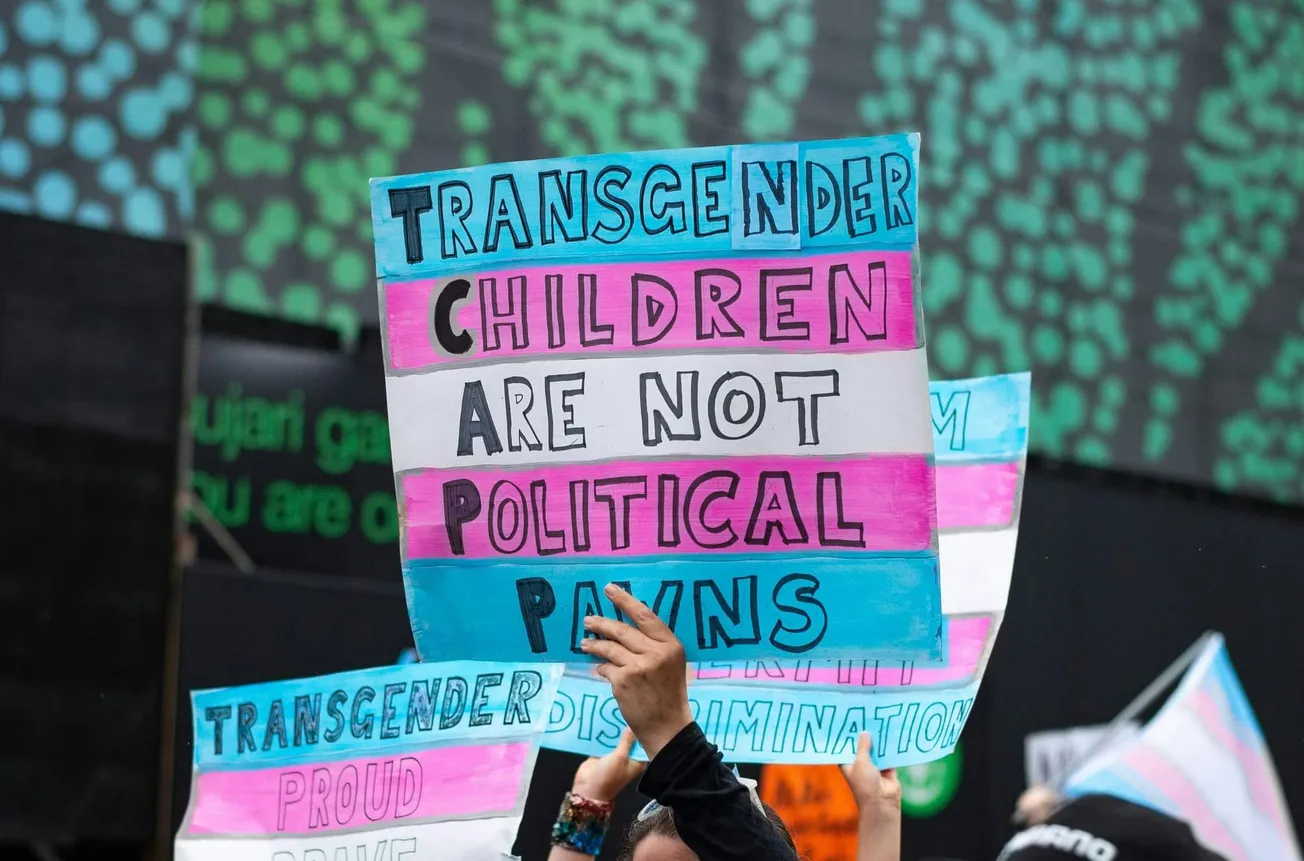
Rep. Marjorie Taylor Greene (R-Ga.) may be on an anti-Trump media tour, but don’t worry, she still agrees with him on most things, especially the idea that youth gender-affirming care is bad. In Greene’s final days in Congress, the House passed her bill called the Protect Children’s Innocence Act. It would create a criminal ban on gender-affirming care for minors, jailing doctors for up to 10 years per violation. The House also passed a bill from Rep. Dan Crenshaw (R-Texas), which would bar federal Medicaid funds from being used to pay for youth gender-affirming care. This is essentially a gender-affirming care version of the Hyde Amendment, which outlawed the use of Medicaid funds for abortion care, and over time sprawled out so that similar policies apply to every federally funded health program. Fortunately, neither of these bills are likely to pass the Senate.
However, Crenshaw’s bill would be largely redundant, anyway, because of a proposed rule issued by the Trump administration. Under this rule, any hospital that participates in Medicaid or Medicare—so, nearly every U.S. hospital—would be barred from providing gender-affirming care to any child, regardless of whether the care is actually paid for by these federal programs. The Centers for Medicare and Medicaid Services isn’t allowed to regulate the practice of medicine, but the agency claims it can limit gender-affirming care because the federal government believes it is “not healthcare.” This policy, too, is a version of the Hyde Amendment—though it would mean hospitals can’t provide this care to anyone, not just federally funded patients, which no existing version of Hyde has done.
Unfortunately, this was not the only anti-trans health rule proposed by the administration last week. A second proposed federal rule prohibits Medicaid from paying for gender-affirming care for patients under 18, and prohibits gender-affirming care coverage for people under 19 enrolled in the Children’s Health Insurance Program (CHIP). This rule would also explicitly prohibit state Medicaid agencies from paying for this care, attempting to undercut in advance any state efforts to make up funding gaps. A third proposed rule declares that gender dysphoria is not a disability deserving of anti-discrimination protections under federal law. One saving grace in the case of all these proposed policies is that the federal rulemaking process takes a long time, so nothing will change immediately.
You may remember that the Supreme Court recently declined to take the case of Kim Davis, the Kentucky clerk who refused to marry same-sex couples. Well, legal activist and former Texas Solicitor General Jonathan Mitchell thinks he has a similar, but stronger case. On behalf of a justice of the peace who refused to marry gay couples in Waco, Mitchell has filed a federal lawsuit seeking to overturn Obergefell v. Hodges, the 2015 decision that legalized same-sex marriage in every state.
The Sixth Circuit Court of Appeals blocked Michigan’s ban on so-called “conversion therapy” for minors, a pseudoscientific practice in which therapists try to convince people to reject their sexuality or gender identity. The 2-1 panel said the ban violated the First Amendment rights of therapists and counselors. The Supreme Court heard a case in October about Colorado’s similar ban and appears poised to overturn it, also on speech grounds; a ruling isn’t expected until next summer.
In Northern California, the area’s largest health provider, Sutter Health, was set to end gender-affirming care services for patients under 19 on December 10. Following local outcry, the health system reversed this decision and will continue care. However, patients and their families worry that this reversal is only temporary.
Quick hits
- One of Trump’s judicial nominees said he thinks disabled people shouldn’t get married. The truth is that many already can’t, because if they did, they’d lose their federal benefits.
- The conservative legal super-firm Alliance Defending Freedom increased its spending on advocacy in Europe by 70 percent in 2024.
- “The global battle to age-gate the internet:” Laws theoretically intended to “protect” children from seeing inappropriate content don’t work very well, but they do hurt independent creators and platforms. And we can see how easily they could be used to restrict access to information about things like abortion and birth control. It’s giving Anthony Comstock.
Actual good news
A California court has approved a settlement between health insurance company Aetna and patients who sued over discriminatory fertility coverage policies. The insurer previously made LGBTQ couples wait a year before fertility treatment would be covered. The idea was that enrollees were supposed to try to conceive on their own before turning to fertility treatments—except that isn’t possible for many queer couples, now is it? Queer patients sued, because the policy meant they had to wait longer and pay more than straight couples to receive the same benefits. The settlement means Aetna will compensate patients and expand nationwide coverage of artificial insemination.
Palate cleanser
I could really use a fish rn.
@th3yawninggrave #bear #ilovebears ♬ Airplanes - B.o.B feat. Hayley Williams of Paramore
Follow Autonomy News on Instagram, Bluesky, TikTok, and LinkedIn.