Table of Contents
Welcome to the latest edition of our weekly roundup. Every Monday, we’ll send you a summary of the biggest stories about bodily autonomy. We’ll also include links to pieces that Garnet or Susan have published.
If you’d prefer to receive a single email every week, you can do that—we love autonomy. You can manage your subscriptions by navigating to the site, clicking on “Account” in the upper right, then under “Emails,” select “Manage.” You can toggle off “Autonomy News” to receive only the roundup, or vice versa.
Let’s dive in.
On Autonomy News
Last week, we mentioned the case of a Kentucky woman arrested after an alleged self-managed abortion. As in several other pregnancy criminalization cases we’ve covered recently, the news coverage sensationalized the details and dehumanized the woman at the center of this story. Garnet and Susan wrote about why journalists need to take a new approach. (Share this story on Instagram, Bluesky, or TikTok.)
 Garnet Henderson
We were also honored to appear in The Guardian alongside so many independent journalists and worker-owned outlets we admire, including Marisa Kabas of The Handbasket, Evan Urquhart of Assigned Media, and the founders of 404 Media, who have been tremendously helpful to us through our own launch.
 Mallory Carra
Help keep our journalism paywall-free in 2026! Upgrade to a paid subscription, drop a little something in our Tip Jar, or shop our merch. Interested in making a more substantial gift? Learn more here.
Federal news
President Donald Trump is again drawing the ire of anti-abortion groups. Trump appears to understand that healthcare is likely to be a political liability for Republicans in the midterm elections after they let enhanced subsidies for people who buy insurance plans through the Affordable Care Act exchanges expire at the end of 2025. On Tuesday, he urged House Republicans to be “a little flexible” on the Hyde Amendment. Anti-abortion groups wanted to expand this policy—which bars federal funds from being used to pay for abortions in nearly all circumstances—to restrict abortion coverage in all exchange plans in any subsidies deal. Currently, exchange plans silo funding so that federal money only pays for abortions in situations Hyde allows: cases of rape, incest, or to save the life of the pregnant person.
But groups like Susan B. Anthony Pro-Life America claimed that setup isn’t strict enough and demanded for months that any extended subsidies exclude plans that cover abortion. However, on Thursday, a group of 17 House Republicans helped pass a bill that would extend the subsidies for three years—with no new restrictions on abortion coverage. The legislation would need 60 votes to pass the Senate, meaning it would require a whopping 13 Republican defections. That seems unlikely, but perhaps Trump will pressure lawmakers into supporting a compromise bill that House and Senate members are reportedly drafting. (Trump knows the consequences of losing the House: “they’ll find a reason to impeach me,” he said in the Tuesday meeting.)
Today is the deadline for the Food and Drug Administration to respond to Louisiana’s lawsuit seeking to restrict access to abortion pills. The state first sued the agency in October to argue that a 2023 FDA regulation change allowing telemedicine prescriptions of mifepristone means Louisiana cannot adequately enforce its abortion ban. Representing Louisiana is Erin Hawley, a lawyer at the Christian nationalist firm Alliance Defending Freedom and the wife of Sen. Josh Hawley, who’s been pressuring the FDA to end telemedicine. Normally, the FDA would respond to such a lawsuit by defending its past actions, even those made by a previous administration—but we are not living in normal times. And, in case you missed it: In late December, Louisiana asked the judge, Trump appointee David Joseph, to immediately halt telemedicine prescriptions as the case proceeds. (The request came after reporting that the FDA was slow-walking a “review” of mifepristone.) Joseph scheduled a hearing on that request on February 24, so nothing changes until then.
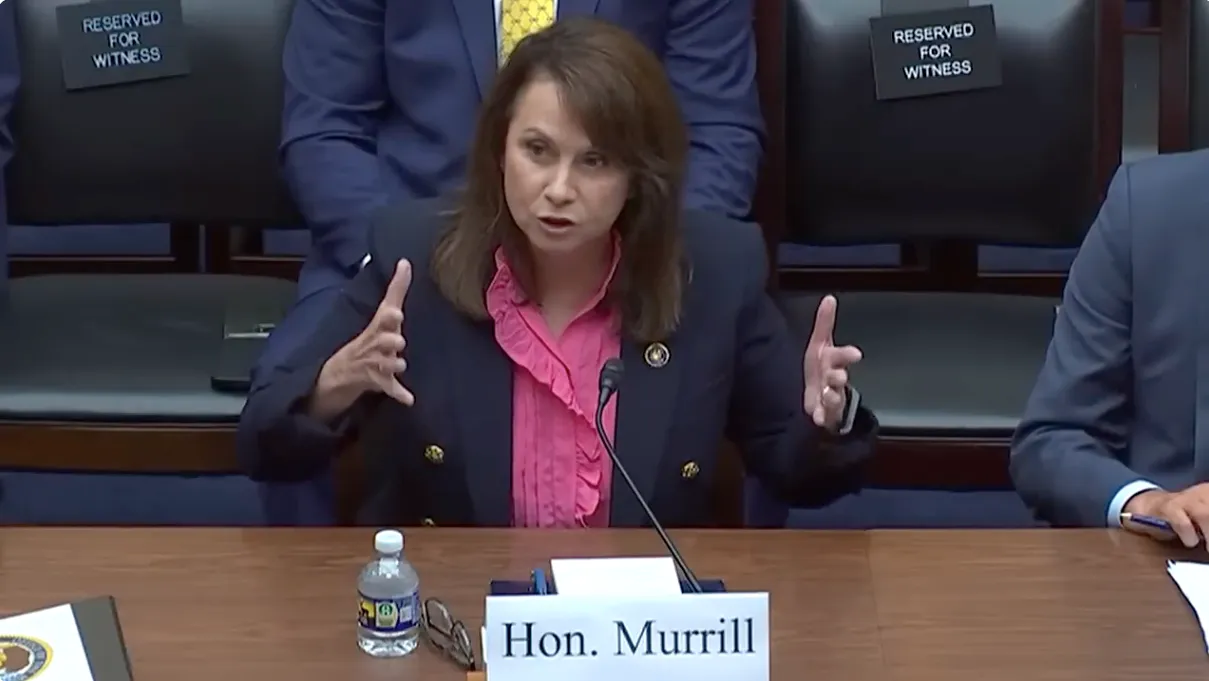
Somewhat relatedly, there will be a Senate committee hearing on Wednesday morning that baselessly questions the safety of mifepristone. Sen. Josh Hawley serves on this committee and the chair, Sen. Bill Cassidy, claimed in a release that “chemical abortion drugs not only kill innocent babies, but also put women in serious danger.” Translation: you can expect a lot of garbage from them and the two anti-abortion witnesses, one of whom is Liz Murrill, the Attorney General of Louisiana, whose office filed the aforementioned lawsuit. (Murrill is also pursuing criminal charges against two doctors accused of mailing abortion pills to Louisiana, one from New York and another from California.) Democratic members of the committee invited as their witness a Georgia OBGYN who is a fellow with Physicians for Reproductive Health. The hearing will stream at 10am here.
A federal judge temporarily blocked a Trump administration effort to freeze around $10 billion in childcare subsidies to Minnesota, New York, California, Illinois and Colorado. States sued after the White House paused $7 billion in funding from the Temporary Assistance for Needy Families program, also known as welfare; nearly $2.4 billion from the Child Care and Development Fund; and $870 million in other grants for at-risk children. The administration claimed without evidence that the freeze was due to widespread fraud. This follows a campaign of harassment against childcare providers of Somali descent in Minnesota spurred by the far-right YouTuber Nick Shirley. There was a real childcare fraud scandal in Minnesota, but such fraud is nowhere near as widespread as Shirley and Trump administration officials have suggested.
State news
South Carolina’s legislature is back in session tomorrow, and lawmakers are gunning to further restrict access to abortion in the state, which already has a six-week ban. One prefiled bill would reclassify mifepristone and misoprostol as controlled substances. Such a law was enacted in Louisiana in 2024, with dangerous results. A second bill, first introduced last year and still under consideration, would change the legal definition of “person” to include “unborn child” and classify abortion as homicide, meaning it would be punishable by death. This fetal personhood bill is a version of the “prenatal equal protection” legislation being pushed by the abortion “abolitionist” movement. Both bills will be heard by the House Judiciary Committee on Wednesday at noon. The hearing will be livestreamed here.
The Wyoming Supreme Court permanently struck down two abortion bans: a “trigger” ban designed to outlaw abortion upon the reversal of Roe v. Wade, and what would have been the nation’s first explicit ban on medication abortion. Neither law was ever in effect as both were swiftly blocked by a lower court judge after their passage, and later found unconstitutional by that same judge. Ironically, all these rulings are based on a 2012 anti-Obamacare amendment to the Wyoming Constitution that guarantees “each competent adult” a “right to make his or her own health care decisions.” Only one of the court’s five justices dissented, but the majority did suggest that state lawmakers could ask voters to weigh in on a new constitutional amendment that would more directly address abortion rights. Gov. Mark Gordon urged the legislature to make such an amendment a priority in their next session, which begins in February. WyoFile also reported that, in a closed-door meeting hours after the ruling, a group of lawmakers discussed a plan that could shrink the state’s Supreme Court from five justices to three.
Following the arrest we reported on in Kentucky, House Democratic Caucus Chair Lindsey Burke has introduced a bill to prevent criminalization of people who seek or provide reproductive healthcare in the state. The bill would establish protections against criminal and civil penalties for seeking or facilitating abortion care in places where it’s legal (in other words, outside the state), and prevent medical records from being used to investigate or prosecute patients, providers, or supporters.
New Hampshire Republicans passed two abortion restrictions last week. The House passed House Bill 232, which would enshrine a right for health care providers not to “participate in” an abortion without retaliation. It now goes to the Senate. That chamber also passed House Bill 191, which criminalizes driving a minor to an abortion appointment. The House already approved this bill, but the Senate amended the text to refer to termination of a pregnancy, not simply any “surgical procedure.” It goes back to the House for final sign-off. Republican Gov. Kelly Ayotte pledged in her 2025 inaugural address to veto any legislation to further restrict abortion, so let’s see if she was lying!
Today, an Arizona court heard closing arguments in a legal challenge to numerous abortion restrictions, including a mandatory 24-hour delay, a ban on prescribing abortion pills via telemedicine, and a ban on abortions performed due to “genetic abnormality.” The lawsuit was filed by the Arizona Medical Association and two abortion providers after voters enshrined constitutional protections for abortion until fetal viability in 2024.
A trial beginning this week in Missouri will determine whether a host of abortion restrictions, most of many of which are temporarily blocked, will be permanently overturned. These include a 72-hour waiting period, a state-mandated, biased “informed consent” process, and onerous abortion clinic licensing requirements. Despite Missouri voters’ adoption of constitutional protections for abortion until fetal viability in 2024, so many restrictions remain on the books that most Missourians are still traveling out of state for abortion care.
An Ohio state appeals court said that a judge erred in striking down the entirety of a 2019 abortion ban under the state’s constitutional amendment and sent the case back to that judge for further consideration. After Ohio voters passed Issue 1 in 2023, abortion advocates challenged Senate Bill 23 in court, arguing the law violated the new protections and should be blocked in full. SB 23 contained a ban on abortions after six weeks and required physicians to check for a fetal or embryonic cardiac activity before performing an abortion, as well as to report abortions to the state. In October 2024, Hamilton County Judge Christian Jenkins issued a permanent injunction against state enforcement of the law. The state appealed that ruling only as it pertains to the ultrasound and reporting requirements, arguing that a “severability” clause in the law’s text meant those provisions could stay even if other parts were struck down. Abortion advocates’ attorneys said the purpose of these provisions was to enforce and uphold the abortion ban that had been struck down. The First District Court of Appeals disagreed and said they’re “presumptively constitutional.” The only good news here is that the six-week ban remains permanently blocked.
Reproductive rights nonprofit Mayday Health is countersuing South Dakota in federal court after the state Attorney General tried to halt its abortion pill information campaign. As we’ve covered previously, AG Marty Jackley asked a state court judge to block a gas station advertising campaign from the New York-based organization. Mayday was set to run ads that read: “Pregnant? Don’t want to be?” and include the url for Mayday’s website, which in turn features links to online abortion pill providers. (South Dakota bans abortion in almost all circumstances.) The complaint argues that the information is First Amendment-protected free speech and that Jackley’s actions were prompted by animus against Mayday’s pro-abortion views.

Personhood watch
A 55-year old Virginia woman was charged with murder in connection with the death of an infant found in a Kentucky college campus dumpster in 1991. State police claim they identified the woman more than 30 years later thanks to “advancements in forensic science and investigative technology,” which led to new leads. Local news stories aren’t explicit about what new information was found, but the arrest is likely the result of genetic genealogy, or when investigators use online genealogy services to try to find a relative linked to DNA from human remains. Several women have been charged with murder in recent years after police reopened cases involving unidentified fetuses and newborns. One consumer-facing service, Ancestry, changed its policies after reporting on these murder charges: The site said in August 2025 that its database was not to be used “for law enforcement purposes” without a warrant or legal order. A grand jury indicted the woman on December 23, and she is awaiting extradition to Kentucky, per police.
A Nevada woman accused of abandoning a newborn in a dumpster in July 2025 has pleaded not guilty to charges of attempted murder and child abuse and will stand trial in August. She reportedly told police she didn’t know she was pregnant until she gave birth.
Assaults on queer people
Tomorrow, the Supreme Court will hear oral arguments in challenges to Idaho and West Virginia laws that bar transgender women and girls from participating in school sports. Both plaintiffs argue that the bans violate the equal protection clause of the Fourteenth Amendment. The plaintiff challenging Idaho’s law, who is now 24 years old, had previously asked the Supreme Court to dismiss her case for a variety of reasons—due to some personal circumstances and the high level of public scrutiny, she no longer wants to play sports in Idaho, anyway. The state, on the other hand, has urged the Supreme Court to go ahead and decide the case. Either way, the Court will still need to rule on the West Virginia challenge, in which the plaintiff says she has never gone through male puberty and therefore the ban shouldn’t apply to her and other student athletes like her. Given the Court’s ruling to uphold Tennessee’s ban on youth gender-affirming care in U.S. v. Skrmetti, a good outcome for trans kids does not seem likely. Arguments begin at 10 a.m. Eastern time and can be streamed live here.
The Department of Health and Human Services has agreed that it will delay its exclusion of hospitals and health systems that provide youth gender-affirming care from Medicare and Medicaid while a lawsuit filed by 19 states and Washington, D.C. proceeds. The proposed rule at issue would exclude all health providers who offer gender-affirming care to children from federally funded health insurance programs, even if no federal funds are used to pay for the care.
Another federal judge has rejected the Department of Justice’s attempt to subpoena patients’ identifying information from providers of gender-affirming care, this time in Colorado. A federal magistrate judge recommended that a subpoena sent to Children’s Hospital Colorado be quashed, or blocked, in its entirety. The DOJ has two weeks to appeal before a district court judge decides whether to approve this recommendation. However, youth gender-affirming care is paused at Children’s Hospital Colorado and Denver Health due to a separate investigation being conducted by the HHS Office of Inspector General.
The far-right law firm Thomas More Society filed an emergency appeal to the Supreme Court in a “parental rights” case from California. They’re asking the Court to block a ruling from the Ninth Circuit Court of Appeals that allowed a state policy requiring schools to use students’ correct pronouns, and barring them from telling parents about pronoun changes without consent, to stay in effect.
Quick hits
- New reporting from Irin Carmon at The Cut: “Planned Parenthood is facing a funding crisis and its political power is waning. Some critics blame the organization itself.”
- The Satanic Temple has lost yet another abortion-related religious freedom case. It’s almost as if they have no idea what they’re doing.
- A new study finds that patients undergoing fertility treatments in states with abortion restrictions have worse maternal health outcomes than patients in other states. The researchers found a statistically significant increase in complications including blood transfusion, ICU admission, unplanned hysterectomy, and uterine rupture.
Actual good news
Private insurers will be required to cover self-swab cervical cancer screening tests, which were recently approved by the Food and Drug Administration, starting in 2027. However, the American College of Obstetricians and Gynecologists said that while it recognizes the “exciting potential” of these tests, “increasing screening access without established systems to provide follow-up testing and treatment could delay diagnosis and treatment and prove detrimental to patients.”
Palate cleanser
@belindaabee Catch us live working out in the mornings 😂 And tik tok picked this song. 10/10 #catsoftiktok #catworkout #peloton ♬ Austin Powers Theme (Soul Bossa Nova) - N.Y. Jazz Orchestra
Follow Autonomy News on Instagram, Bluesky, TikTok, and LinkedIn.