Table of Contents
Welcome to the latest edition of our weekly roundup. Every Monday, we’ll send you a summary of the biggest stories about bodily autonomy. We’ll also include links to pieces that Garnet or Susan have published.
If you’d prefer to receive a single email every week, you can do that—we love autonomy. You can manage your subscriptions by navigating to the site, clicking on “Account” in the upper right, then under “Emails,” select “Manage.” You can toggle off “Autonomy News” to receive only the roundup, or vice versa.
Let’s dive in.
On Autonomy News
We have two stories for you this week: First, Garnet reported on an appeals court hearing about a subpoena the Department of Justice sent to a small, telehealth gender-affirming care practice. The arguments DOJ made about off-label prescriptions spell potential danger for any medical treatments the Trump administration doesn’t like, including puberty blockers and hormones, but also abortion pills. (Share this story on Instagram, Bluesky, or TikTok.)
 Garnet Henderson
Next, Susan wrote about how Georgia police wrongly arrested a Black woman for murder after she allegedly had an abortion using misoprostol. Reproductive justice groups that represent pregnant people say state law doesn’t allow such prosecutions, even with Georgia’s abortion ban in effect. (Share this story on Instagram, Bluesky, or TikTok.)
 Susan Rinkunas
Help keep our journalism paywall-free in 2026! Upgrade to a paid subscription, drop a little something in our Tip Jar, or shop our merch. Interested in making a more substantial gift? Learn more here.
Federal news
Last week, Politico reported that healthcare providers receiving grants from Title X—the federal family planning program that provides birth control and STI testing to low-income people—hadn’t received guidance on how to apply for the next round after funding runs out on March 31. Many Title X providers are still reeling from having their grants frozen early last year, while the Department of Health and Human Services said it was investigating whether they had violated Trump’s executive orders banning diversity, equity, and inclusion efforts. Much of that money was quietly restored in December, a fact that seemed to surprise Trump and Health Secretary Robert F. Kennedy Jr. when they were asked about it during a press conference. (Funding resumed too late to prevent some clinics from closing.) Two days after this new delay was made public, HHS finally issued guidance for the next round of Title X grants, but it unsurprisingly removed references to “equity” and the importance of non-discrimination. Because application review takes time, many grantees still fear at least a temporary funding gap. This is almost certainly related to mass layoffs at HHS back in October, in which nearly the entire Office of Population Affairs, which administers Title X, was cut.
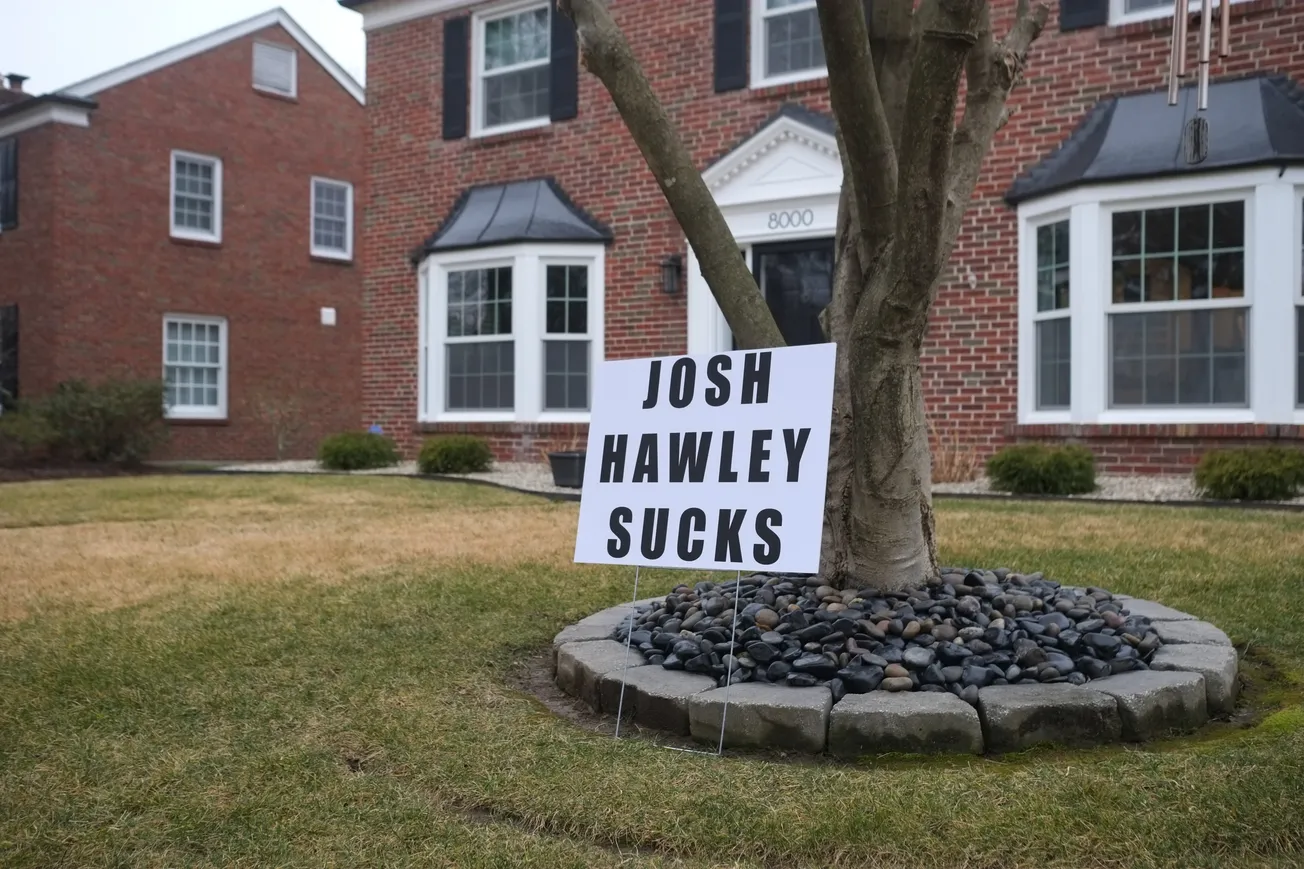
Missouri Senator Josh Hawley has been vocal about his frustration with the Food and Drug Administration’s refusal, thus far, to reinstate old restrictions on the abortion drug mifepristone. Recently, he said he felt it was time for Congress to act, and wouldn’t you know it, he’s introduced a new bill. The ‘‘Safeguarding Women from Chemical Abortion Act,’’ or Senate Bill 4066, would withdraw the FDA’s approval of mifepristone for use in pregnancy termination. It would also allow people to sue for damages in federal court over “harm to women caused by chemical abortion drugs.” Hawley was accompanied at the press conference by his wife, Erin, as well as the CEOs of Alliance Defending Freedom and Susan B. Anthony Pro-Life America. This bill is not likely to pass Congress—but it is probably a sign that Hawley wants to run for president.
Relatedly, the FDA filed a response in one of three ongoing lawsuits brought by anti-abortion Attorneys General over its regulation of mifepristone. In this case, filed by Florida and Texas, the agency asked a judge to either dismiss the lawsuit, or pause it pending a politicized “review” of mifepristone’s safety. The FDA recently made the same request in a lawsuit led by the state of Missouri, whereas it has asked only to pause a case in Louisiana. Erin Hawley is representing Louisiana in its case against the FDA.
State news
A West Virginia House committee advanced a bill that would allow crisis pregnancy centers to use state funds to pay for unproven and potentially dangerous abortion pill “reversal” treatments.
The Oklahoma House passed HB 3194, a bill that would drastically limit oversight of crisis pregnancy centers. Wyoming Governor Mark Gordon signed a similar bill, based on model legislation from Alliance Defending Freedom. The New Hampshire House also passed a version of the bill, as did the Kansas legislature, though it may get a veto from pro-choice Governor Laura Kelly.
New Hampshire legislators also voted down a 20-week abortion ban, an attempt to remove “buffer zones” around reproductive health facilities, and a bill that would have required pharmacies to tell patients it’s possible to “reverse” medication abortion.
As expected, the same group of abortion providers and advocates that successfully challenged a total abortion ban and a medication abortion ban in Wyoming are fighting the state’s new six-week ban in court. They asked a judge to roll this new law into an existing case challenging other abortion restrictions, including a transvaginal ultrasound requirement, 48-hour forced waiting period, and a requirement that abortion clinics be licensed ambulatory surgical centers. The judge has already blocked these other restrictions while legal proceedings continue, but the six-week ban went into effect immediately, and it will remain in force unless or until the judge temporarily blocks it.
In a case heard by the Supreme Court this term, a group of crisis pregnancy centers in New Jersey is suing Attorney General Matt Platkin over his attempt to investigate them for potential fraud. They’re expected to win, so this year, state lawmakers filed A1679, a bill intended to take another shot at limiting CPCs’ deceptive advertising practices. In an effort to head off the anti-abortion centers’ likely argument that the bill targets them based on their religious beliefs, lawmakers broadened the bill so that it would apply to all health providers. But advocates say it’s a mistake to include providers of legitimate health services in a law intended to target facilities that advertise medical services and don’t actually provide them.
A New Jersey Assembly committee advanced five bills that would strengthen protections for abortion access, including the above mentioned deceptive advertising bill. Other measures would stop abortion ban states from using license plate readers to track patients traveling to New Jersey; protect access to assistive reproductive technology like in-vitro fertilization; issue a travel advisory for New Jersey residents about the risks of traveling to states that restrict abortion, and enter New Jersey into a “reproductive healthcare compact” with other states that agree to protect abortion providers and abortion seekers. However, anti-abortion groups showed up to the hearing to argue that these bills would benefit human traffickers.
Legislatures in at least eight states—Kentucky, Missouri, New Hampshire, Oklahoma, Rhode Island, South Carolina, Utah, and West Virginia—are considering bills that would expand medical professionals’ right to deny patients care based on their “conscience” or religion.
Washington was one of several states that stockpiled mifepristone back in 2023 as a protection against any federal policy changes that could make it less accessible. But some of the stockpile expired earlier this year. State law currently requires that pills be sold for at least the price they were purchased for, plus $5 per dose. As a result, it didn’t make sense for abortion providers to buy them, because they’d be paying more than they normally do. Now, a bill eliminating the requirement for the state to be paid for the pills has passed the legislature. If Governor Bob Ferguson signs SB 5917 into law, Washington will be able to distribute the rest of its stockpile for free.
A new Republican-sponsored bill in Louisiana, HB 288, would require healthcare providers to include in medical records the word “miscarriage” after “spontaneous abortion”—the medical term for miscarriage. (It’s similar to a Utah bill that would require doctors to note an abortion “was not elective” if it was done in certain medically indicated circumstances.) Louisiana Democrats, on the other hand, are trying to rein in crisis pregnancy centers: HB 611 would require CPCs to be licensed by the state health department. Another bill, HB 931, would prevent contractors and subcontractors of the state’s Pregnancy and Baby Care Initiative—a CPC funding program that has come under fire for lack of appropriate oversight—from “conditioning services on religious requirements.” Companion bill HB 897 would strengthen privacy protections for clients of state-funded CPCs; these organizations are often not bound by the healthcare privacy law HIPAA.
Personhood watch
Some Florida hospitals illustrate the horrifying realities of fetal personhood: People in labor who’ve refused cesarean sections have been forced into court-ordered surgeries. The nonconsensual procedures happened because lawyers petitioned judges that the pregnant person's medical decisions threatened the life of the fetus. As ProPublica reports, women have been forced to participate in emergency court hearings from their hospital beds. “Pregnancy is the only condition where Florida courts have ruled that a patient can be forced to undergo unwanted treatment,” the outlet notes. “Even a state prisoner on a hunger strike has more rights to make medical decisions.”
A Kansas Republican is trying to ban abortion in the state via a ballot proposal that he’s offensively calling an “equal rights amendment.” The text of Sen. Mike Thompson’s proposal says it seeks to “clearly guarantee the equal rights of men and women, beginning at conception.” If adopted, that would mean a total ban on abortion and possible limits on access to IVF and some forms of birth control—not very equal rights-y for people who can get pregnant. Kansas voters would seem to oppose this, as they voted down a 2022 effort to strip the state’s abortion protections, weeks after the fall of Roe v. Wade.
A Kentucky grand jury indicted a former college student for first-degree manslaughter after police say they found fetal remains in her campus home in August. The woman was initially arrested for abuse of a corpse, concealing a birth, and tampering with evidence, and the grand jury indicted her on those charges as well. Fayette County Commonwealth Attorney Kimberly Baird said her office had been waiting for an autopsy report and told local news that the fetus died “from asphyxia through unknown means.” Authorities have released few details about the case, but Baird claimed—without citing specific evidence—that this is not about a miscarriage or abortion: “I have been aware that people have thought, you know, whether it was a miscarriage or that we, you know, she was attempting an abortion and we’re prosecuting. It was not that,” she said.
We’ve reported on how charges like concealing a birth and abuse of a corpse are misused to criminalize pregnancy outcomes. Some of these laws date back to the 1600s, but in 2026, “we’re seeing women who are, all of a sudden, villains in their own tragedies, and their mugshot is plastered all over the news before they can even launch their defenses,” Pregnancy Justice’s Kulsoom Ijaz told HuffPost.
Republican lawmakers in Arizona want pregnant people to be able to receive child support from the moment they get a positive pregnancy test. Don’t be fooled—this is nothing more than a way to enshrine fetal personhood into state law.
First Amendment watch
The Arizona House passed a bill that says public universities or their employees “may not encourage or facilitate abortions”—wording so unclear it could apply to counseling at student health centers. As we’ve explained, the state already bars public facilities from performing abortions, but the sponsor of House Bill 2060 says she wants to ban abortion information and referrals on campus. "Those taxpayer dollars should not be used to directly or indirectly promote or assist an intentional ending of a ‘preborn’ life,'' state Rep. Rachel Keshel said earlier this year. The bill now proceeds to the Senate, but would undoubtedly be vetoed by Governor Katie Hobbs (D).
Assaults on queer people
The Fourth Circuit Court of Appeals ruled that West Virginia can ban Medicaid coverage of gender-affirming surgeries for people of any age, overturning a judge’s ruling saying the ban violated anti-discrimination protections. Last week’s decision absurdly argues that the ban doesn’t discriminate against transgender people because it applies to care intended to treat gender dysphoria, and doesn’t ban care because patients identify as trans. Never mind that only trans people get diagnosed with gender dysphoria. The judges cited as the basis for their rhetorical gymnastics the 2025 Skrmetti decision, which upheld Tennessee's ban on care for trans minors. While more than a dozen states prohibit or limit Medicaid coverage of the care, this is the first federal appeals court to uphold such a restriction. The case was heard by a panel of three judges, and civil rights attorney Joshua Ehrlich wrote on Bluesky that there was “no way this survives en banc,” or a full panel of judges. However, even if the state does lose before a full panel, it could appeal to the Supreme Court.
The Texas Supreme Court ruled that Attorney General Ken Paxton can require an LGBTQ advocacy organization to turn over certain records. The dispute dates back to 2023 and an unsuccessful lawsuit against a ban on gender-affirming care for minors. The group PFLAG wrote in an affidavit in support of the suit that families of transgender adolescents were discussing “contingency plans” and “alternative avenues to maintain care in Texas.” Paxton is needlessly investigating whether medical providers have misled insurers about treatments provided to trans minors, and he jumped on the PFLAG statement as evidence that doctors could be breaking the law. The document request now goes back to a lower court to hash out the details.
A judge ordered health insurance company Aetna to reconsider its policy to categorically deny coverage of gender-affirming facial reconstruction surgeries as “cosmetic” procedures. Two transgender women argued in a 2024 lawsuit that the surgeries are medically necessary and that Aetna’s policy constitutes unlawful sex discrimination under Section 1557 of the Affordable Care Act. The plaintiffs say Aetna has covered similar procedures at the request of cisgender patients.
The Lemkin Institute for Genocide Prevention issued a third red flag alert for transgender people in the U.S., saying it believes the country “is squarely within the early to middle stages of a genocidal process against trans people, the goal of which is to completely erase transgender people not only from public life but also from existence in the U.S. and globally.” They said 2025 was the sixth consecutive year that lawmakers broke records with the number of anti-trans bills introduced, and cited the recent law in Kansas that invalidated trans people’s driver’s licenses.
The Idaho House approved a resolution that urges the Supreme Court to reverse its 2015 marriage equality decision, known as Obergefell v. Hodges. As we told you earlier this month, the move is purely symbolic, but a legitimate legal threat is brewing thanks to a federal lawsuit filed on behalf of a Waco, Texas, justice of the peace who refused to marry gay couples.
Quick hits
- The Marshall Project covered how hospitals helped erode reproductive rights: “Criminal prosecutions sparked by hospital drug testing helped advance the legal concept that the fetus had interests the state could protect.”
- Costco announced a partnership that will allow its members to access prescription fertility treatment medications at steep discounts, including Follistim, a drug that stimulates the ovaries to produce eggs.
- A new study in the journal Contraception found that there was a “statistically significant increase” in the use of lidocaine—a topical anesthetic—and opioid pain relievers on the day of IUD placement after the Centers for Disease Control and Prevention adopted new guidelines encouraging proper pain relief in 2024. However, as of 2025, a staggering 95 percent of IUD recipients still did not receive either of these pain control methods.
- States with abortion bans have lower rental prices and higher vacancy rates, suggesting people don’t want to live there. A new paper from the National Bureau of Economic Research found that bans had an “economically meaningful and statistically significant” effect on rental markets.
- Far-right activists in Colorado are trying to send two anti-transgender ballot measures to voters this fall. The proposals would ban trans kids from obtaining gender-affirming surgeries and prohibit trans girls from playing on girls’ sports teams.
- The DOJ gave the Department of Veterans Affairs the power to initiate legal guardianships in state court for veterans who have no family, and are homeless or “at risk of homelessness.” The administration has said it wants to increase involuntary treatment or institutionalization for people with mental illness and drug addiction.
Actual good news
New Mexico will become the first state in the U.S. to have universal childcare after Governor Michelle Lujan Grisham signed Senate Bill 241 into law, setting up funding for one of her legislative priorities.
Palate cleanser
We love this diva.
@minatobias 10/10 in my heart though #dog #chihuahua #pet ♬ original sound - mina tobias
And this one.
@nataliireynoldss they are so obsessed with me… #fyp #nataliereynolds ♬ original sound - Natalie Reynolds
Follow Autonomy News on Instagram, Bluesky, TikTok, and LinkedIn.