President Donald Trump is wrong about many things, but he does understand that abortion bans are deeply unpopular.
Trump knows implicitly that the Supreme Court overturning Roe v. Wade was bad politics for Republicans—even blaming “the abortion issue” for his party’s performance in the 2022 midterm elections months later. During his 2024 campaign, he desperately worked to triangulate a stance on abortion that wouldn’t scare off swing voters, but would somehow still keep religious conservatives happy. Trump landed on a pledge to "leave abortion to the states," despite the fact that right-wing activists openly plotted nationwide restrictions with Roe out of the way.
His tightrope walk got him back into office, but now he’s confronting an anti-abortion movement clamoring for more action at the same time he stares down the approaching November 2026 elections. The outcome of the midterms could change the course of Trump’s presidency with a fresh impeachment, so he’s once again working to give people a false sense of security about abortion access. And a new legal filing underscores how desperate the administration is to keep the topic out of the headlines in this crucial election year.
On Tuesday, the Food and Drug Administration responded to a lawsuit filed by Louisiana that seeks to end telehealth prescriptions of the abortion pill mifepristone and restore unnecessary in-person appointments nationwide. The FDA asked the judge to pause the litigation until it completes a safety review of the drug—a review that activists and lawmakers pressured it to undertake. The agency said in its filing that the review could take a year, and that it was important not to have court rulings in the meantime that could disturb access.
This request comes weeks after Bloomberg reported that FDA Commissioner Marty Makary personally intervened to delay completion of the review until after the midterms. In September, Makary had told several Republican Attorneys General that the review was underway, but it’s not clear when it began or how much progress was made.
There is absolutely no need for a safety review of mifepristone, as more than 100 studies have found that it’s a safe and effective way to end a pregnancy—including when prescribed via telehealth. (Mifepristone is used alongside a second medication, misoprostol, for abortion care, and the two-drug combination is also used to manage miscarriages.) But anti-abortion groups pressured the hardest-right lawmakers to take up the cause with help from a flawed data analysis which suggested that medication abortion is far more dangerous than these high-quality studies would suggest. This widely criticized, non-peer reviewed paper was published by the Ethics and Public Policy Center, an advisory board member of Project 2025.
In this week’s court filing, the FDA left the door open: It could ultimately decide to end telemedicine abortions separate from this lawsuit. Louisiana’s “requested relief may prove as unnecessary as it is disruptive, if FDA ultimately decides that the in-person dispensing requirement must be restored,” the agency’s lawyers wrote. In other words, this is a punt, not a win. “Don’t be fooled: the Trump administration isn’t defending medication abortion—it’s just defending its own authority to restrict access to mifepristone if, when, and how it sees fit,” said Julia Kaye, senior staff attorney with the ACLU Reproductive Freedom Project.
The fact that, for now, the FDA is asking to preserve the status quo is important. The White House seems to believe it’s a bigger risk to alienate moderate voters than it is to upset abortion opponents who will likely vote Republican no matter what. Anonymous aides have said as much in response to anti-abortion groups threatening to withhold get-out-the-vote-efforts. The administration doesn't want any changes to abortion pill access before the midterms, when Republicans are expected to lose control of the House, and possibly lose seats in the Senate.
Loss of the House would ensure that Democrats impeach Trump again. The president knows it, and he has even tied his fate to abortion. When speaking to Republican House members earlier this month, Trump explicitly invoked this threat. “If we don't win the midterms, it's just going to be—I mean, they'll find a reason to impeach me. I'll get impeached," Trump said. It was during that meeting that he told lawmakers they needed to be "flexible" on the anti-abortion Hyde Amendment when it came to Affordable Care Act insurance plans, drawing the ire of anti-abortion groups.
Republicans are likely to lose the House no matter what, but Trump is taking absolutely no chances. He is trying to stage-direct the legislative branch on abortion while also trying to pump the breaks on the judicial branch. But the Louisiana lawsuit—like the Ethics and Public Policy Center paper and mifepristone safety review—come straight from the broader conservative movement that propelled Trump into office. And that movement is not content with the status quo.
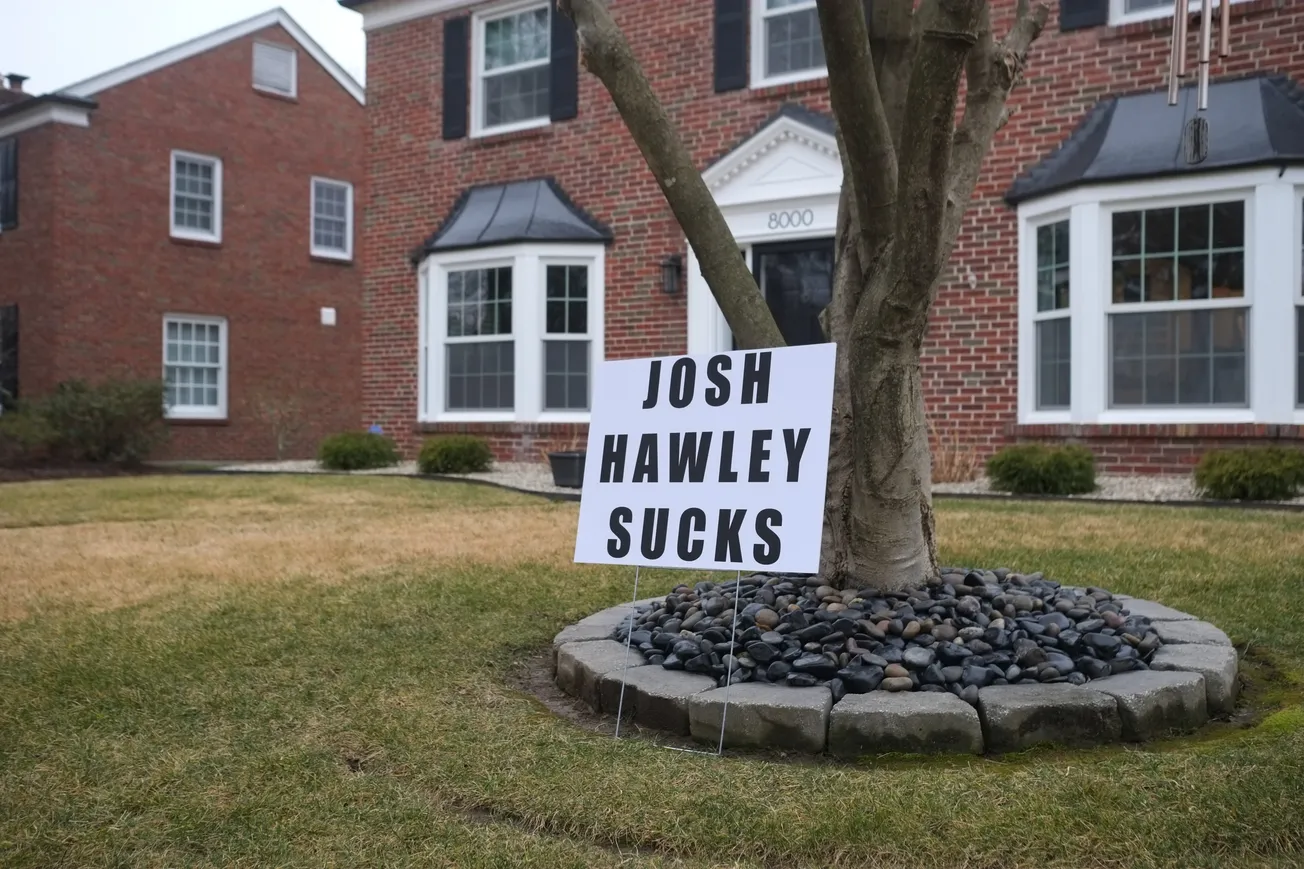
Representing Louisiana is Alliance Defending Freedom, a Christian nationalist law firm that was also on the Project 2025 advisory board, and filed the first lawsuit against the FDA seeking to restrict mifepristone in 2022. Specifically, the lead ADF attorney on the case is Erin Hawley, wife of Sen. Josh Hawley, the lawmaker who’s been leading the charge to force the FDA to restrict mifepristone.
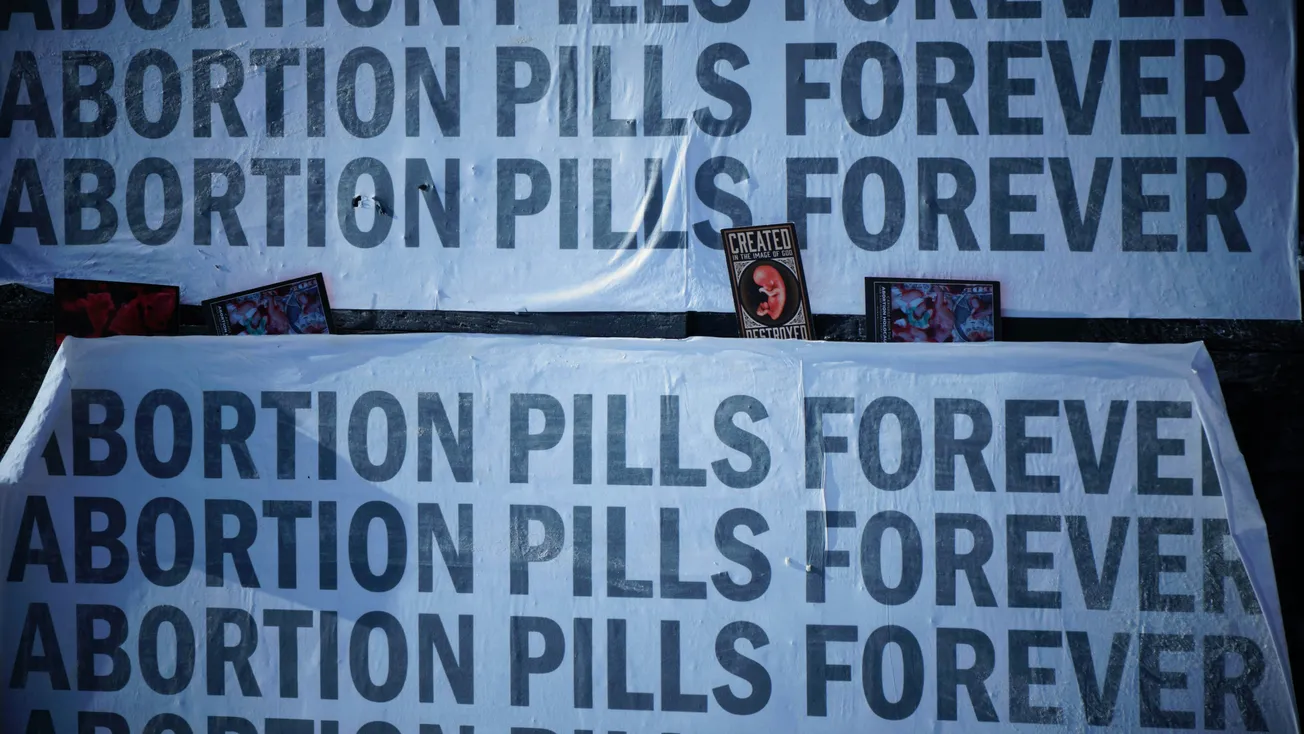
Medication abortion is essential to access across the country, and telemedicine “shield laws” are allowing doctors in states where abortion is still legal to prescribe the pills to people in states with bans. The availability of mifepristone by mail has contributed to an increase in the number of abortions nationwide, a fact that has enraged conservatives. A key goal of Project 2025 was to end telehealth prescriptions of the drug, if not revoke its FDA approval entirely.
Ending telehealth prescriptions, which make up more than 1 in 4 reported abortions, would be a huge blow to access—and would be deeply unpopular, as Trump is well aware. It would also contradict Trump's campaign pledge to "leave abortion to the states," because this federal change would override laws even in states where abortion remains broadly legal, or is even a right codified in state constitutions.
So Trump is returning to his 2024 tactic: downplaying the risks of nationwide abortion restrictions in order to win votes.
Trump gaslit voters about his abortion stance during the 2024 campaign, saying in April that he wanted to keep abortion a state matter and that, while it was an important issue, conservatives also had an obligation to win elections. He meant he wouldn’t commit to federal restrictions because it could prevent him from returning to power. That fall, Trump said several times that women voters “will no longer be thinking about abortion.” He was desperate for people to believe abortion access wouldn't get worse if they voted for him. However, during his only debate with Vice President Kamala Harris, Trump twice declined to say whether he’d veto an abortion ban. He claimed that such a law would never pass Congress.
Trump did this abortion dance in part because he knew winning in 2024 would give him a legal shield: Sitting presidents can’t be prosecuted, meaning he would avoid trials in the criminal cases against him and stay out of prison.
At the same time, Trump has been trying to string along the anti-abortion faithful. A few weeks after winning the election, Trump said it would be “highly unlikely” that his administration would restrict access to mifepristone, but he refused to be definitive. “I guess I could say probably as close to ruling it out as possible, but I don’t want to,” he said. Later in December, he said he probably wouldn’t take action on abortion pills, but couldn’t promise anything because “things change.” Then, during Robert F. Kennedy Jr.’s confirmation hearing in January 2025, he said Trump asked him to study the safety of the drug. And here we are.
Trump has been transactional on abortion since at least 2016, and no one should expect him to change now. The promised FDA review is a purely political act meant to assuage conservatives that restrictions are likely coming without damaging the GOP’s electoral prospects. And now the agency is citing the sham review in court to slow down litigation the administration is worried about.
If the FDA restricts mifepristone in 2027, Trump will have repaid his supporters, and he’ll be free from dealing with the fallout.
This story was edited and fact checked by Garnet Henderson.
Follow Autonomy News on Instagram, Bluesky, TikTok, and LinkedIn.