Table of Contents
Welcome to the latest edition of our weekly roundup. Every Monday, we’ll send you a summary of the biggest stories about bodily autonomy. We’ll also include links to pieces that Garnet or Susan have published.
If you’d prefer to receive a single email every week, you can do that—we love autonomy. You can manage your subscriptions by navigating to the site, clicking on “Account” in the upper right, then under “Emails,” select “Manage.” You can toggle off “Autonomy News” to receive only the roundup, or vice versa.
Let’s dive in.
On Autonomy News
In these final days of the year, we have just $13,000 left to raise to hit our stretch goal of $75,000. Your gift will help us pay ourselves a living wage, and keep our work sustainable in 2026. Enjoying these roundups? Make a tax-deductible donation today!
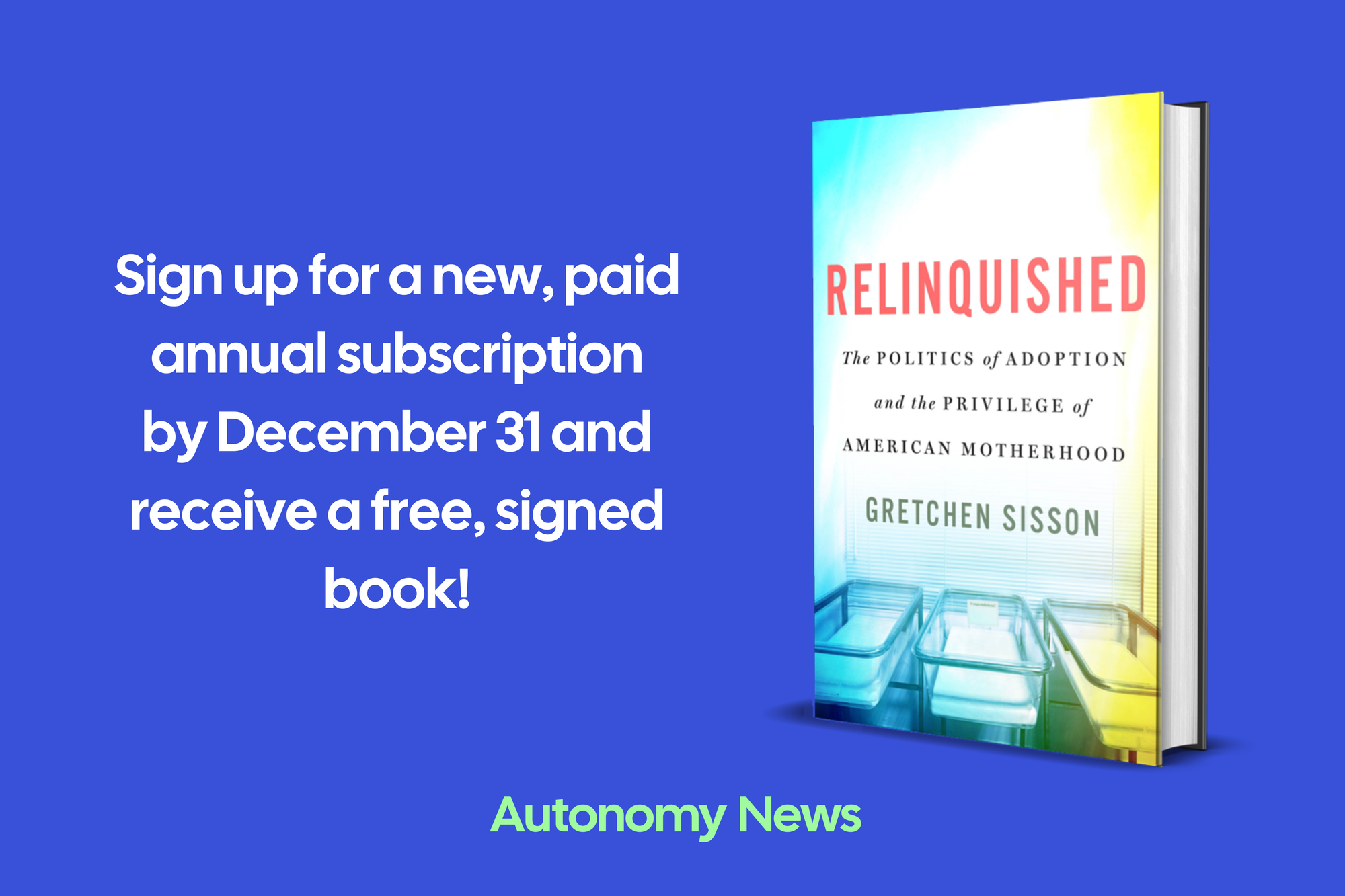
Another great way you can support us is by upgrading to a paid subscription. And remember, if you start a new, paid annual subscription before the end of the year, you’ll receive a free, signed copy of researcher and Autonomy News subscriber Gretchen Sisson’s book Relinquished: The Politics of Adoption and the Privilege of American Motherhood.
Federal news
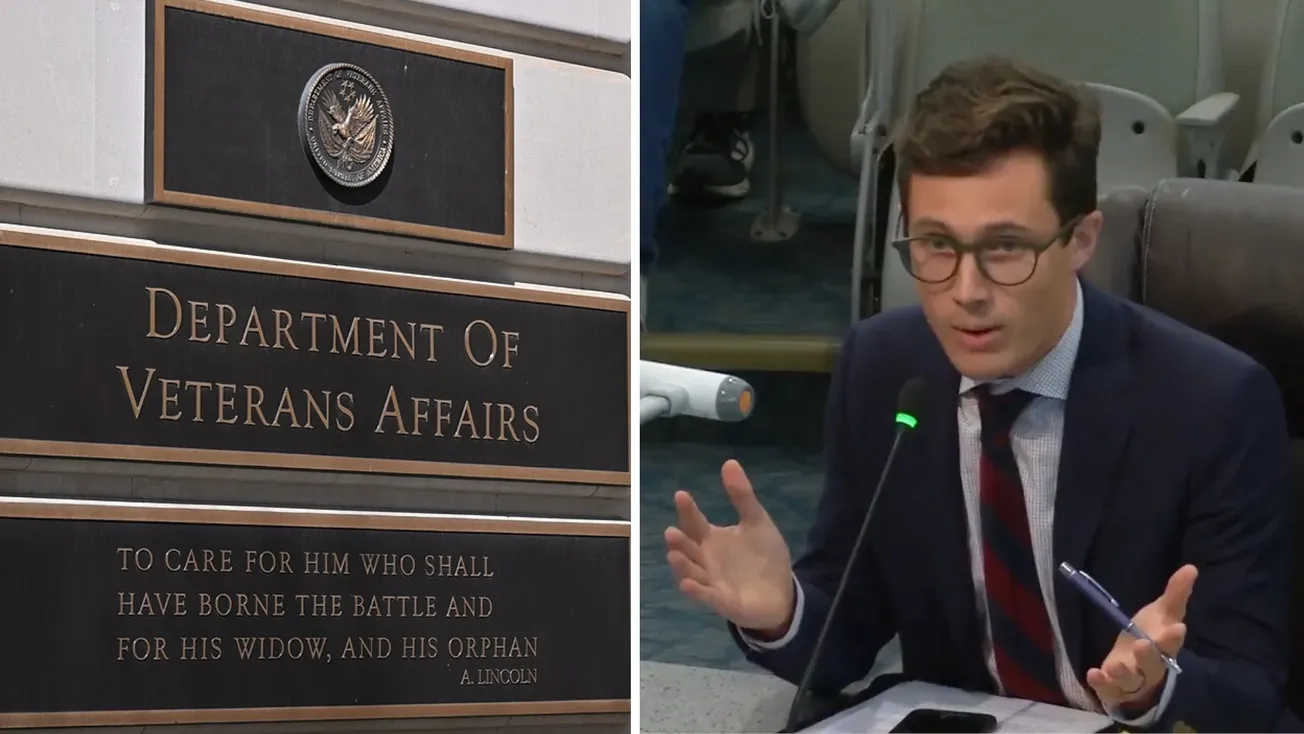
The Department of Veterans Affairs reimplemented a near-total abortion ban, ending a Biden-era policy that allowed the VA to provide abortion counseling and services to veterans and their dependents whose health was endangered by a pregnancy, or who became pregnant as a result of rape or incest. The change was the result of a memo from the Justice Department’s Office of Legal Counsel, which helps the White House interpret the Constitution. The VA had proposed a new rule to end these limited abortions in August, and the OLC published its memo on December 18, despite the fact that the federal rulemaking process is still technically ongoing. Internal VA guidance sent last week said that the health system can still provide abortions in “life-threatening circumstances, including treatment for ectopic pregnancies or miscarriages”—but people’s health can deteriorate so rapidly that these exceptions are often useless. The author of the OLC memo is deputy assistant attorney general Josh Craddock, whose appointment we warned about in July. Craddock is a strong proponent of fetal personhood, the dangerous idea that the 14th Amendment constitutes a nationwide abortion ban. He co-authored an Americans United for Life proposal for how the U.S. president could enshrine fetal personhood via executive order. He also supports weaponizing the Comstock Act of 1873 to ban abortion pills, and he could be instrumental in overturning Biden-era OLC guidance that allows pills to be mailed to states with bans.
A coalition of 19 states has sued to block a proposed rule that would withhold all Medicaid and Medicare payments to hospitals that provide youth gender-affirming care, whether or not federal funds are paying for the care. Many of the same states had already sued the Trump administration in August after several anti-trans executive orders led more than 20 hospitals to stop providing gender-affirming care to minors.
Last week, the American Academy of Pediatrics lost several government grants from the Department of Health and Human Services due to its use of “identity-based language,” per the agency. Now, the AAP has sued in an effort to reverse the decision and restore about $12 million in funding.
Bethany Kozma was recently appointed to head the HHS Office of Global Affairs, effectively making her the country’s top health diplomat, particularly in the wake of Trump’s gutting of the United States Agency for International Development (USAID). She has no background in global health, but does have a history of calling abortion “murder” and campaigning against gender-affirming care. She started her career as a staffer at the White House Homeland Security Council under President George W. Bush, and served as a senior adviser for gender equality and women's empowerment at USAID during the first Trump administration. What did she do after Trump lost in 2020? Help develop Project 2025, of course. She was a major fixture in the Project 2025 training videos obtained and published by ProPublica.

State news
Twenty-one towns and eight counties in Texas passed “Sanctuary City for the Unborn” ordinances this year, bringing the total to 74 cities and 14 counties since activist Mark Lee Dickson started the campaign in 2019. While these ordinances are theoretically local abortion bans, they aren’t really enforceable, and abortion is illegal in Texas, anyway. However, they do serve to create fear and stigma around abortion, and increasingly, activists are talking about using them to enforce bans on abortion travel—which they refer to as “abortion trafficking.” Where local sheriffs or police chiefs oppose abortion, that strategy could actually work.
Pennsylvania lawmakers have introduced bills to repeal the state’s biased “informed consent” requirements for abortion, as well as an unnecessary 24-hour waiting period. They also introduced a state version of the federal Freedom of Access to Clinic Entrances Act to cut down on clinic harassment. These bills are separate from an effort to put abortion rights to a statewide vote, which recently passed the House, though a constitutional amendment faces steep odds in the state Senate.
We told you recently that South Dakota’s attorney general sent a cease-and-desist letter to Mayday Health, a group that shares information about how to get abortion pills. AG Marty Jackley has now asked a judge for a court order to halt Mayday’s campaign in the state, which bans abortion in almost all circumstances. The nonprofit was set to begin a gas station advertising campaign with ads that read: “Pregnant? Don’t want to be?” and include the url for Mayday’s website, which in turn features links to online abortion pill providers. The organization insists the information is First Amendment-protected free speech.
Assaults on queer people
A federal judge in Pennsylvania has become the fifth to rule against the Department of Justice in its attempts to subpoena identifying patient information from providers of gender-affirming care. District Judge Cathy Bissoon blocked parts of an invasive subpoena sent to University of Pittsburgh Medical Center, though she limited her ruling to the parts that sought patient information. Back in November, Garnet reported on another of these subpoenas, which was quashed by a Washington judge in its entirety. That one was sent to QueerDoc, the only small, independent provider known to have received one. Chris Geidner at Law Dork points out that a filing in the UPMC case reveals the DOJ has moderated its requests in an apparent response to its many losses. A DOJ lawyer told UPMC’s attorneys that the agency would accept fully anonymized patient records—but even that didn’t pass muster with Bissoon, who shot down the government’s demands for patient information wholesale.
A federal appeals court temporarily blocked a lower court ruling that would force California public school teachers to out trans kids to their parents. Last Monday, District Judge Roger Benitez sided with conservative plaintiffs who challenged Escondido Union School District’s policy of using students’ correct pronouns, and not telling their parents about pronoun changes without consent. (The plaintiffs are represented by the anti-abortion Thomas More Society.) But Benitez, an ultraconservative George W. Bush appointee, also approved class-action litigation, saying his order applied statewide. However, on Friday, the Ninth Circuit Court of Appeals blocked Benitez’s ruling and preserved the status quo for one week. Last year, Gov. Gavin Newsom signed the SAFETY Act, which bans school districts from requiring staff to disclose a student’s sexual orientation or gender identity to their parents, nullifying mandatory notification policies that had been adopted by several school districts. The law prompted right-wing fury from Elon Musk and others, who falsely claimed that schools were transitioning kids without their parents’ consent. Of course, using students’ correct names and pronouns is not “transitioning” them.
Quick hits
- While the 2026 elections will bring fewer abortion-related ballot measures than the 2024 cycle did, two in “red” states—Missouri and Idaho—could be consequential, and will likely be the subject of continued legal battles.
- Relatedly, Right to Life of Michigan and a cohort of anti-abortion parents are asking a judge to reinstate their previously dismissed lawsuit against Michigan’s voter-approved 2022 reproductive freedom constitutional amendment, claiming it violates the federal constitution.
- Preparing for a natural disaster? Don’t forget your birth control. Few states include sexual and reproductive health supplies in emergency checklist recommendations.
- The Mormon church has updated some of the language about abortion in its handbook for lay priesthood, clarifying that people who seek forgiveness can be absolved of the sin of having an abortion. Thanks?
- A new study found that teens were significantly less likely to report receiving person-centered contraceptive counseling—meaning counseling that focuses on respecting a patient’s values and preferences—compared to older patients. However, those who did receive PCCC were more likely to actually use their preferred birth control method.
Actual good news
International abortion pill provider Women Help Women worked directly with drugmakers in India to produce a medication abortion blister pack that contains more misoprostol than those currently on the market. Existing combipacks have one mifepristone pill and four misoprostol pills, but WHW designed a pack with eight miso tablets for use up to 12 weeks of pregnancy. Sadly, WHW does not serve U.S. patients.
Palate cleanser(s)
We’re all talking about your bum behavior.
@sophiawpelton #boyfriend #fyp #comedy ♬ original sound - Soph
The goose is a good judge of character.
@sophias_sewingroom #americangirl #americangirldoll #americangirldollcollector #americangirlmolly #pleasantcompany ♬ original sound - Cranky✨
Follow Autonomy News on Instagram, Bluesky, TikTok, and LinkedIn.