Autonomy News is a reader-funded, independent publication. Please consider becoming a paid subscriber or making a gift from a donor-advised fund today.
Ten years ago we boarded an evening flight home to New York, exhausted and nervous. That morning, we had gone to the Boulder Abortion Clinic, where Dr. Warren Hern administered an injection to end my pregnancy. Settling into a window seat next to my husband, Garin, I looked around, wondering if anyone else on the plane could sense what we were carrying. At 32 weeks, I was preparing to be induced the next day in order to deliver my stillborn baby in a New York City hospital. I remember feeling like a human tomb.
At the time, I had not yet become a weathered abortion rights advocate who had the politically respectable language to describe my experience. I was in a haze navigating a heartbreaking end to a very hard pregnancy, while squaring with the reality that I was having a so-called “late-term abortion.” All I knew was that women like me were vilified and stigmatized. That knowledge added rage to the baseline indignities I experienced trying to access this care, like having to fly to Colorado for a shot I couldn’t legally access in New York, and the fact that my insurance wouldn’t cover it—to the tune of $10,000. My only response was to share my story hoping to warn others. And so I did.
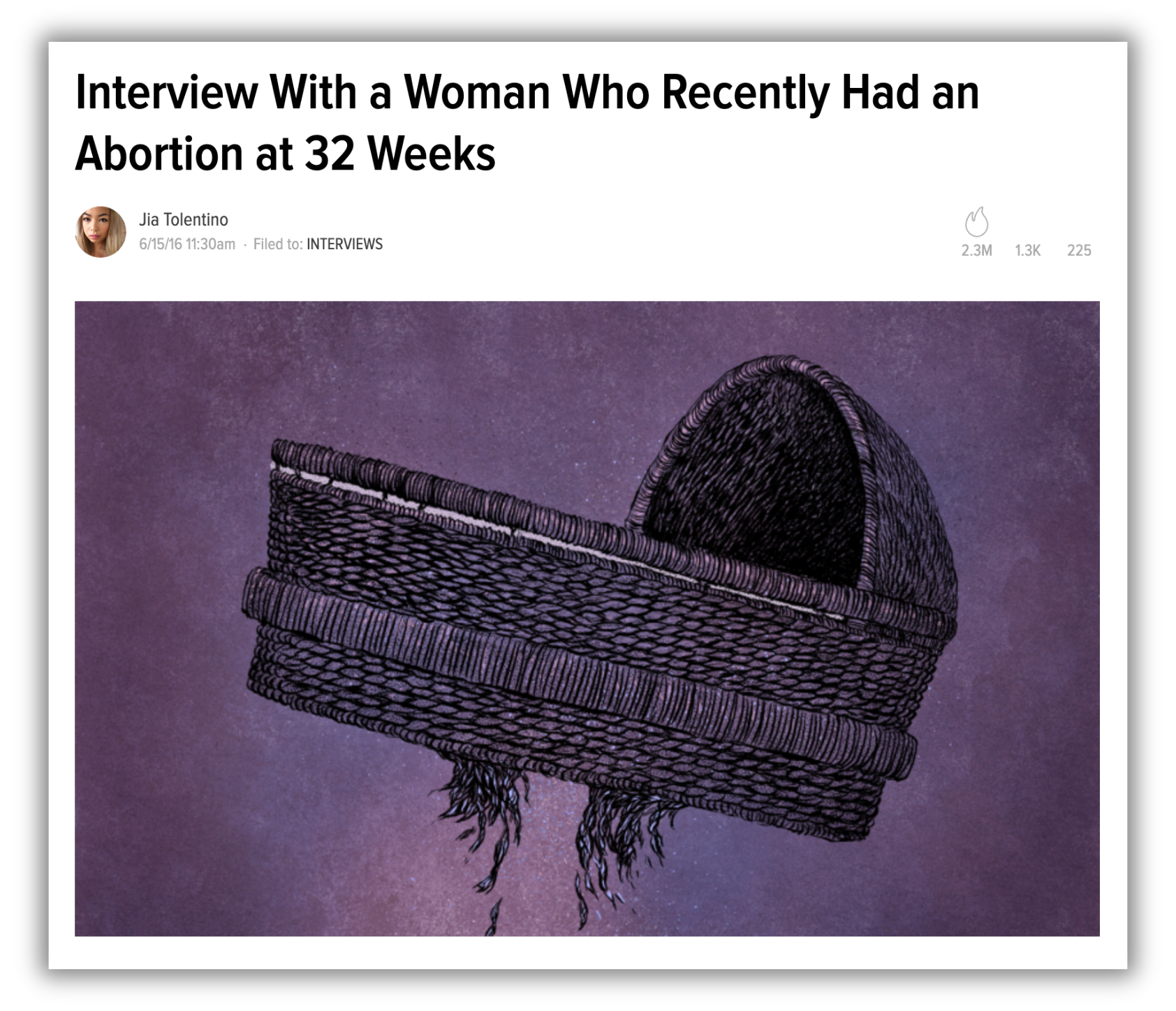
Shortly after my 32-week abortion, I shared my story publicly with Jezebel under a pseudonym. I wanted the world to know that New York and other progressive states had harmful laws that made it harder, not easier, for abortion seekers in my position. When my story first ran, more than a million people read it. That October, Donald Trump took to the presidential debate stage, flaming anti-abortion fever dreams and ranting, “They take the baby and rip the baby out of the womb. In the ninth month.” My story quickly reached two million readers. People were looking for a way to make sense of what they were hearing about later abortion from politicians.
Like the millions who read my story, sharing my experience helped me to reconcile rhetoric with reality. In the coming years, Garin and I became public advocates co-founding Patient Forward, the nation’s first national advocacy organization focused on eliminating legal, financial, and social barriers to later abortion care. But the journey from patient to advocate was not a straight line, and probably never will be. We make mistakes. We also learn from them and continue to evolve. Advocating for a complicated issue requires us to do better once we know better.
In the very beginning, we spent a few years volunteering our time to advance a then-stalled New York bill called the Reproductive Health Act (RHA). The RHA aimed to bring New York’s state law in compliance with Roe v. Wade’s federal protections for abortion, limited at potential fetal viability. Roe included exceptions for situations like mine where there was a serious threat to the health of the fetus or the pregnant person; New York State did not have these exceptions. At the time, as non-professionals, we still believed that exceptions in abortion bans actually protected people.
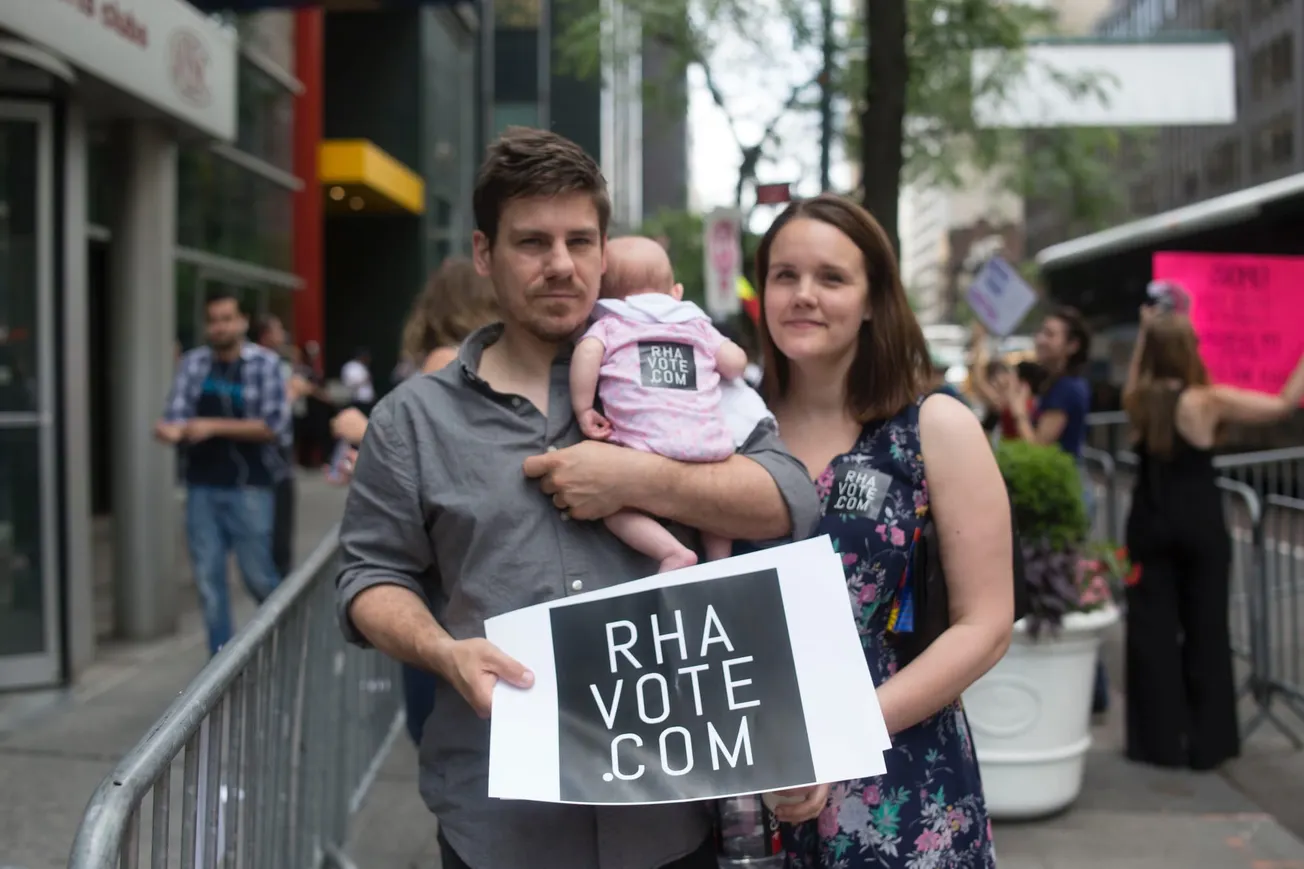
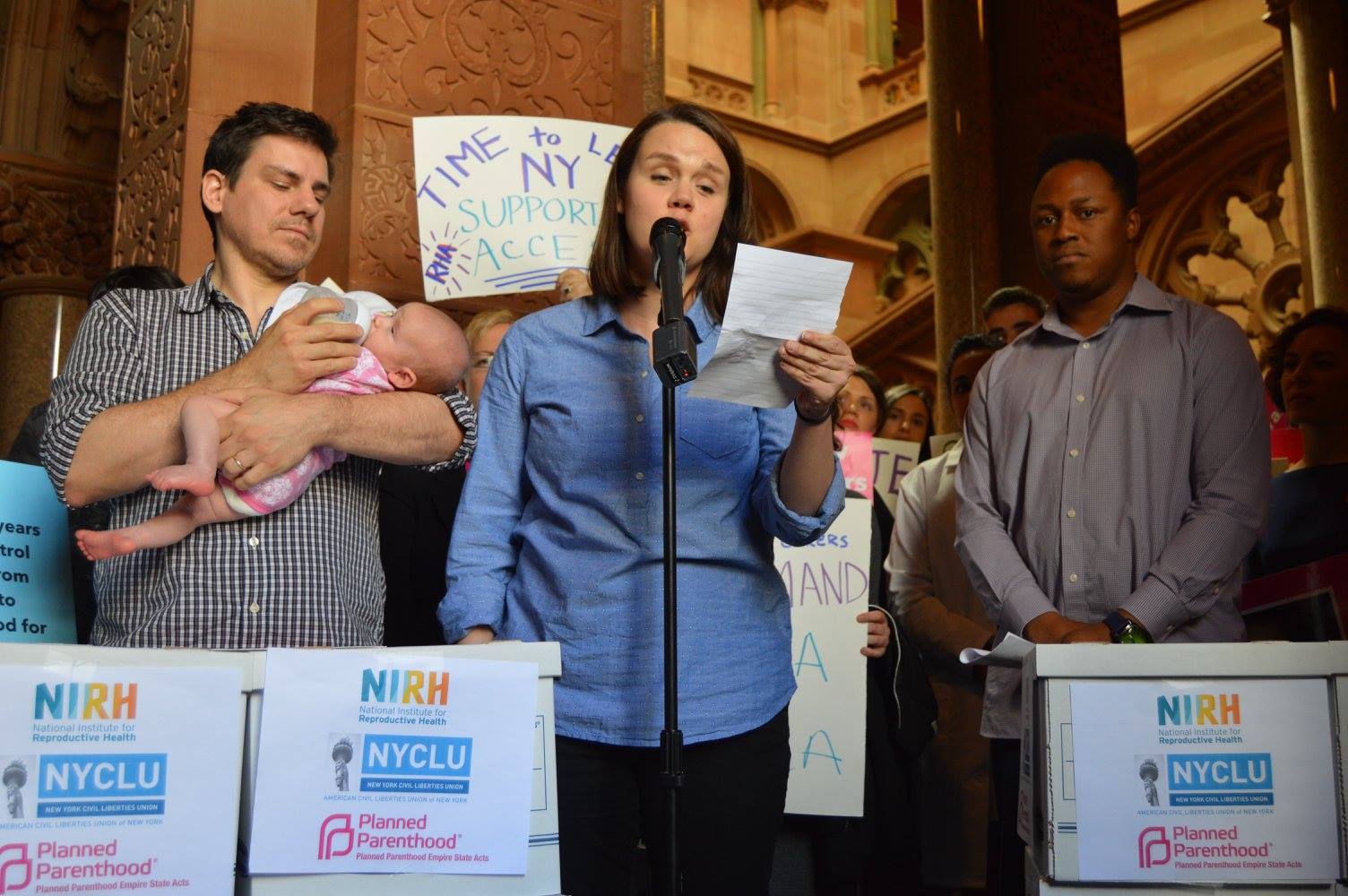
We established RHAVote, the grassroots home for the RHA. During this time, we welcomed our daughter to the world and toted her all across New York state while we told our abortion story hundreds of times in service of passing this legislation. We did pop-ups and experiential marketing schemes. We protested, we rallied, we petitioned, we created media opportunities.
At the same time, we began meeting other later abortion patients from New York and across the country whose experience had nothing to do with a fetal diagnosis. I met a woman whose severe nausea from cancer treatments masked her pregnancy symptoms, so despite regular appointments with her doctors, no one thought to give her a pregnancy test until she was already six months along. I met parents whose high-performing teenage athlete had irregular menstrual cycles, which led to her pregnancy being detected much later. There was a woman who learned she was eight weeks pregnant while in treatment for a substance use disorder. She had zero dollars in her bank account. While she tried to find a job so she could pay for an abortion, she didn’t know the price was also rising with each week. By the time she told her therapist what she was going through and he could offer resources to help, she had reached the third trimester. The $400 abortion she could have had at eight weeks was now a $20,000, multi-day procedure paid for by abortion funds running on grassroots donations.
Advocating for a complicated issue requires us to do better once we know better.
These stories aren’t uncommon. We meet so many people who simply did not know they were pregnant until they were near or over the legal limit in their state. My story led us to their stories. Their stories evolved our understanding. Collectively, our stories drive the necessary culture change to evolve policies that strike at the root of abortion bans and pregnancy criminalization.
While the RHA sailed to victory in 2019, Garin and I started grappling with a new reality. By supporting a limited state law with mostly symbolic exceptions, our advocacy helped uphold a ban for patients needing the same care we did under different circumstances. Today, few providers offer care after potential viability, and most people who need abortion care in the third trimester still must travel out of New York for care—to Maryland, Washington, D.C., or beyond.
For decades, abortion later in pregnancy was treated as a political third rail—rarely discussed, poorly understood, and heavily stigmatized. Anti-abortion operatives dominated the conversation, making it feel too complex and too risky for supporters to engage directly. In that silence, the far right defined the issue.
But that was then. Now, I can look back at the past 10 years since my abortion, since Patient Forward’s founding, and I see how later abortion stories have changed the conversation. Since 2016, Americans have come so far in how they understand abortion, particularly abortions that happen in the third trimester. Advocates across the country are publicly calling to abolish viability limits. Right now, Massachusetts legislators are the first in the nation to attempt to repeal a 24-week ban in the open, standing on principle.
Storytelling did what fearmongering never could: It made the abstract real. It connected legislative compromise to the people harmed by it. It reminded us that on the other side of any lines we draw in the law, a person is navigating something often complex and deeply personal.
When people hear actual stories from real patients, they don’t support bans—at any point in pregnancy. Even when they’re still uncomfortable with later abortions, they oppose government interference even more. Research from the National Institutes for Reproductive Health (NIRH) shows people have the capacity to evolve when they understand how complex pregnancy can be.
And yet, there’s a persistent gap between where the public is and what our laws and advocacy reflect. Progress marches on, but the road is not straight. Despite 66 percent of voters reliably rejecting all bans on abortion, including care in the third trimester, only 9 states and the District of Columbia protect abortion without arbitrary legal limits. Even in so-called abortion haven states like California, Illinois, and New York, legal limits at potential fetal viability remain on the books like hidden trap doors. Since Roe was overturned in 2022, the most high-profile and well-funded abortion rights campaigns have continued to enshrine these limits into their state’s constitutions. In 2024, NIRH found that people were surprised to learn that the abortion rights movement had included these limits. Some even found it hard to believe.
The consequences reach far beyond abortion. Lines drawn at any gestational duration or at potential viability set up a legal framework that invites government intrusion into pregnant people’s lives. Prosecutors and judges have used these limits to advance theories of fetal personhood, a concept that gives legal rights to zygotes, embryos, and fetuses, often overriding the fundamental rights of pregnant individuals. This has led to numerous investigations of adverse pregnancy outcomes, punishment for behavior during pregnancy, and forced medical interventions like C-sections and blood transfusions.
Culture doesn’t change because people are told what to think. It changes because we’re given the tools to understand.
Today, Patient Forward advocates for policies that erase time-based limits on abortion care or hand the government tools to curb our bodily autonomy. This isn’t about purity tests or perfection: It’s about what happens when the government forces someone to be pregnant against their will. If we’re willing to support a legal limit on abortion, then how much intrusion are we willing to accept in order to enforce these laws? To what end must a pregnant person lose their rights in the name of political compromise?
As I mark the 10-year anniversary of my later abortion, I reflect on the paradigm shift that patients created from the ground up. Now, leading medical organizations and researchers including the American College of Obstetricians and Gynecologists, the Society of Maternal Fetal Medicine, and the Society of Family Planning publicly oppose gestational and viability limits. These groups recognize that such policies lack accuracy or medical certainty, and invite arbitrary and discriminatory enforcement. Exhaustive research has demonstrated that denying people abortion care threatens their health and safety. It’s well documented now that an abortion ban’s only function is to delay and deny timely care, and that’s exactly what they do.
Culture doesn’t change because people are told what to think. It changes because we’re given the tools to understand. Because someone tells a story that resonates and invites us to sit with complexity instead of being shielded from it. What I’ve come to learn about the first steps in owning my story is that we can define our abortion experiences on our own terms. And when we do, we create a bigger tent for a diversity of lived experiences that lead to more inclusive policies that reflect reality, not political rhetoric.
The real question now isn’t whether Americans can evolve on later abortion care. We’ve already seen that they can. The question is whether our laws—and the people who shape them—will catch up.
Erika Christensen is a later abortion patient advocate and co-founder of Patient Forward, the leading national advocacy organization focused on eliminating barriers to abortion care throughout pregnancy. Erika’s advocacy career is grounded in her own personal experience with a later abortion ban when she needed to end her pregnancy in 2016. While Erika will always first identify as a patient advocate, she’s built a portfolio of messaging research that has reshaped how abortion care later in pregnancy is understood and discussed in America. Today, she trains other advocates nationwide on messaging related to abortion and pregnancy criminalization, ensuring their narrative supports sound policy goals. Erika is also a leading advocate for all-trimester abortion clinics. She is one of the creators of Get Later Care, a guide to abortion care later in pregnancy; helped establish FundLaterCare.org, a fundraising campaign to keep all-trimester clinics open; worked with providers to open new all-trimester clinics in Maryland and New Mexico; and provides education and values-clarification training for hospital systems in service of expanding patient-centered care.
Follow Autonomy News on Instagram, Bluesky, TikTok, Threads, and LinkedIn.