LIMITED TIME: Support three independent, worker-owned publications with a single subscription. Get a three-month subscription to Autonomy News, The Flytrap, and Mothership for less than $11 a month! Offer ends June 30.
Midway through Episode 7 of Season 2 of HBO’s hit show The Pitt, the triage nurse walks into the ER to grab charge nurse Dana (Katherine LaNasa). “I have a sexual assault victim in triage,” she says. “A navigator is on the way.”
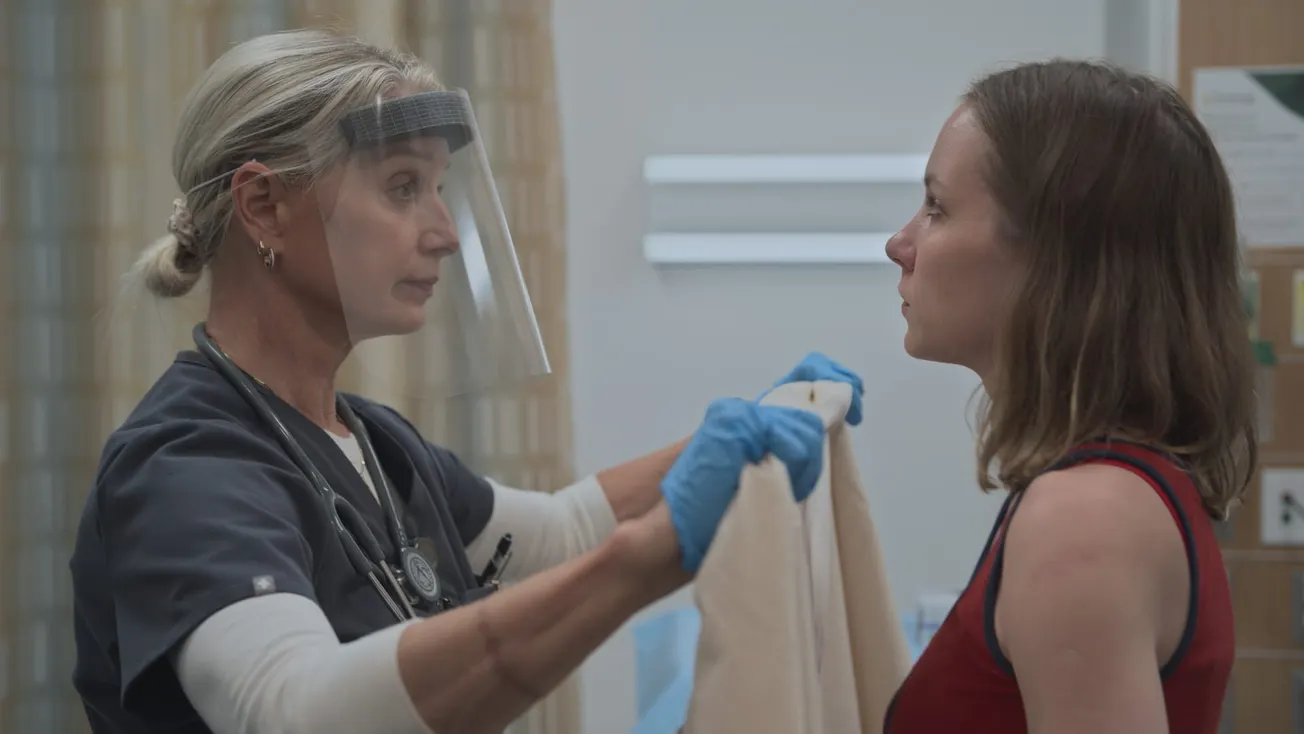
Through some walk-and-talk exposition, we learn that because it’s a holiday, the team won’t be able to call in a Sexual Assault Nurse Examiner (SANE), a nurse trained in forensic evidence collection for sexual assault survivors. Nurse Dana, who also happens to be SANE-certified, will have to step in, otherwise the survivor would be left to wait for hours. “More nurses should train for it!” we’re told. The only female attending on the show’s cast—Dr. Baran Al-Hashimi (Sepideh Moafi) is tapped to assist Dana in the exam.
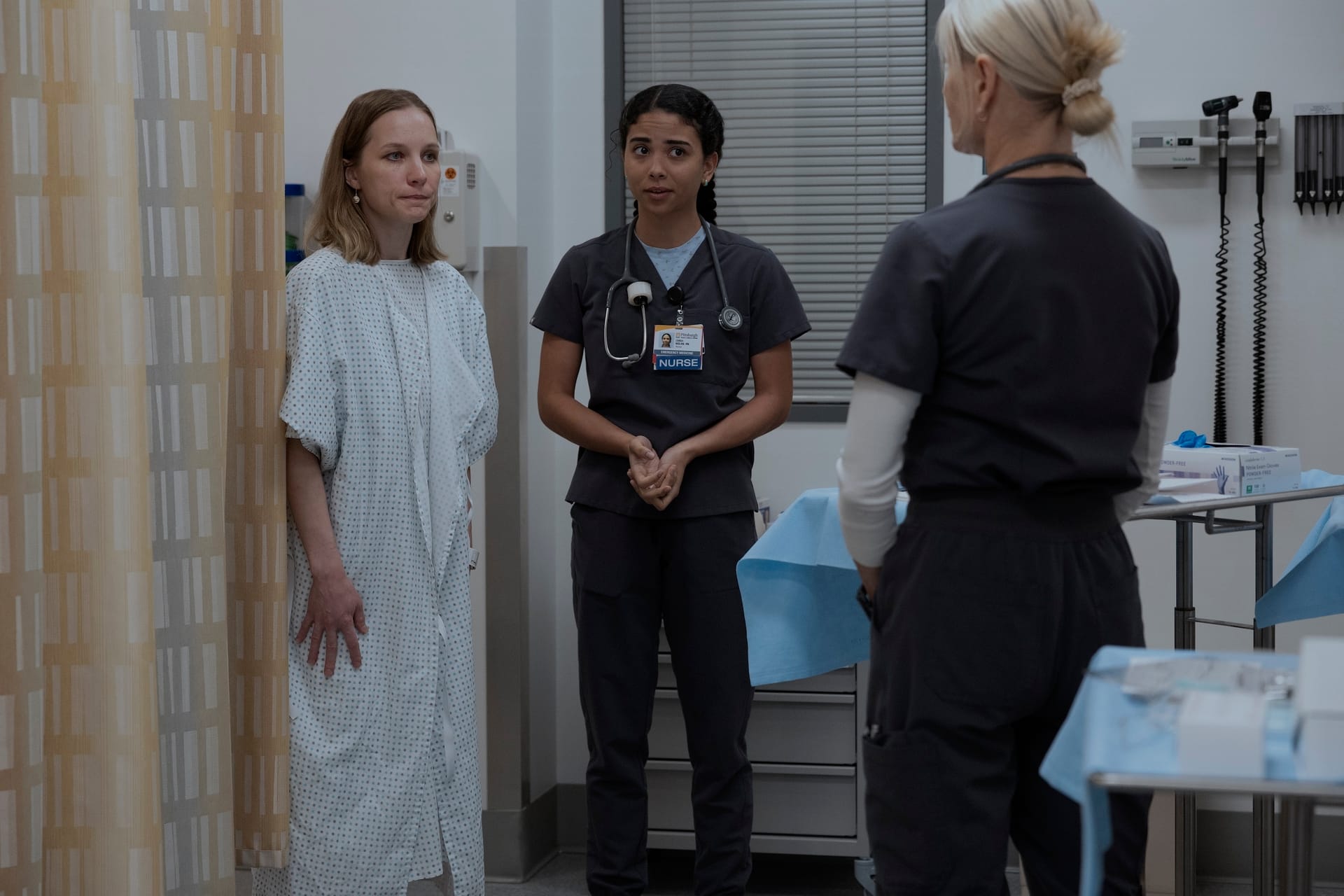
The storyline, woven in between multiple other cases, unfolds over two episodes. The patient, introduced only as Ms. Miller, is young, slender, and white. The viewer is not led to believe that she was drunk or took any drugs. The camera—in a rare and excellent choice—cuts away during her description of her assault, avoiding what media critics often call “trauma porn.” Hours later, after the exam is over and the patient is speaking to a local rape crisis center advocate, Dana walks her young trainee, Emma, to deliver the rape kit to the box where the police will pick it up within 72 hours.
Except no one has picked up the kits already stacked in the box, apparently for weeks. An exhausted Dana calls the local precinct and tells them that if they expect her ER to let their officers jump the line when they need care, the least they can do is their jobs. Dana tears up in rage, the moment adding to her storyline throughout the season of increasing burnout and secondary trauma.
Three of us contributed to this piece: a SANE nursing professor who pioneered the sexual assault forensics curriculum at Northwell Greenwich Village Hospital, an ER attending who is the site director for Long Island Jewish Medical center’s sexual assault forensics program, and a professor working on moral injury and PTSD in ER providers. Only one of us could watch the entire two episodes over which the storyline unfolds. The Pitt’s accuracy makes it notoriously unwatchable for the real-life versions of its characters—which is to say that the show did the best job it could at packing information about sexual assault care into an HBO drama, but there is still more we wish you knew.
When Dana tells her young charge that more nurses should get SANE- certified, she leaves out that only 20% of hospitals in the U.S. have anyone with this training on staff. Even fewer have 24/7 coverage, and most of those supposed 24/7 sites have hours-long gaps in the middle of the night. Nationally, only about 500 nurses have specialized pediatric SANE training and there is no standardized training for transgender or gender nonconforming individuals, who are at an increased risk of sexual assault. When the survivor walked into The Pitt’s ER on July 4, in other words, she almost certainly would have been waiting for hours to be seen by a trained nurse examiner—if she saw one at all.
A more likely scenario is that a trainee female physician would have been pulled off her shift to do the exam. Over and over again we have seen that female student doctors, untrained in the specifics of forensic nursing, are asked to step in over their male colleagues. Research suggests that nurses—nearly 90 percent women—and female physicians are more likely to have been sexually assaulted themselves and they disproportionately bear the cost of re-traumatization and secondary trauma when treating survivors over their male colleagues.
Towards the end of collecting the rape kit, Dana performs a pelvic exam on her patient. While SANEs receive specialized training in performing these exams, most trainee physicians in the ER do not feel confident performing a pelvic—and may never have performed one on shift prior to their first sexual assault patient. Pelvic exams are not billed as a specialized procedure separate from the main physical exam—meaning they don’t make money for hospitals and may receive less emphasis in training. Anecdotally, many ER physicians complete training without basic competency and comfort in providing them.
The challenges in sexual assault care extend well beyond staffing and procedural competency. Even when survivors receive timely care, financial barriers remain. While you likely won’t be billed for your pelvic exam as a sexual assault survivor, you will likely be billed for at least some of your visit. While the Violence Against Women Act prohibits states from directly charging for a rape kit, they are allowed to charge for anything not directly related to the exam—like STI testing or pregnancy testing. Some states cover these costs; others do not. But roughly 86% of women with private insurance will pay out of pocket for their sexual assault care. For patients under 17, an explanation of benefits may be sent to their parents’ home, revealing details of the care they received.
After the pelvic exam, Dana offers Miller medications to prevent HIV (PEP, or post-exposure prophylaxis) and common sexually transmitted infections, plus emergency contraception to prevent pregnancy. Access to these medications also varies substantially depending on geography and the hospital. While ERs increasingly offer PEP, not all do, and most rely on federal funding to provide it. Recent federal funding cuts and instability continue to threaten access to these medications for sexual assault survivors. Policies regarding emergency contraception vary across religiously affiliated institutions, creating differences in what survivors may be offered depending on where they seek care. Some religious ERs even prohibit staff from discussing emergency contraception with rape survivors.
For some patients, reporting to law enforcement may introduce additional fears or barriers including concerns about privacy, legal consequences, immigration status, or involvement with child protective systems. These concerns may influence whether survivors report assaults, or even seek care.
Sexual assault care does not exist in isolation. Access to trained clinicians, forensic services, preventive medications, reproductive care, and social support all shape a survivor’s experience after assault. Yet across the country, these services remain uneven, fragmented, and difficult to access, particularly after hours, in under-resourced settings, or for vulnerable populations.
The Pitt showed viewers a version of care at its best, but too often, reality falls short.
T.S. Mendola, PhD, is the Associate Program Director of the Women's Health in Emergency Medicine Division at Northwell Health and an Assistant Professor of Emergency Medicine at Hofstra University. Her work centers on expanding access to reproductive healthcare in emergent care settings.
Dr. Amy Smith, a nurse practitioner and emergency nurse, has dedicated her career to serving communities in need of emergency care as well as forensic care. Dr. Smith has built a SANE program in New York’s Greenwich Village Hospital, and started a Department of Health-certified SANE education program at the Hofstra Northwell School of Nursing and Physician Assistant Studies. Her goal is to increase SANE services for anyone seeking care, as well as increased prosecution for those who wish to pursue charges.
Dr. Dana Gottlieb is an emergency physician at a tertiary care hospital in New York. Her work focuses on advancing patient-centered quality improvement initiatives in the emergency department, with a particular focus on women’s health and the care of survivors of sexual assault.
Follow Autonomy News on Instagram, Bluesky, TikTok, Threads, and LinkedIn.