Table of Contents
Welcome to the latest edition of our weekly roundup. Every Monday, we’ll send you a summary of the biggest stories about bodily autonomy. We’ll also include links to pieces that Garnet or Susan have published.
If you’d prefer to receive a single email every week, you can do that—we love autonomy. You can manage your subscriptions by navigating to the site, clicking on “Account” in the upper right, then under “Emails,” select “Manage.” You can toggle off “Autonomy News” to receive only the roundup, or vice versa.
Let’s dive in.
On Autonomy News
Garnet got a tip that a crisis pregnancy center in Georgia was receiving federal money from an unusual source: the Department of Housing and Urban Development. Despite public opposition, the commissioners of Gwinnett County, in Atlanta’s metro area, gave the center $450,000 in HUD grants last summer, bringing the total it’s received to more than $1.1 million since 2020. The center says it’s opening a maternity home, which advocates fear means residents could be coerced into placing children for adoption. One local elected official says he warned the Biden administration, but they didn’t intervene. Advocates who spoke out were slapped with cease and desist letters. (Share this story on Instagram, Bluesky, or TikTok.)
 Garnet Henderson
Interested in learning more about the recent history of adoption in America, and how it’s often much more coercive and painful than the dominant cultural narrative would suggest? Sign up for a new, paid annual subscription by January 31 and you’ll receive a copy of researcher and Autonomy News subscriber Gretchen Sisson’s book Relinquished: The Politics of Adoption and the Privilege of American Motherhood.
You can also drop a little something in our Tip Jar, shop our merch, or make a more substantial gift to support our time-intensive investigative reporting.
Federal news
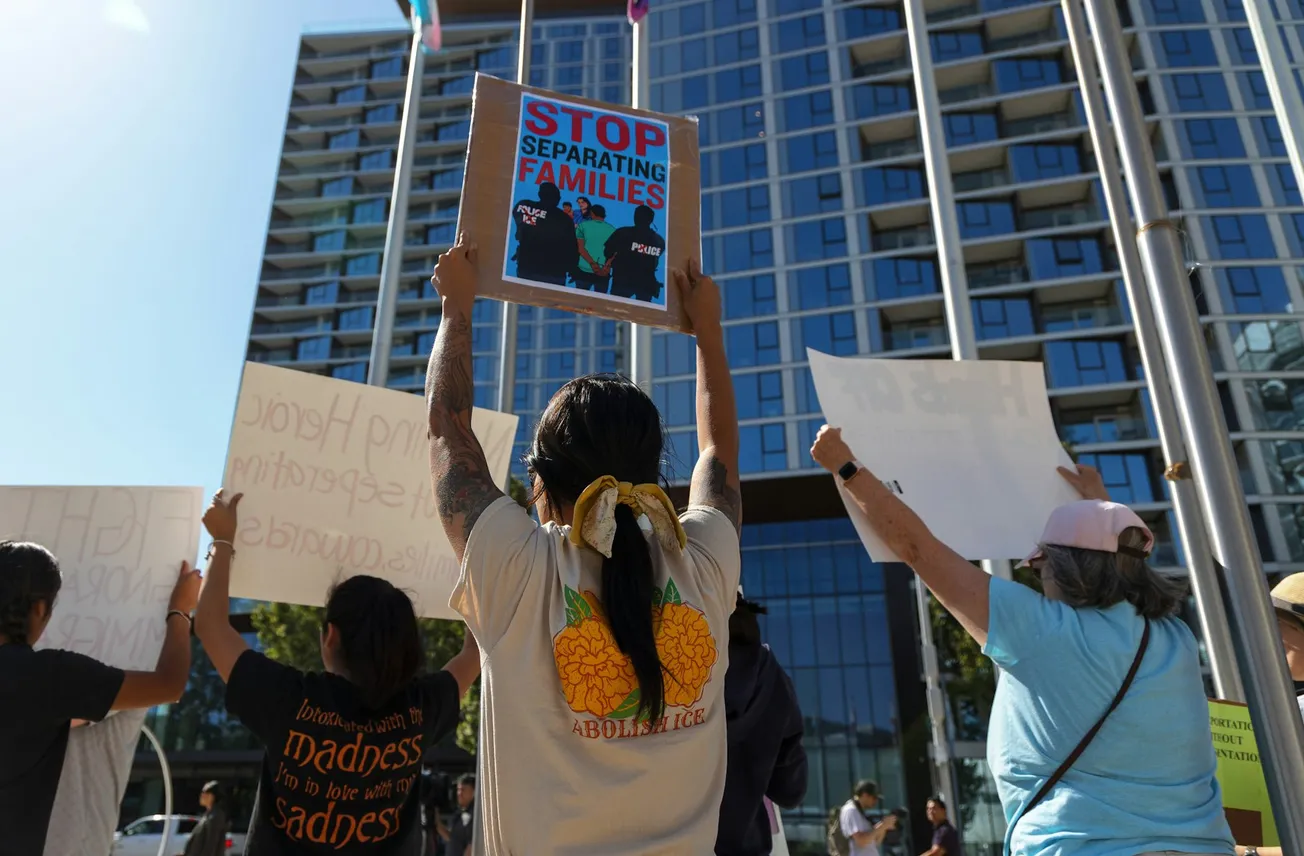
Immigration and Customs Enforcement is terrorizing pregnant people. Last week, an asylum seeker was deported to Colombia despite being eight months pregnant and in a state of medical distress. A federal judge issued an order to keep her out of the air and require ICE to provide her with adequate care, but by the time the order was entered, ICE had already loaded the woman onto a flight. A woman who found out she was pregnant while in ICE detention in Louisiana says she has experienced heavy bleeding and cramps, but the only medical care she has been offered was one emergency room visit. She has two older children, one of whom she is still breastfeeding. Another woman who also found out she was pregnant while in ICE detention in Nevada also says she has been denied prenatal care. These stories come weeks after several men in ICE detention in Fort Bliss, Texas, alleged that guards crushed their testicles during beatings. The Trump administration is effectively trying to limit reproduction of a disfavored group, and we have a word for that: eugenics.
Anti-abortion groups are angry at the Trump administration for not doing more to restrict abortion, even threatening to punish Republicans in the midterms by halting voter outreach. Ahead of last week’s March for Life, the administration announced a host of anti-abortion policies meant to placate the movement: a ban on federal funding of fetal tissue research; an investigation into the $88 million in Small Business Administration loans that Planned Parenthood affiliates received during the pandemic; and a Health Department threat to withhold funding from Illinois, claiming that it violates the rights of anti-abortion medical professionals by requiring them to refer patients to people who will provide abortions. (Illinois isn’t even enforcing that law, by the way.)
Vice President JD Vance also announced at the March for Life that the Trump administration will enact an unprecedented expansion of the Global Gag Rule, also known as the Mexico City Policy. This policy originally barred foreign organizations that receive U.S. family planning funding from providing or referring for abortion care. However, during his first term, Trump instituted a broadened version of the rule that applied to all foreign assistance, not just family planning aid. He reinstated this version of the policy within days of resuming office last year. Now, the rule will be further expanded to bar aid to organizations that engage in diversity, equity, and inclusion initiatives, or uphold “radical gender ideologies”—in other words, acknowledge that transgender and nonbinary people exist. But top groups say this isn’t enough, and they want the White House to focus on restricting abortion pills and ending federal subsidies for Obamacare plans that cover abortion. Live Action even called on the Food and Drug Administration to revoke its approval of mifepristone.
The Supreme Court said last week that Tennessee remains eligible for $7 million in federal family planning funds despite a state ban on grant recipients complying with a rule that they make abortion referrals if patients ask. The Title X program requires nondirective counseling and referrals for abortions upon patient request, but Tennessee refused to comply with this rule following the Dobbs decision that let the state ban abortion. The Biden Administration disqualified Tennessee from Title X in 2023 and the state sued. The Sixth Circuit Court of Appeals ruled against the state in 2024, saying it couldn’t use its abortion ban to “dictate [Title X] eligibility requirements.” The Supreme Court just overturned that decision even though the Trump administration had already restored the grants to the state.
Florida Senator Ashley Moody re-introduced a bill that would make it a federal crime to transport a minor across state lines for an abortion without complying with parental consent or notification laws. Abortion opponents claim this kind of law is needed to prevent human trafficking, which is already illegal. In fact, what it would do is criminalize friends or relatives for helping a young person whose parents don’t support their abortion decision. The proposal, the Child Interstate Abortion Notification Act (CIANA), needs 60 votes to pass the Senate, meaning it would need support from at least seven Democrats. Former Sen. Marco Rubio has introduced this bill every session since 2011; Moody was appointed to his seat after President Trump named him Secretary of State. A similar bill in the House has just 16 cosponsors.
State news
Two updates on states targeting reproductive health information nonprofit Mayday Health: A federal judge temporarily blocked South Dakota Attorney General Marty Jackley from taking down Mayday’s gas station ad campaign about abortion pills. A hearing on Mayday’s request for a preliminary injunction is scheduled for Thursday, January 29, at 4pm. Separately, Kentucky Attorney General Russell Coleman has subpoenaed several gas stations that ran the ads because, he claims, they “could be participating in the unlawful mailing or delivery of abortion pills into Kentucky.” Mayday only provides information and links to other services that prescribe or mail the pills, so Coleman is clearly trying to scare business owners out of running the ads.
An Indiana Senate committee approved SB 236, a bill that would allow anyone to sue manufacturers or providers of abortion pills for a bounty of at least $100,000, for up to 20 years after their alleged violation. (Texas recently enacted a similar law). This is also a fetal personhood law, because one of the avenues for legal action is to file a lawsuit for wrongful death of a fetus. The bill also adds new requirements for termination of pregnancy reports—which doctors are already required to file with the state health department—including the name of each person who assisted with the report. An earlier version of the bill would have made these reports public, but that was modified in committee. Reports that are in any way incomplete would be forwarded to the health department’s inspector general for investigation into potential wrongdoing. The bill now heads for consideration by the full Senate.
At the ongoing Missouri trial that will determine whether a host of abortion restrictions are constitutional after voters enshrined a right to abortion until fetal viability in 2024, a regulator admitted on the stand that abortion clinics have been subject to a high level of scrutiny not actually tied to health or safety concerns.
Iowa Republicans advanced a bill that would allow healthcare workers including pharmacists to refuse medical care based on moral and ethical objections, in addition to existing exemptions for religious concerns. Medical groups worry it could lead to providers refusing to provide abortions or gender-affirming care. Christian nationalist law firm and recurring villain of this newsletter Alliance Defending Freedom also sent someone to testify at the hearing. A state senate subcommittee voted to send House File 571 to the full Judiciary Committee. Last year, the bill passed the House, but stalled in the senate.
Voters in Idaho seem to support a proposed constitutional amendment that would overturn the state’s abortion ban by codifying a right to abortion until fetal viability. A survey from Boise State University found that about 60% of voters support the ballot measure. (The amendment fared slightly better when people were told the title is the “Reproductive Freedom and Privacy Act,” versus no title, with 60.5% and 58.9% support, respectively.) The organizers, Idahoans United for Women and Families, are still collecting the signatures required to get on the November 2026 ballot.
After the Wyoming Supreme Court permanently overturned two abortion bans, Republican lawmakers are considering putting an anti-abortion constitutional amendment on the ballot. But they might regret doing that: According to a poll from the Wyoming Tribune Eagle, only about 26 percent of respondents say they’d vote to ban abortion.
Assaults on queer people
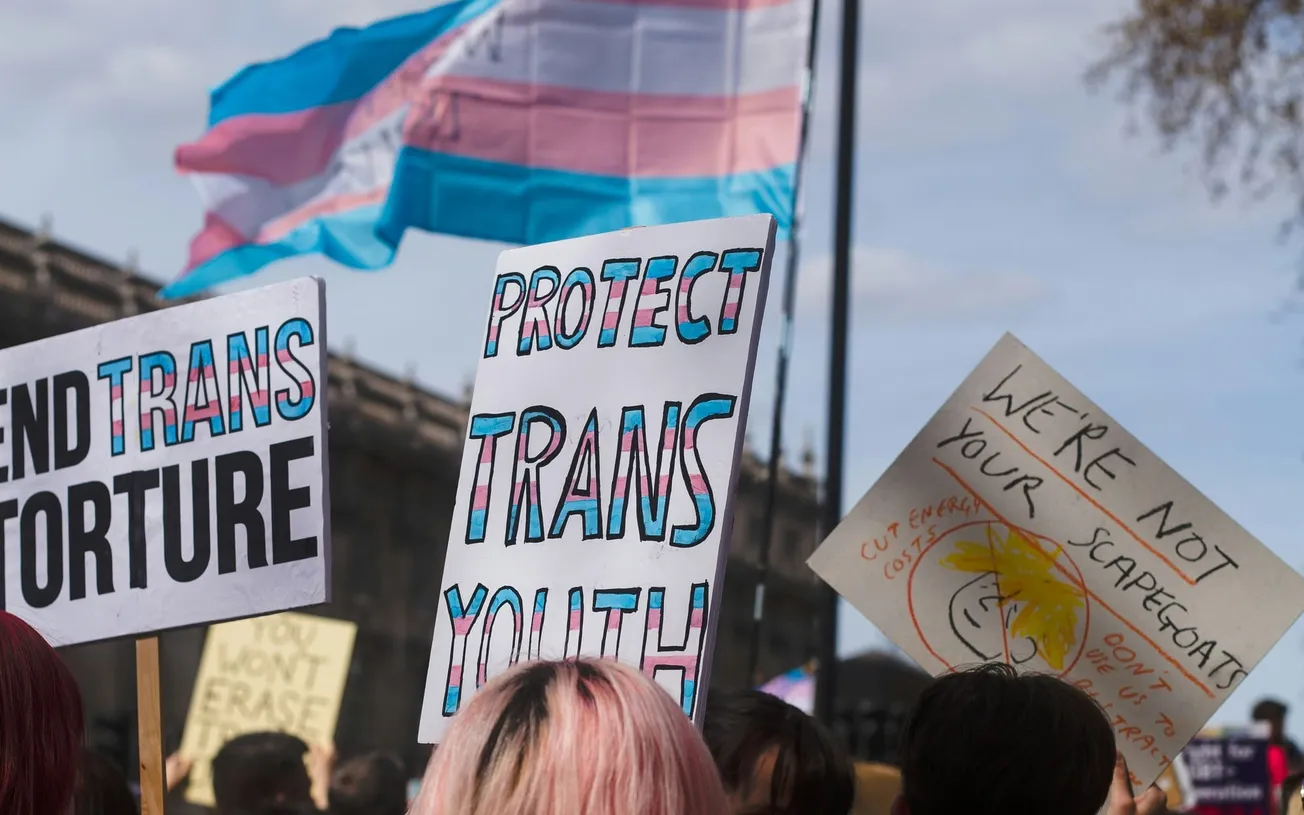
Another of the Department of Justice’s creepy attempts to subpoena the medical records of trans people has been shut down by a federal judge. This time, the subpoena was challenged by patients at Children’s National Hospital in Washington, D.C. However, this order only applies to the patients who sued to block the subpoena.
Quick hits
- A group of anti-ICE protesters interrupted a church service at St. Paul's Cities Church because one of its pastors, David Easterwood, also appears to be the acting director of ICE’s St. Paul field office. The Department of Justice claimed they may have violated the Freedom of Access to Clinic Entrances (FACE) Act, which was primarily designed to protect abortion clinics but also protects churches from harassment and vandalism. Minnesota Attorney General Keith Ellison disagrees.
- The Nexplanon contraceptive implant is officially approved by the Food and Drug Administration for use up to five years. Previously, it was approved for three years, even though data had shown it works for longer.
- “We’re now at a point where there are a bunch of loaded guns lying around on tables, and we don’t know what’s going to happen,” says legal historian Mary Ziegler of Trump’s relative inaction on abortion while numerous anti-abortion lawsuits make their way through federal court. “This is sort of like a Russian roulette moment.”
- Robert Hadden, an OBGYN who worked at Columbia University Irving Medical Center and New York Presbyterian Hospital for decades, was convicted of sexually abusing hundreds of patients in 2024. Over 400 students at CUIMC recently signed on to a letter expressing concern that the university is not taking seriously enough the investigation into whether its own leadership participated in “enabling or ignoring Hadden’s abuse.” Patients had reported his abuse for years.
Actual good news
State lawmakers in Arizona are introducing bills to repeal or amend more than 50 anti-abortion laws that remain on the books after voters approved a reproductive freedom constitutional amendment in 2024. Some of the laws and restrictions they seek to repeal include: a mandatory 24-hour waiting period, a ban on Medicaid coverage of abortion, a ban on telehealth abortion, a ban on abortions after fetal viability which leaves behind later abortion patients, and a definition of abortion that creates fetal personhood.* State Rep. Sarah Liguori and Sen. Analise Ortiz are behind the bills to change these laws, and their package would also amend a law requiring notarized parental consent for minors and replace it with judicial bypass. The ballot measure established a right to abortion until viability.
Palate cleanser
We aspire to achieve this level of chill.
@kels__on.smoko Her sunbathing spot while I work 🥹 #rescuedog #slowmona #cutedog ♬ sonido original - Eazy-E
*Correction, 1/28/26: The item about an Arizona proposal to repeal abortion restrictions incorrectly stated that the bill wouldn't repeal a ban on abortions after fetal viability. The bill, HB 2653, would repeal that law, and it would also repeal a 24-hour mandatory waiting period before any abortions.
Follow Autonomy News on Instagram, Bluesky, TikTok, and LinkedIn.