Table of Contents
Autonomy News is a reader-funded, independent publication. Our reporting isn't possible without your support. Please consider becoming a paid subscriber or making a gift from a donor-advised fund today.
Welcome to the latest edition of our weekly roundup. Every Monday, we’ll send you a summary of the biggest stories about bodily autonomy. We’ll also include links to pieces that Garnet or Susan have published.
If you’d prefer to receive a single email every week, you can do that—we love autonomy. You can manage your subscriptions by navigating to the site, clicking on “Account” in the upper right, then under “Emails,” select “Manage.” You can toggle off “Autonomy News” to receive only the roundup, or vice versa.
Let’s dive in.
On Autonomy News
We always try to avoid sending you two emails in one day—but when Garnet saw that Trump’s new moms.gov website links to anti-abortion crisis pregnancy centers, and refers people to the hate group Focus on the Family for adoption information, she had to write about it. (Share this story on Instagram or Bluesky. You could have shared this video on TikTok, but it was removed for “violating the community guidelines.”)
 Garnet Henderson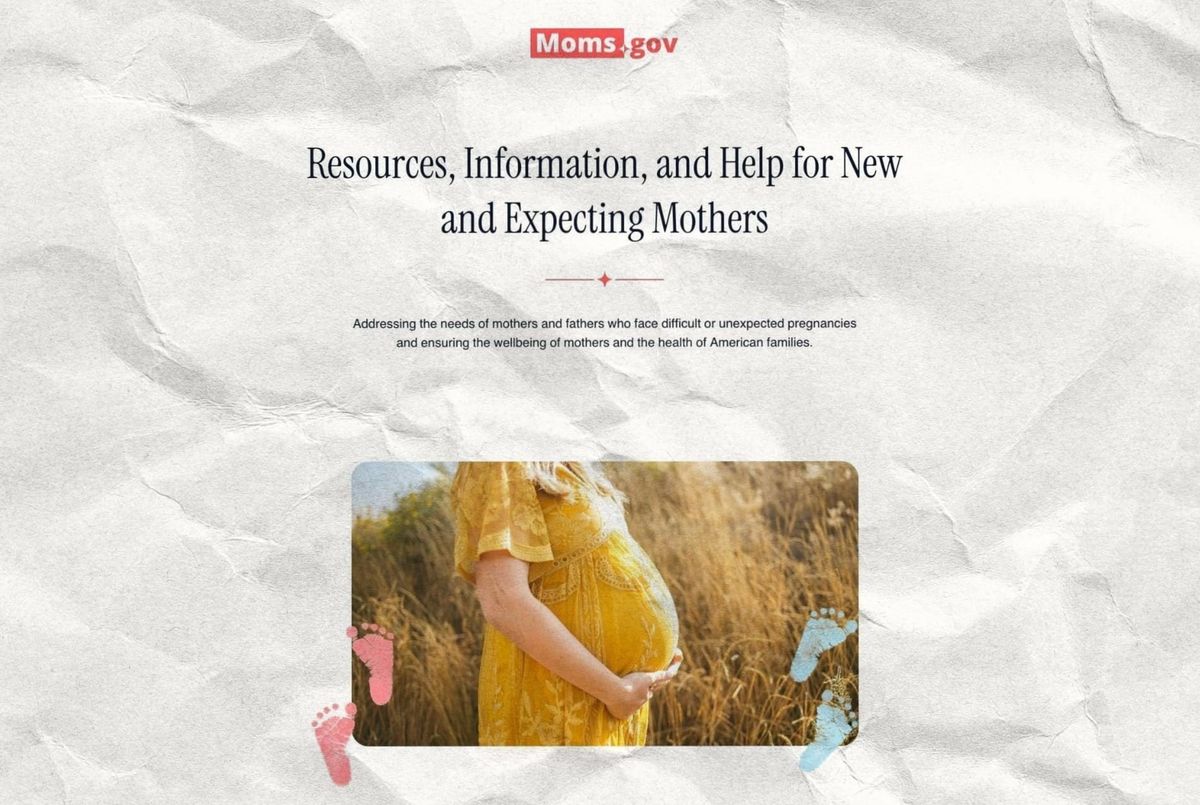
Anti-abortion groups that were once part of the movement’s kooky fringe are becoming real players in the model legislation game. That’s not because they’ve become more mainstream—it’s because they’re successfully shifting the Overton window. Learn more about the dangers of a propaganda video on fetal development in this op-ed from Reproaction. (Share this story on Instagram, Bluesky, or TikTok.)
Victoria Lambert
Help keep our journalism paywall-free in 2026! Upgrade to a paid subscription, drop a little something in our Tip Jar, or shop our merch. Interested in making a more substantial gift? Learn more here.
Federal news
We were expecting the Supreme Court to say something about telemedicine prescriptions of the abortion drug mifepristone today after it paused a restrictive ruling from the Fifth Circuit Court of Appeals last week. But Justice Samuel Alito, who handles all appeals from that circuit, extended the pause for another three days, meaning it will now expire at 5pm ET on Thursday, May 14. We all have to wait until then for the outcome of the emergency appeals filed by mifepristone manufacturers Danco and GenBioPro. The case began when Louisiana filed a federal lawsuit against the Food and Drug Administration, arguing that the agency was wrong to allow telehealth access to mifepristone. Virtual access is a common method: 27 percent of abortions in 2025 were provided via telehealth, per the Society of Family Planning.
In a separate case about mifepristone, the Attorneys General of Missouri, Kansas, and Idaho cited the Fifth Circuit ruling purporting to end telehealth prescriptions to ask Judge Cristian Stevens to keep their case moving forward, rather than to pause or dismiss it like the FDA asked him to do in March. The Republican AGs are asking for more restrictions than in the Louisiana case: They want the court to reimpose decade-old regulations that say mifepristone can only be used up to 7 weeks of pregnancy and must be dispensed in person by a physician, not an advance practice clinician. They’re also asking to rescind the 2019 approval of a generic version and ban all prescriptions to minors.
President Trump is reportedly preparing to fire FDA Commissioner Marty Makary, due to clashes over “vaping, abortion and drug policy.” Makary has faced mounting pressure to restrict access to mifepristone, and anti-abortion groups were infuriated when Bloomberg reported that he told officials to delay a “safety review” of mifepristone until after the midterms. Trump hasn’t yet asked for his resignation, however, and he may even testify before Congress this week.
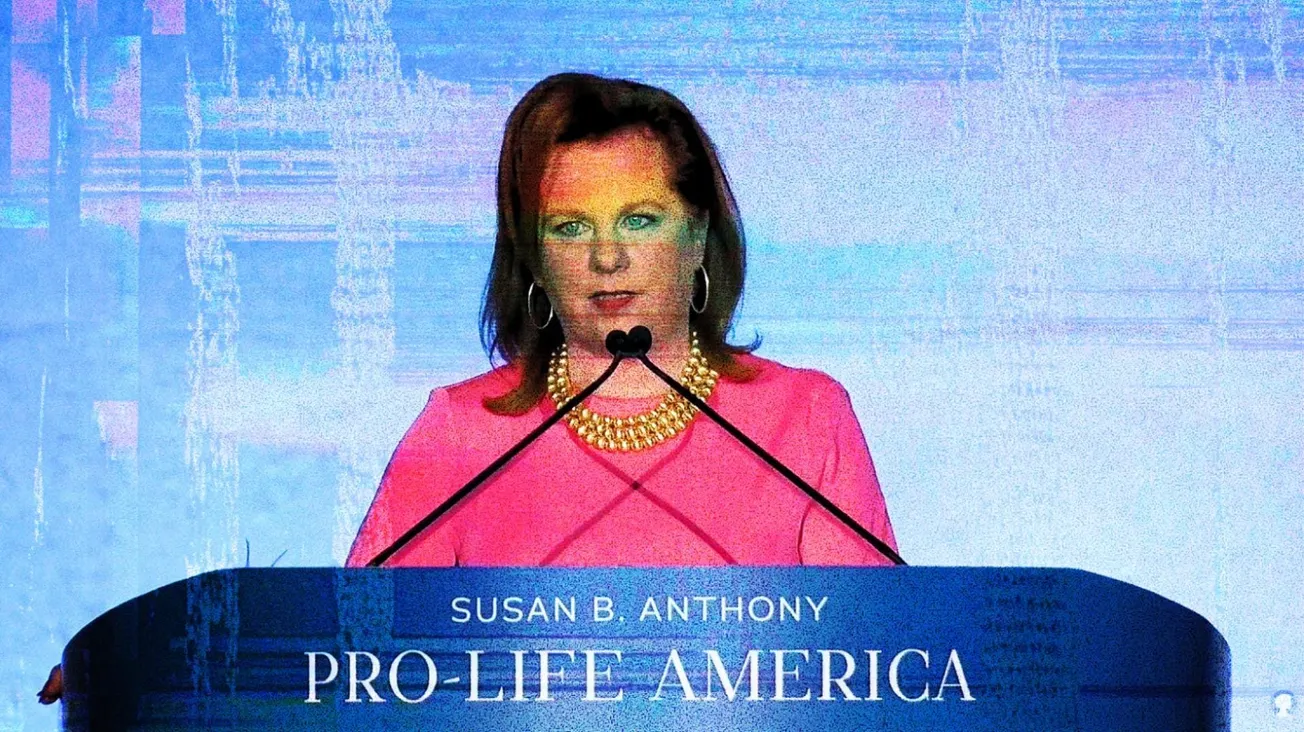
The anti-abortion group most frustrated with Makary is Susan B. Anthony Pro-Life America, which reiterated its call for him to be fired last week. President and CEO Marjorie Dannenfelser also recently told the Wall Street Journal that Trump’s inaction on abortion pills is hampering the anti-abortion cause: “Trump is the problem. The president is the problem.” Trump campaigned by claiming he’d “leave abortion to the states,” and Dannenfelser is already trying to lay down a marker for 2028, telling the WSJ that presidential candidates must commit “to pro-life action at the national level.” After this public airing of grievances, the White House reportedly held a Friday meeting with activists including Dannenfelser. In related news, the group Students for Life delivered petitions urging the Department of Justice to apply the Comstock Act, a 19th century anti-vice law, to the mailing of medication abortion.
House Speaker Mike Johnson is telling fellow Republicans that he will try to extend the “defund” of large abortion providers like Planned Parenthood, which expires on July 4. But Johnson would have to do that via a third budget reconciliation bill, which he reportedly acknowledges that some in his own party don’t want to do, or don’t think can be done in time.
Florida Rep. Kat Cammack introduced a bill that would largely ban abortion after the first trimester by prohibiting a procedure known as dilation and evacuation, the most common second-trimester method. This bill, based on model legislation crafted by National Right to Life, has been introduced five times since 2015. Cammack’s version has just 13 cosponsors out of a Republican caucus of more than 200. It’s certainly upsetting to hear about, but it’s not new.
State news
South Carolina Republicans are trying to pass a bill during the last week of their legislative session that would classify two medications used for abortion as Schedule IV controlled substances—a category normally reserved for drugs with addiction potential. House Bill 4760 would make distributing mifepristone and misoprostol illegal, even though they have many other uses in reproductive healthcare, including for miscarriage management, postpartum hemorrhage, and cervical dilation. Patients would need an in-state doctor’s prescription to legally possess the medications, otherwise they could face criminal penalties. The bill is a copy of a law that passed in Louisiana with dangerous results.
Oklahoma Governor Kevin Stitt signed a bill that makes it a felony to provide “abortion-inducing drugs” to someone seeking to end their pregnancy, punishable by 10 years in prison, a fine of up to $100,000, or both. House Bill 1168 applies to any drugs prescribed for the purpose of abortion, which would include mifepristone. It also specifically prohibits off-label use of misoprostol and methotrexate, though there are technically exceptions for the treatment of ectopic pregnancy and miscarriage. The Center for Reproductive Rights said the law could result in a parent going to jail for helping a daughter end a pregnancy. This is not a theoretical concern, as multiple mothers have been prosecuted after helping their daughters obtain abortion pills.
Wyoming lawmakers are using pronatalist arguments to justify their repeated attempts to ban and restrict abortion, even though the state Supreme Court has made it clear the constitution protects abortion rights. “We're sending a message that children are important and that they're the future," Republican state lawmaker and former nurse Evie Brennan told NPR. "Without an up and coming population that grows up here that wants to stay here, then we just become a stagnant or an aging slash dying state."
North Carolina Democrats have introduced HB 1120, a bill that would require crisis pregnancy centers that receive state funding to submit detailed disclosures including information about their staff, client totals, services provided, and complete budgets.
After a filibuster by Democrats, Missouri Senate Republicans dropped a provision of SB 999 that would have allowed for civil lawsuits against anyone involved in an illegal abortion, including self-managed abortion. Abortion is currently legal—though not especially accessible—in Missouri after voters approved a reproductive rights constitutional amendment in 2024. However, a new ballot measure this year seeks to reimpose an abortion ban. Democrats worried that, if the anti-abortion ballot measure were to succeed, more Missourians would need to self-manage abortions with pills and would therefore be at risk of being sued. However, the bill, known as the “Born-Alive Abortion Survivors Protection Act,” did pass the Senate and will move on to Governor Mike Kehoe if the House approves the Senate’s version. The bill reinforces the anti-abortion myth that infants are often born alive following attempted abortions, and requires healthcare providers to use lifesaving measures in such a situation. It also creates criminal penalties for anyone who “knowingly” kills a child born alive—in other words, commits murder, which is already illegal.
With access to medication abortion once again under threat at the federal level, Connecticut advocates have renewed their call for state legislators to pass SB 295, a law that would “shield” Connecticut medical professionals who provide reproductive and gender-affirming care across state lines.
A constitutional amendment that would give all people in Delaware the “the right to make and effectuate decisions about all matters relating to pregnancy” until fetal viability is making its way through the state legislature. However, even if it succeeds this year, it will have to pass again next year to end up on voters’ ballots.
Montana voters approved a constitutional amendment that protects the right to abortion until fetal viability in 2024, and a state court has rejected yet another attempt to challenge that result. An anti-abortion group and one Republican state lawmaker argued, for the third time, that the initiative was invalid because the full text of the constitutional amendment wasn’t printed on the ballot. This is the case in most states—usually it’s a summary that appears on the ballot—and a judge validated that there is no requirement for the full text of an amendment to appear on the ballot.
Elections
Kansans will vote in August on a ballot measure that would turn state Supreme Court seats into elected positions, which worries advocates of abortion rights. In 2019, the Kansas Supreme Court found the state constitution protects the right to abortion, which it reaffirmed in 2024. (Kansas voters defeated a 2022 proposal to invalidate that ruling by a staggering 59 to 41 margin.) Now, Republicans are pushing to be able to elect justices who would reverse those abortion rights decisions, with state Senate President Ty Masterson admitting behind closed doors that this is the goal. Masterson told a conservative group: “The solution in Kansas is that Supreme Court election. But you can’t go out there and say it because they’ll say that if you elect your Supreme Court, you won’t have any right to abortion anymore.”
Early voting is underway in the crowded primary for California governor, which ends on June 2. Planned Parenthood Affiliates of California recently endorsed Xavier Becerra, the former Health and Human Services Secretary under Joe Biden. The group cited the national attack on medication abortion as a reason for needing a “seasoned leader.”
Personhood watch
A Kentucky judge struck down part of the state’s abortion ban that defined life as beginning at fertilization. The decision came in a suit that was first filed in 2022 by a group of Jewish women who argued that the ban interfered with their right to religious freedom, and that a host of Kentucky laws made the legality of in vitro fertilization unclear. The court had previously rejected all but one of three original plaintiffs, and ultimately, the judge also rejected the religious freedom arguments. Though the abortion ban’s definition of life is now moot, it is technically still in effect. It will be up to the state legislature to create a new definition.
Dana Sussman of Pregnancy Justice—an organization that defends the rights of pregnant people against criminalization—writes that South Carolina’s everything-but-the-kitchen-sink abortion ban, SB 1095, is unprecedented in its inclusion of prison time as a punishment for people who have abortions. The bill recently made it out of committee in the state Senate.
Florida Attorney General James Uthmeier has intervened in a legal dispute over gestational surrogacy, comparing the practice to slavery. Surrogacy is often exploitative and ethically thorny—but the fetal personhood arguments Uthmeier is making could outlaw abortion entirely in a state where it’s currently available until about six weeks of pregnancy.
Assaults on queer people
The Department of Education has opened an investigation into Smith College over its admission of transgender women. Specifically, the investigation is about whether the admissions policies of the all-women’s college violate Title IX, which prohibits sex-based discrimination in education.
The Department of Justice has also opened Title IX investigations into around three dozen school districts in Illinois, looking into whether trans students are allowed to use single-sex bathrooms and play on sports teams.
After a federal judge in Texas resurrected a DOJ subpoena seeking gender-affirming care patient records from a hospital in Rhode Island, the state’s Child Advocate is suing the Trump administration in a new attempt to block the subpoena once again.
After the Supreme Court ruled that Colorado’s ban on anti-LGBTQ conversion therapy was intended to “regulate speech based on viewpoint”—and should therefore be subject to the highest degree of legal scrutiny—state lawmakers have passed legislation that redefines what the state considers conversion therapy. The new definition outlaws any form of “therapy” meant to “direct a patient toward a predetermined sexual orientation or gender identity outcome, or eliminate or reduce attractions toward individuals of a particular sex or gender.” HB26-1322 also removes the statute of limitations on malpractice claims related to conversion therapy, meaning that survivors can sue at any time for abuse that happened at any time in the past. The bill now goes to Governor Jared Polis’ desk.
Extremism
An anti-abortion activist will stand trial in San Francisco, having been charged with violating California’s version of the Freedom of Access to Clinic Entrances (FACE) Act. The charges are related to a video the activist posted to social media, featuring close-up footage of an abortion clinic volunteer with a caption that said “unalive them.”
Quick hits
- Hospitals say more newborn babies are bleeding to death as parents increasingly refuse safe, evidence-based vitamin K shots. But the federal government doesn’t track refusals, so we can’t be sure exactly how widespread the problem is.
- Families are going hungry due to Trump’s food stamp cuts.
- The FDA proposed removing all references to gender in its regulations and instead replacing them with “sex.”
- Deloitte and Zoom recently slashed the amount of parental leave for their employees. The cuts at Deloitte are for “support staff,” not accountants and consultants, and these roles are more often held by women.
- Unfortunately, Clarence Thomas is now the second longest-serving justice in Supreme Court history, and may try to hang on until 2028 to take the top spot.
Palate cleanser
Too blessed to be stressed.
@betch she’s happy to be here (ig: jessidosen)
♬ original sound - Betch
Follow Autonomy News on Instagram, Bluesky, TikTok, Threads, and LinkedIn.