LIMITED TIME: Support three independent, worker-owned publications with a single subscription. Get a three-month subscription to Autonomy News, The Flytrap, and Mothership for less than $11 a month! Offer ends June 30.
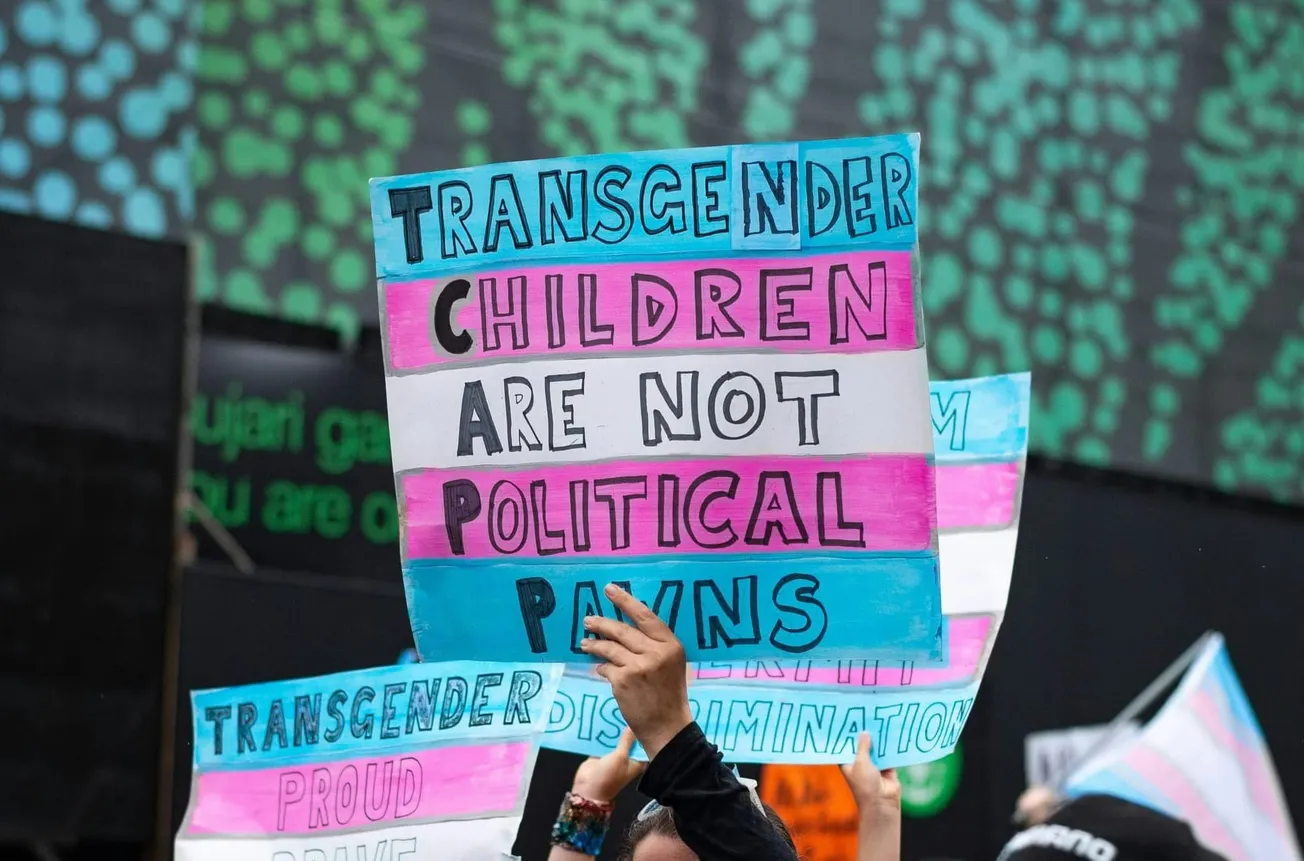
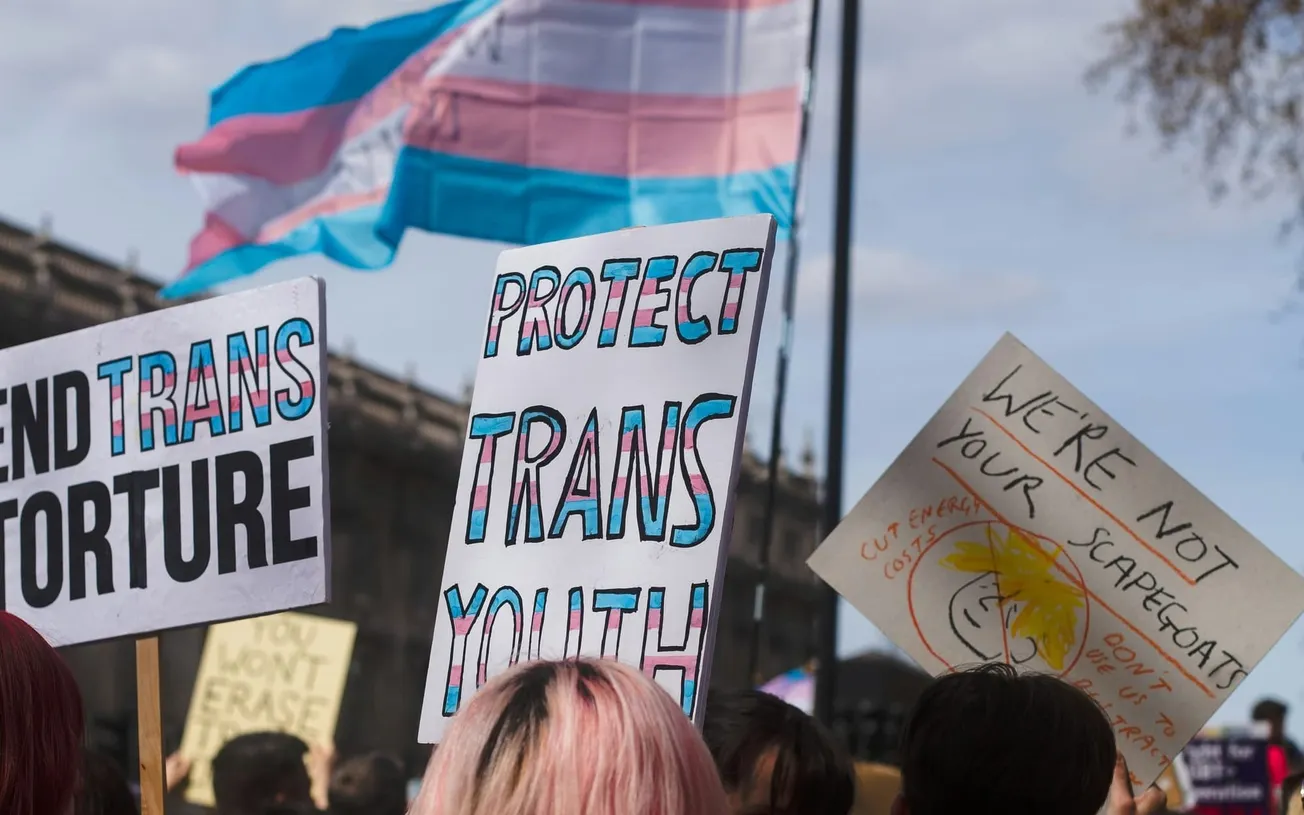
Providers of gender-affirming care—especially those who care for transgender youth—were already struggling before Donald Trump returned to office. Many had scaled back or shut down altogether in recent years due to state-level bans and right-wing harassment campaigns. Then, just days after Trump was sworn in, his administration made an all-out assault on these medical providers one of its top priorities. It issued invasive subpoenas demanding identifying patient information, opened criminal investigations alleging that clinics are violating a federal ban on genital mutilation, and proposed rules that would strip medical institutions of federal funding for providing affirming care to trans youth.
That was only the start: After its first round of subpoenas were largely thrown out by federal judges, the Department of Justice (DOJ) turned to brazen venue shopping, meaning it chose to sue in an area where it was likely to get a favorable judge. To advance its agenda, the agency has leaned on the Northern District of Texas, where far-right Chief Judge Reed O’Connor ruled that a hospital in Rhode Island—nowhere near his district—must comply with a DOJ subpoena. This week, the Federal Trade Commission—joined by Alaska, Iowa, Nebraska, and Texas—sued the World Professional Association for Transgender Health in the same district, accusing the professional organization of making misleading statements about the benefits of gender-affirming care for its members’ financial gain. The district’s U.S. Attorney has also obtained new, grand jury subpoenas for patient records from hospitals as far away as New York.
In another alarming development, the DOJ recently announced settlements with Texas Children’s Hospital and Cleveland Clinic, which require them not only to stop providing gender-affirming care to minors, but to fund clinics for “detransitioners,” advancing the myth that large numbers of trans people later regret and want to reverse their transitions. (Of the small number of people who do detransition, many report doing so because of social stigma, discrimination, or other external factors—meaning, not because they were wrong about their trans identity.) Both hospitals also paid significant sums to resolve claims that they improperly billed insurers for transition-related care.
Facing this onslaught, more than 40 hospitals have stopped providing youth gender-affirming care since January 2025, or have significantly limited their offerings. Advocates and patients have criticized these moves as complying in advance with policies that, in some cases, haven’t even been finalized or enforced. But there are providers who refuse to surrender. Many of them operate or work for smaller, independent practices, which can be more nimble than large health systems, but also lack their tremendous resources. Some work for major hospitals that haven’t given up gender-affirming care, but are treading very carefully in an effort to avoid scrutiny.
One doctor who runs an independent telemedicine practice said they no longer advertise their services. “We closed all of our social media accounts permanently,” said Terry, whose name has been withheld to protect them from retaliation. “I took down all the pictures of people who work for my practice off the website. We don't have any location listed, and I put my house into a trust that's not in my name, so that people couldn't look up public records and try to find my house.”
Like every provider who spoke with Autonomy News for this story, Terry asked us not to share their real name and state of residence, for their own safety and that of their patients. Several providers were hesitant to speak with a journalist at all, given how many in the field feel their work and words have been misconstrued in mainstream outlets, chief among them the New York Times.
A heartbreaking downside of these precautions is that they make it that much harder for trans people to find the care they need. “Most people find out about us by word of mouth or through online forums,” Terry said. “A lot of patients are like, ‘Oh my gosh, I never knew you existed.’”
Terry’s team of providers serves patients across the country. They never imagined how much they would need to scale up their operations, or how difficult caring for patients would become. “I started this practice thinking, ‘I'll do this for a couple years, just me, until gender-affirming care is easy to get,’” they said. “‘It's so straightforward, soon this will be basic primary care and I'll do something else with my life.’”
Instead, things have gotten harder every step of the way. But, Terry said, the question has always been, “What do we need to do next?”
Quitting, they said, is “not an option.”
Many patients have been left adrift by clinics closing without so much as a referral to a new provider. “We could absorb a lot of the kids that have been kicked out of some of these clinics, but it's really hard to even reach somebody at the clinic who's willing to talk to me,” Terry said. “They're afraid to even pass along our info.” On the advice of their lawyer, Terry declined to say whether their practice had received any subpoenas from Trump’s Justice Department. But they shared that, in the past, they have received other demands for patient information, “and we've successfully not disclosed any patient data yet.”
While most of the Trump administration’s attempts to restrict gender-affirming care are bogged down in legal challenges, many parts of the healthcare system are complying in advance.
Anecdotally, Terry said they’d noticed a significant dropoff in private insurers paying for gender-affirming care, something experts warned was likely to happen under a second Trump presidency. The day before they spoke with Autonomy News, a pharmacy refused to fill a prescription for one of Terry’s 18-year-old patients, because of Trump’s executive orders and proposed rules that aim to bar gender-affirming care for those under 19 years old—even though none of these policies currently restrict a pharmacy’s ability to fill a prescription. The patient had to get their medication elsewhere.
While this specific problem is new, running into issues at the pharmacy was unfortunately already common for trans patients, especially those taking testosterone, which is a controlled substance. Many pharmacies have their own internal policies that restrict prescriptions of controlled substances above and beyond the requirements of state and federal law, something Terry said had already forced them to stop sending prescriptions to several major pharmacy chains.
Even in states where the laws protect trans people and their healthcare, federal attacks are still limiting access. For example, Colorado Children’s Hospital was ordered by the state Supreme Court to resume gender-affirming care after patients’ families sued the hospital over the suspension of its program in January. But the hospital claimed earlier this week that none of its doctors are willing to provide the care. In New York, NYU Langone Health has not resumed its gender-affirming care program despite being ordered to do so by the state Attorney General.
“I don't have any hope that on a federal level anything is going to change anytime soon,” Terry said. “I just hope it stays with the states, so at least we keep this half-and-half situation in the country … but I am really pessimistic.”
"Most people at the institutions where this care is housed were told not to participate in media, and because of that, the narrative got away."
In the meantime, patients are suffering. Sidney, a doctor who recently left a hospital and went into private practice, said “the abject terror that people have lived in over the last handful of years is unprecedented. It is medical terrorism.” Among patients and their parents, Sidney said, there is a constant conversation of, “What do we do to keep ourselves safe, to keep our children and our young people safe?”
“It's just a horrible thing to witness as a healer,” they said. “I've spent my whole career trying to help people blossom, and become who they are and be their best selves.”
In framing attacks on trans people and gender-affirming care as being about “parents’ rights,” the far-right implies that parents of trans kids “don’t know their own children,” Sidney added. They also regret that the medical field didn’t work harder to get out in front of right-wing attacks. “Most people at the institutions where this care is housed were told not to participate in media, and because of that, the narrative got away,” they said. “We let people who are ignorant about the issue define the narrative.”
Many providers of gender-affirming care are themselves trans or gender nonconforming. While having difficult conversations with patients and their families, they’re also managing their own pain. “Day in, day out, it's challenging, but our community has always been able to survive even on the margins,” said Robin, a doctor who works in a hospital. “When care was not easily accessible, we found ways to support each other.”
“All the providers that I work with, they are finding ways to still take care of their patients as best they can, while working within the confines of the current administration, and the current political atmosphere,” Robin continued. “We believe in the welfare of our patients and our communities, and we will work hard, tirelessly, many times without pay or reimbursement, many times to our own detriment, to try to care for our communities.”
"We will work hard, tirelessly, many times without pay or reimbursement, many times to our own detriment, to try to care for our communities."
Providers had mixed things to say about hospital administrators. Terry said they have spoken to hospital system CEOs who have been “heartbroken,” and even “tortured,” by their decisions to shut down gender care programs. Sidney had a different perspective. “I truthfully believe some of these institutions actually believe some of the Fox News narrative,” they said. “I think there are people on these boards that have their own reticence and concerns, and they're not raising trans kids, and they're not sitting in rooms with kids with gender dysphoria. They're very unexposed to the truth.”
As care becomes harder to access, multiple providers told Autonomy News they’ve seen more patients turn to do-it-yourself hormone therapy. The history of DIY transition is much longer than the history of medicalized transition care—but doctors worry that patients aren’t always finding good information. “There's folk knowledge, or knowledge disseminated in Discord servers, and Reddit posts, and online forums, and it's hard to tell sometimes, as a young trans person trying to find the best information you can, what's accurate,” Robin said. “Some information that's floating out there is super accurate, and actually better than you can get from a lot of providers. But some of it is less accurate.”
So much of this current landscape—providers going to great lengths to protect themselves in the face of threats, hospitals scaling back while clinics fill in the gaps, and people self-managing their own care—mirrors what happened in the U.S. with abortion access. But there’s one key difference: While many people have multiple abortions in their lifetime, gender-affirming care happens on a more ongoing basis, often involving daily or weekly medications.
Terry said “tons of people” now come to their practice having taken their care into their own hands. “I just say, ‘I'm so glad you're here,’” they said. “‘You've been doing a great job, but can I help?’”
This story was edited by Susan Rinkunas and copy edited and fact checked by Hannah McAlilly.
Follow Autonomy News on Instagram, Bluesky, TikTok, Threads, and LinkedIn.