Autonomy News is a reader-funded, independent publication. Our reporting isn't possible without your support. Please consider becoming a paid subscriber or making a gift from a donor-advised fund today.
Last week, a Texas appeals court reversed a 2025 injunction that shut down three Houston-area clinics operated by licensed midwife Maria Rojas, who Attorney General Ken Paxton accused of violating the state’s abortion ban. When Rojas was arrested in March of last year, she was the first person to be charged under the criminal abortion ban in Texas. Initially, she was charged with the performance of abortion—a second-degree felony punishable by up to 20 years in prison—and practicing medicine without a license.
In addition to criminal charges, Texas law allows the attorney general to pursue fines of at least $100,000 for each abortion provided, so Paxton also sued Rojas in civil court. Those proceedings led to the shuttering of her clinics, where she cared for predominantly Spanish-speaking and uninsured patients. In its reversal of the injunction, the appeals court found that the state hadn’t presented sufficient evidence to close Rojas’ clinics. However, despite this legal victory, the clinics will not reopen.
The state suspended Rojas’ midwifery license within about a week of her arrest, and it is now expired. After her clinics were forced to close, she had no choice but to give up the leases on those spaces, according to the Center for Reproductive Rights (CRR), which represents her in civil court. After Rojas was arrested, she spent 10 days in jail, and was only released after bail funds paid enough to secure her $1.4 million bond. Her attorneys told Autonomy News that, not only do the bond conditions still require her to wear an ankle monitor while the criminal case continues, they also prohibit her from going to the former clinic locations, or from working in healthcare in any capacity.
What’s more, 10 other people are facing criminal charges in connection with the case, meaning that, even without the license or lease challenges, Rojas likely wouldn’t have enough staff to run clinics, CRR senior counsel Jenna Hudson said. In an October press release, Paxton characterized Rojas and her staff as a “cabal of abortion-loving radicals,” and his office boasted that several “were foreign nationals.”
“While we celebrate this important step toward justice, it is the reality that because of Texas' actions, the damage is done here,” Hudson said. “This is a midwife who has dedicated her entire career over the last 15 years to caring for mothers and families in Texas, and without any evidence, the state has destroyed her career and left hundreds of Texans without trusted, affordable care. There's no way to put it other than to say it’s just cruel and vile.”
Nicole Deborde Hochglaube, who represents Rojas in the criminal case, echoed those sentiments. “The whole case is a political attack,” she said. “It is, in our opinion, a prosecution meant to make a point rather than cure a problem.” Paxton is now the Republican nominee in the Texas Senate race.
Hudson added that the shutdown of Rojas’ clinics left hundreds of patients “stranded” without health records and test results, in a state where nearly half of counties are considered maternity care deserts. “It's important to remember that she primarily has served low-income, uninsured, Spanish-speaking communities in the Houston area,” Hudson said. “It's not a coincidence, we don't think, that the state has targeted Ms. Rojas and these clinics, and by extension, her patients, amid the attacks on immigrants nationwide.”
One of the few facts the state has pointed to in alleging wrongdoing is that Rojas possessed misoprostol. This drug is used in medication abortion, but also for miscarriage management, labor induction, and crucially, for the treatment of postpartum hemorrhage, the leading cause of pregnancy-related death worldwide. In other words, any midwife should have misoprostol.
The charges stem from an investigation conducted by an officer in the AG’s Medicaid Fraud Control Unit, “based on an anonymous e-mail complaint that abortions had been performed at one of the clinics,” according to the appellate court ruling. CRR has argued that the investigator lacked the appropriate experience to conduct this investigation. “It was headed by a Medicaid fraud investigator with no medical training, no experience with midwifery, no experience investigating abortions or practicing medicine. He truly jumped to some incredibly wild conclusions,” said former CRR attorney Marc Hearron at a February hearing. “He saw someone exiting the clinic and just assumed that person must have had an abortion.”
The Texas Court of Appeals focused on procedural missteps by Paxton’s office and didn’t rule on the inspector’s qualifications. However, if the AG’s office wants to win a new injunction, it would have to call witnesses—one of whom might be the investigator, who Hudson said they’d love to cross-examine. “We have a lot of questions for him about this investigation, his training to conduct an investigation, what he knows about healthcare, what he knows about miscarriage management,” she said. “We are interested to hear what it is the state thinks happened here.” Paxton’s office did not respond to a request for comment by publication time.
However, Rojas and her attorneys may not get the chance to cross-examine anyone soon. Paxton has asked the state Supreme Court to reconsider the appellate court’s decision, Hudson said. If they take up that request, it will further delay trial court proceedings in the civil dispute.
The criminal case remains ongoing, with a status hearing scheduled for next week. In June, Rojas was reindicted on 22 criminal charges, including three counts of illegal performance of abortion. The rest of the charges are related to the allegation that she practiced medicine without a license. Though “the whole case is unusual,” Hochglaube said, the reindictment is a procedural step that isn’t uncommon. “It's the prosecutor working out the language of the charge, but not any new allegation,” she said.
Targeting of midwives evokes history
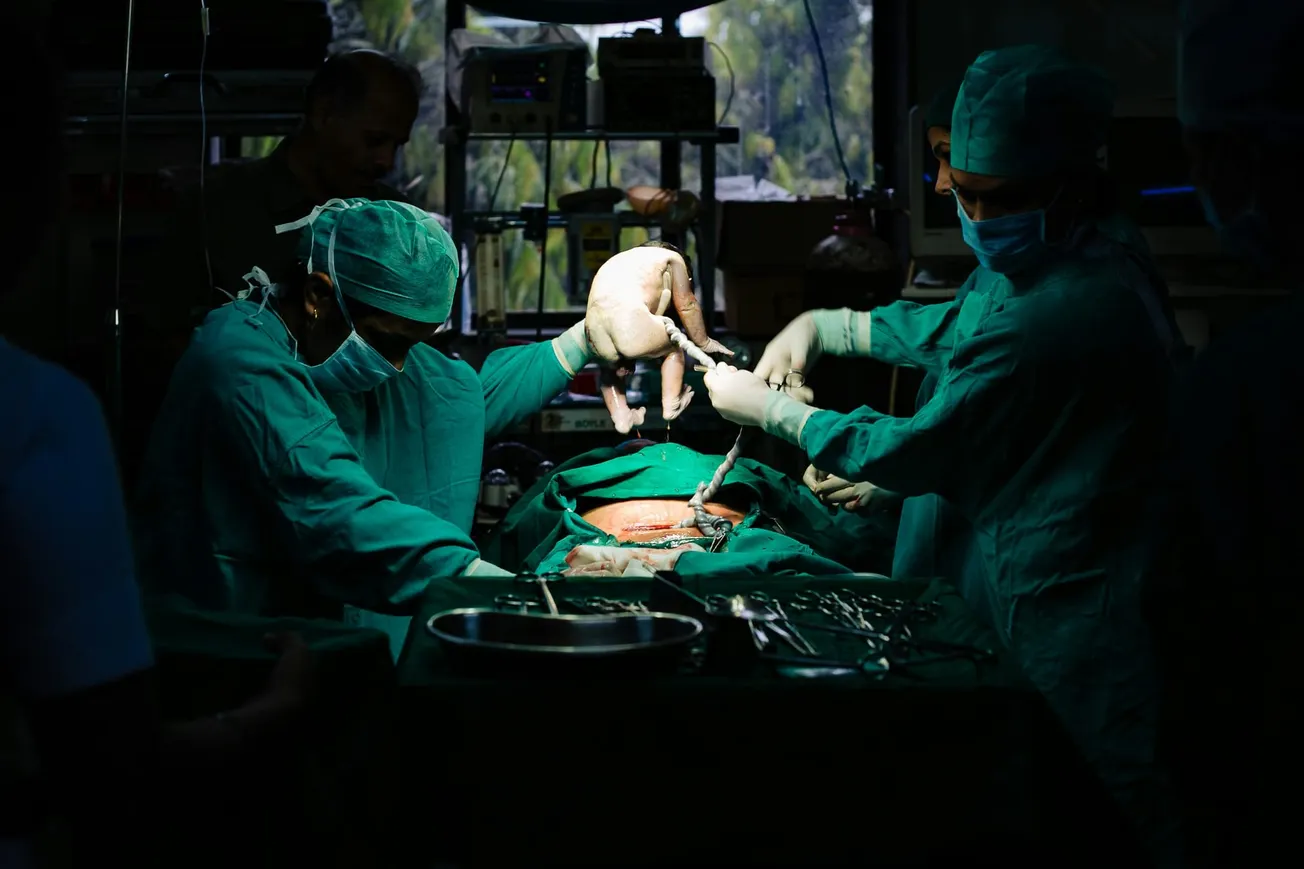
The fact that Rojas is accused of practicing medicine without a license might seem odd, given that she was a licensed healthcare professional. In fact, this charge evokes a long history of anti-midwifery policies in the United States, and in particular, abortion bans being used in an attempt to force midwives out of practice.
America’s first abortion bans were enacted in the mid-nineteenth through the early twentieth century. Some of their most vocal advocates included a group that would surprise many people based on today’s politics—doctors. At the time, university-trained physicians were newcomers to a healthcare landscape dominated by other practitioners. Among the most skilled and trusted of these providers were midwives, who were often Black, Indigenous, or immigrant women. The newly-formed American Medical Association (AMA), on the other hand, was made up entirely of white men—and it would exclude women and Black people until forced to admit them following the Civil Rights Act of 1964.
Women trusted midwives for their reproductive care, and for good reason: Some research indicates that home births attended by midwives had lower rates of maternal death than births attended by physicians in early American hospitals. Physicians referred to this as the “Midwife Problem.” Doctors were determined to force midwives out of business, and solidify themselves as the only legitimate practitioners of medicine.
One of their key strategies was to associate midwives with another form of care they provided—abortion—paint abortion as dangerous, and lobby lawmakers to outlaw it. They started this campaign in earnest in the mid-1800s, and by 1910, every state in the country banned abortion entirely. The medicalization of birth quickly followed. In 1900, only 5 percent of all births occurred in hospitals. By 1935, that number had increased to half of all births. While the AMA has since changed its stance on abortion, it continues to lobby aggressively to limit the scope of practice of other healthcare providers like nurse practitioners and physician associates.
Beyond the specific targeting of individuals like Rojas, many states still have laws on the books that “treat midwives like criminals,” said Hillary Schneller, a CRR senior staff attorney.
For example, CRR is currently representing a group of midwives suing the state of Georgia over its restrictive laws, which threaten jail time and fines for professional midwives who practice without a nursing license—regardless of what other training they have. They also require certified nurse midwives (CNMs) to work under physician oversight, an arrangement that is often very expensive. Evidence shows it’s safe for CNMs to practice independently, and according to the American College of Nurse Midwives, 31 states and Washington, D.C. allow them to do so. However, opponents of independent practice for CNMs, and the licensing of professional midwives who aren’t CNMs, include—you guessed it—the AMA.
States typically try to justify these policies by saying they’re intended to protect patients’ health and safety, Schneller said. Yet Georgia has the second-highest rate of maternal mortality in the country, with particularly high rates of death among Black women, especially those living in rural areas. “What we are doing now is not working,” Schneller said. “It cannot be that pushing midwives out of practice is protecting patients.”
One of CRR’s Georgia clients, Jamarah Amani—who cofounded the National Black Midwives Alliance—was inspired to become a midwife in part by a bad hospital birth experience. “She is a Black woman who was giving birth for the second time, and a white nurse in the hospital scolded her to stay in bed, and threatened that if she didn't stay in bed, she risked killing her baby,” Schneller said. Amani wanted to offer birth care that was more respectful than what she received—but due to Georgia’s restrictive laws, she had to relocate to Florida to train and practice as a midwife.
Black women are increasingly avoiding hospitals because of experiences like Amani’s, and many people also seek out midwives for culturally competent care. “I think we often think about pregnancy and birth as primarily medical events, but across the board, there is deep cultural significance,” Schneller said.
In a previous lawsuit, CRR secured expanded protections for midwives in Hawaii after challenging its restrictive laws. A central issue in the case was that regulations were forcing Native Hawaiian midwives out of practice, threatening criminal penalties for those who trained through traditional apprenticeship pathways. “That had many ramifications, including the risk of eradicating those traditional practices completely, because people couldn’t teach the next generation and pass them on,” Schneller said. One plaintiff in the case was one of only two licensed Black midwives in Hawaii.
"The problem is that there's a human being on the other end of whatever political point it is they're trying to make."
Research shows that access to midwives improves outcomes for pregnant people and their newborns. Yet, like Georgia, other Southern states maintain harsh restrictions on midwifery, despite high rates of maternal mortality, especially among Black women. In Alabama, the American Civil Liberties Union is representing midwives and birth centers challenging a decision that would require the centers to be certified as hospitals. The American College of Nurse Midwives is also suing Mississippi over its requirement that CNMs have an agreement with a physician in order to practice.
“This is not an either/or: We need hospitals. We need OBGYNs,” Schneller said. “We also need midwives to be able to care for people and prioritize their choices about where and with whom they give birth.”
Schneller connected these policies to Rojas’ prosecution. “It is worsening a problem that already exists,” she said. “When the state went after Maria, her clinics were forced to close. The state didn't come in and fill that gap. It instead left a community that already was deeply under-resourced with no more healthcare provider.”
As for Rojas herself, “this has been an incredibly difficult time for her, both financially and emotionally,” Hochglaube said. “The problem is that there's a human being on the other end of whatever political point it is they're trying to make.”
This story was edited by Susan Rinkunas and copy edited and fact checked by Hannah McAlilly.
Follow Autonomy News on Instagram, Bluesky, TikTok, Threads, and LinkedIn.