Autonomy News is a reader-funded, independent publication. Our reporting isn't possible without your support. Become a sustaining member or make a tax-deductible gift today.
An Arizona man who was recently awarded nearly $70,000 in damages over his ex-wife’s abortion filed an appeal last month because he and his attorney want more. Specifically, they want courts to establish personhood for the 8-week embryo—something that could lead to a bigger payout, and set a legal precedent that could imperil many forms of reproductive healthcare.
The case dates back to 2020, when Mario Villegas sued a Phoenix abortion clinic and two physicians alleging that they didn’t follow the state’s informed consent law for his ex-wife’s wanted abortion in 2018. The woman signed four consent documents for her medication abortion and Villegas went with her to all three appointments, according to ProPublica. But Villegas argued in the suit that clinicians didn’t tell her about alternatives to abortion or the loss of “maternal-fetal” attachment, nor did they give her the URL of a government website with information about crisis pregnancy centers. All of this is required by state law.
The biased counseling law in Arizona, like in many states, has a private right of action. This means citizens can sue to enforce the law. In the case of Arizona, a would-be father—if married to the pregnant person at the time of their abortion—can file suit if the draconian regulations aren’t followed, said Stephanie Toti, executive director of The Lawyering Project, which represents the clinic.
The man’s attorney, J. Stanley Martineau, told Autonomy News “there's no doubt” that the case would impact reproductive rights in the state if his client prevails. “I'm going to ask the Arizona Supreme Court to make a decision [on the question of] ‘are prenatal children persons under the Arizona Constitution,’ and yes, it would change everything,” Martineau said. “It will throw a huge monkey wrench into reproductive rights in Arizona. Everybody assumes they're settled.”
In 2024, Arizonans passed a constitutional amendment codifying a right to abortion until fetal viability. Martineau claimed that a recognition of embryos as legal persons wouldn't ban abortion. “But it would certainly require a balancing,” he said. “It would be more like the way things were in Arizona with the so-called territorial abortion ban.” That 1864 law banned all abortions except to save the life of the pregnant person; the legislature repealed it in 2024.
Villegas and his ex were married at the time of her 2018 abortion, but they were already talking about separating. They divorced later that year. The woman claimed during the trial that Villegas lied to her about whether he had gotten his vasectomy reversed in 2017, and Toti said an expert witness testified that “their relationship fit a certain pattern of abuse.” She said the witness added that the lawsuit was a way for Villegas to further control his former partner by “dragging her into court, by publicizing her abortion, by creating a need for them to continue to interact.”
“That's, to me, what's most infuriating about it,” Toti said. “Statutes like this biased counseling statute—and so many of the vigilante statutes that we've seen enacted over the past three years—are mainly utilized by abusive partners as a means of continuing to perpetuate their abuse.”
But Villegas didn’t just allege violations of the biased counseling requirements. He also claimed that the embryo was a person under Arizona law, and made a wrongful death claim on behalf of himself and the embryo’s “estate.” He sought damages not just for his own psychological and emotional “injuries”—including being deprived of “love, affection, comfort, and companionship of his child”—but also for the net lifetime earnings of the embryo had the abortion never happened. A judge dismissed Villegas’ wrongful death arguments in 2024 and the parties went to trial on the informed consent claim, where a judge sided with him. The judge ruled that the woman didn’t prove Villegas intentionally misled her about his fertility and that the expert witness wasn’t persuasive in part because the woman was able to get an abortion. In July, the judge awarded Villegas $67,500 in damages under the counseling law; he had sought $1.25 million.
Villegas’ October appeal, which has not been previously reported, argues that the judge should have ruled in favor of “the constitutional personhood of Mario’s embryonic child,” thereby resulting in greater damages under the wrongful death statute. From the outset of the case, Villegas referred to the 8-week embryo as a girl, despite the fact that sex is typically not confirmed until at least 10 weeks in pregnancies that don’t result from IVF.
“The plaintiff is upset that he wasn't able to prevail on his fetal personhood claims or make any [legal] precedent about fetal personhood,” Toti told Autonomy News.
One upside of the appeal is that Toti’s firm can now argue to another judge that the informed consent statute is unconstitutional under the 2024 amendment and should be struck down. Toti said they did make that argument at the trial court level, but the judge said he wouldn’t rule on the matter. If the appeals court strikes down the law, “that would nullify the judgment” awarded to Villegas, Toti said.
Even if that determination doesn’t happen in this case, physicians filed another legal challenge to the biased counseling law and other abortion restrictions on the basis of the constitutional amendment. Democratic Attorney General Kris Mayes refused to defend the statutes, so Republican leaders of the state House and Senate waded into the litigation. But after Democrats flipped the legislature in the midterm elections, they’re expected to drop out of the case. A judge will likely strike down the laws by default. Should the doctors’ suit wipe out the biased counseling law, no other disgruntled ex could sue in a case like this.
Toti said the woman was so sure about her choice that she was a witness for the abortion provider at trial. “She was completely satisfied with the services that she received at the clinic,” Toti said. “She felt like her decision was fully informed, and nothing would have changed her mind.”
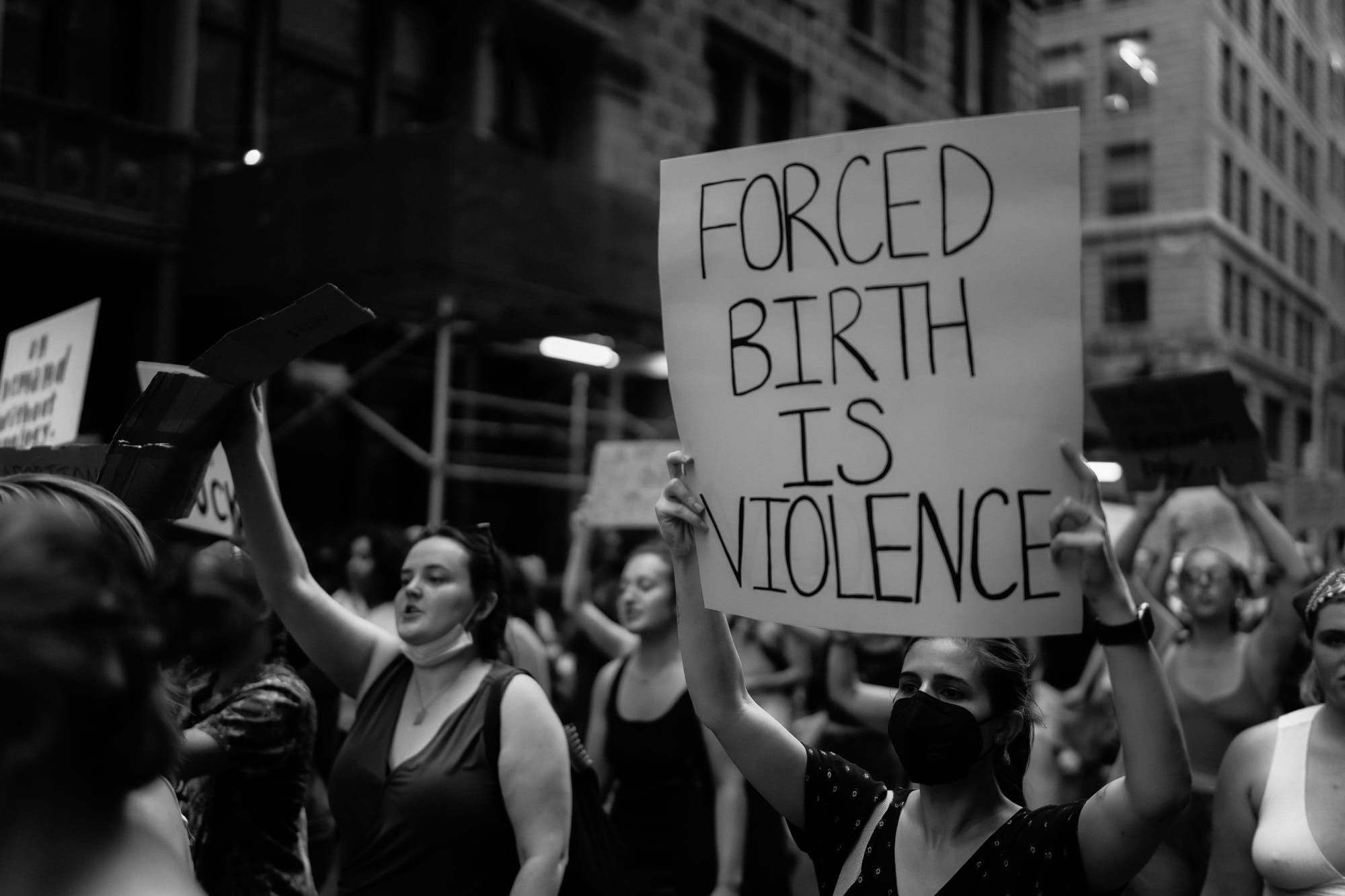
While Villegas’ case may seem bizarre, it’s far from the first of its kind. In fact, using civil lawsuits to punish people for having abortions has become a favored strategy of the anti-abortion movement. This approach was pioneered by far-right attorney Jonathan Mitchell, who wrote the most notorious vigilante law in the country: Texas SB 8, which allows any private citizen to sue someone who “aids or abets” abortion after about six weeks of pregnancy for at least $10,000. That mechanism now also applies a $100,000 bounty to those who manufacture, distribute, or otherwise help people get abortion pills under a law known as HB 7. (If a plaintiff isn’t related to the fetus they can seek $10,000, with the rest going to charity.)
Mitchell has represented multiple Texas clients accused of abuse or harassment, including a man who sued friends of his ex-wife for $1 million in wrongful death damages because they allegedly helped her get abortion pills. The parties settled the case days before a trial was set to begin. Mitchell is currently representing a convicted abuser suing a California doctor for prescribing mediation abortion to his ex, and a woman who sued a telehealth abortion service and her ex-partner in 2025 in what the man alleges is retaliation because he wanted to end the relationship. He claims she miscarried without ever taking the pills.
Villegas got the idea to sue for wrongful death of an embryo from an Alabama man upset about his former partner’s abortion at six weeks pregnant, according to ProPublica. In 2019, Ryan Magers opened an estate for his ex-girlfriend’s aborted embryo and sued a Huntsville abortion clinic over her 2017 termination. He cited a constitutional amendment Alabama voters passed in 2018 saying the state recognizes the “rights of unborn children.” A judge later dismissed the case, writing that Magers could not bring a wrongful death claim because the abortion was legal. The clinic’s medical director, Dr. Yashica Robinson, said the lawsuit was part of “thinly veiled attempts to abolish abortion, and to harass and intimidate abortion providers and women.”
At some point, Villegas contacted Magers’ lawyer, who referred him to Martineau, the attorney who eventually filed his case in Arizona.
Liked this story?
The outcome of this lawsuit remains to be seen, but anti-abortion activists celebrated a recent settlement in a similar case out of New Mexico.
In 2023, a woman filed a wrongful death lawsuit against an Albuquerque abortion clinic on behalf of the estate of her 26-week fetus. She said she couldn’t legally consent to her 2020 abortion because she was under the influence of methamphetamine at the time. A judge had determined that “a 26 week old viable fetus…is a person as defined under the Wrongful Death Act.” The clinic settled in September, paying her $200,000.
Anti-abortion activists believe this New Mexico settlement could be the first awarded to the estate of an aborted fetus—but it might not be the last.
This story was edited by Garnet Henderson and copy edited and fact checked by Hannah McAlilly.
Follow Autonomy News on Instagram, Bluesky, TikTok, Threads, YouTube, and LinkedIn.