Autonomy News is a reader-funded, independent publication. Our reporting isn't possible without your support. Become a paid subscriber or make a tax-deductible gift today.
On Tuesday, a Texas woman sued employees of the anti-abortion group Students for Life of America (SFLA) who tried to order medication abortion online and filmed the stunt for social media. She’s using a state law that empowers members of the public to sue anyone who manufactures, distributes, or provides abortion medication for at least $100,000. In a twist, SFLA’s lobbying arm pushed the Texas legislature to enact the bounty-hunter law last year, and declared “victory” when it passed.
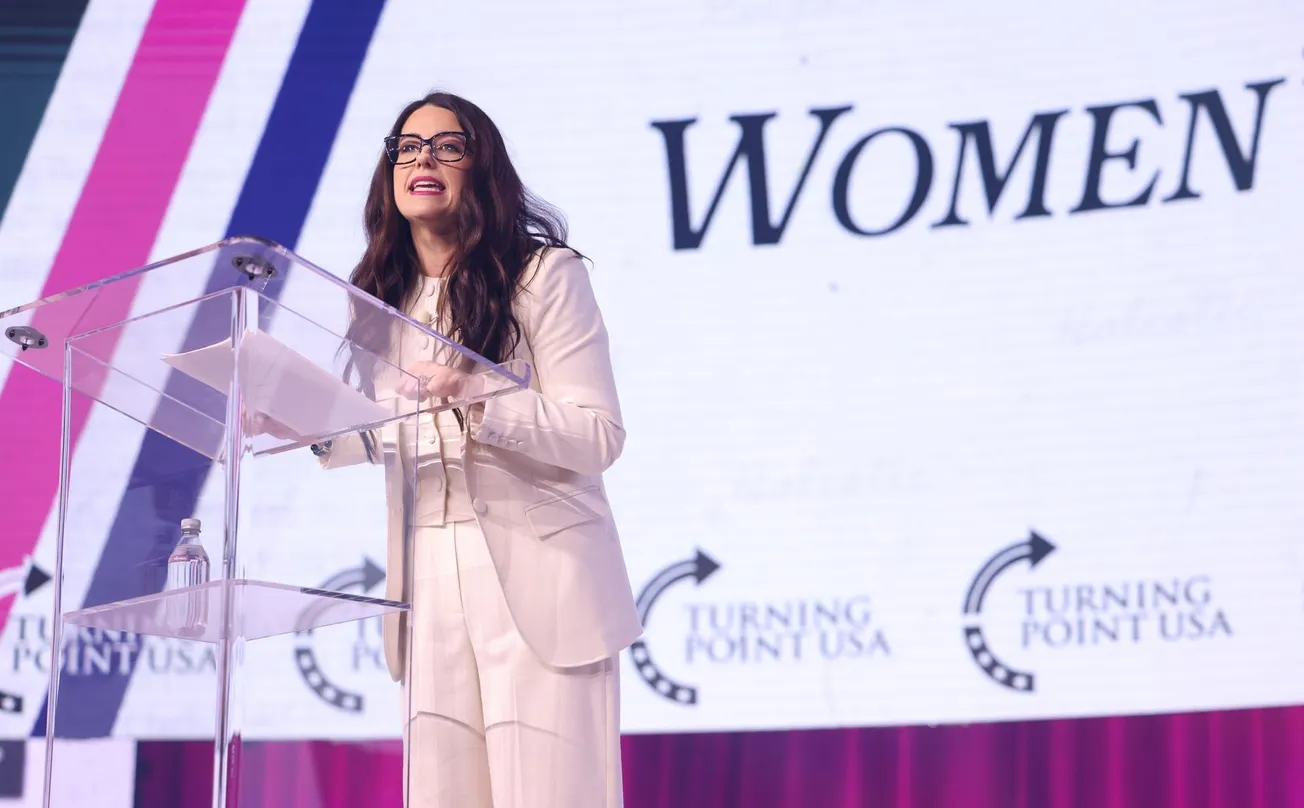
In March, the group posted a photo of president Kristan Hawkins and other employees using their phones in front of Houston’s Space Center on Instagram stories. Text overlaying the photo read, “Guess what we are doing? Ordering abortion pills undercover? Yep. Stay tuned.” Not only did SFLA broadcast the stunt online, they conducted it in front of journalist Amy Littlefield, who documented it for Mother Jones. It’s unclear whether they actually obtained the pills.
The law, HB 7, bars legal action against people who obtain pills to end their own pregnancies. However, it allows any private citizen to sue someone for damages if the defendant distributes pills or simply “intends” to do so. Unlike in normal civil suits, the litigant doesn’t have to be personally harmed by the acts of the people they’re suing.
But the woman suing Hawkins and her colleagues was harmed by the state of Texas. Maria Puerto is a 26-year-old single mom who says the state’s abortion bans forced her to give birth not once, but twice. Puerto, who’s using a pseudonym, is suing for $459,782, the average cost to raise two children in Texas until age 18.
Puerto, who first shared her experience with The Meteor, said she wants the people responsible for the bans to know her story. She got pregnant in 2022 while using the birth control pill. Puerto’s elderly mother relied on her financially. She didn’t have a car, so she felt traveling out of state wasn’t an option. “It was either pay for my mom’s medicine or get an abortion,” Puerto said, per the complaint. As her pregnancy continued, she lost a college scholarship after leaving class due to severe morning sickness—forcing her to drop out—then she lost her job at a convenience store because she could no longer lift heavy objects.
"The majority of abortion seekers look like Maria, and we don't hear from them enough."
After becoming pregnant again in 2024, she experienced “severe depression,” especially after learning she was having a girl. Her boyfriend left her, and while he sends her “a few hundred dollars a month,” she cannot afford the childcare necessary in order to get a job. She says she’s living in a room in her mother’s home and sharing a bed with her two children, ages 3 and 1. She sometimes sleeps on the floor.
Puerto’s lawyer is Molly Duane, who previously represented a group of Texas women who were denied abortion care in the state despite experiencing obstetrical complications. Duane has worked with many people in similar circumstances in a decade as a reproductive rights attorney. “While not rare, that is the minority of abortion seekers,” she told Autonomy News. “The majority of abortion seekers look like Maria, and we don't hear from them enough.”
“It does seem strange that someone with literally no legal standing could bring a lawsuit,” Duane said, referring to the fact that the SFLA stunt didn’t directly involve Puerto. But “if anyone should be benefiting from this regime, it should be people like my client,” she said.
All-too-common harms
Duane is the litigation director of Amplify Legal, the legal arm of Abortion in America, an advocacy group that shares patient stories. She said that even though it’s legal in Texas to order abortion pills for your own use, Puerto was too fearful. “It's something she was scared to do,” Duane said. “Even before HB 7, people were terrified about it.”
So the fact that SFLA employees bragged on social media about how easy it is to break the law was too much to bear. “My client said it felt like they were mocking her and people like her,” Duane said. As Puerto wrote in The Meteor: “I’ve filed a lawsuit against those who helped build these horrible laws—and then had the privilege to break them in an attempt to trap women like me who still need help.”
Duane believes this is the first time an anti-abortion group has been sued for violating a law it helped pass. But because of how the statute was written, if Puerto wins, she can only collect $10,000. The rest would go to a charity of her choosing—Jane’s Due Process, a nonprofit that helps young Texans navigate legal barriers to abortion and birth control. Abortion in America set up a fundraiser for Puerto for the remaining $449,000 it will cost to raise her children.
SFLA vice president of media & policy Kristi Hamrick said in a statement about the lawsuit that the organization “appreciates the backhanded compliment that because of our legislative work, babies’ lives are being saved.” The statement also claims that no one is forced to parent, because they can relinquish their children at birth under “Safe Haven” laws. It even name-checked Supreme Court Justice Amy Coney Barrett, who made that claim during arguments in the Dobbs case where the court overturned Roe v. Wade. Hamrick continued that “the goal of the abortion lobby is not to help a woman in need but rather to prop up abortion.”
But Amplify Legal is trying to help Puerto—by getting her compensation to raise her children. “We need to spend more time thinking about the hardships that abortion bans place on the lives of everyday Americans,” Duane said. “This is the story that is all too common but rarely told.”
‘The law is a tool’
SFLA is increasingly focused on restricting access to abortion pills nationwide, whether by reimposing unnecessary in-person appointments, weaponizing a dormant anti-vice law called the Comstock Act, or even labeling mifepristone—the first of two drugs in a typical regimen—as a water contaminant.
SFLA is leading a campaign to use environmental laws to restrict medication abortion access, an effort it launched in late 2022 but ramped up after Trump won a second term. At the organization’s January 2025 conference, Hamrick spoke about appealing to the sensibilities of incoming health secretary Robert F. Kennedy Jr. “This is not because the environment was my first weapon of choice—it’s because it’s the one we have now,” Hamrick said. “Frankly, I’m for using the devil’s own tools against them.”
In June, the organization argued in an appeals court brief that the Food and Drug Administration violated the Endangered Species Act when it approved mifepristone in 2000, and later allowed prescriptions via telehealth, because the FDA didn’t consult with wildlife agencies about the potential effects of its usage.
Duane said that, by using HB 7 to advocate for Puerto, she’s also using the tools available to her. “The law is a tool. It can be used for justice. It can be used for harassment,” she said. “I see my job as a lawyer to be using it as a tool to help people seek justice.”
Duane added that the post-Dobbs world calls for different strategies. “We are living in unprecedented times where a constitutional right was taken away for the first time ever,” she said. “I think we have to be more creative as lawyers and as advocates for our clients.”
Hawkins seems to view the law differently. The SFLA president wrote on X in response to the lawsuit that, while Puerto’s school may have discriminated against her, it was “child abuse” for Puerto to say that she wanted to have abortions rather than give birth to her children. She said Child Protective Services should investigate her “asap.”
Duane said that comment is telling. “The defendant's first reaction to this lawsuit is to directly threaten a woman who's just trying to support her kids. I think that says everything you need to know about how much they actually care about Texas families,” she said.
Other activists behind the Texas statute
State lawmakers passed the first bounty-hunter abortion ban in 2021, which ended legal access to abortion after about six weeks in Texas. That law, SB 8, was written by anti-abortion attorney Jonathan Mitchell. It was designed to evade judicial review because it’s enforced by citizens—who are incentivized to file lawsuits against people they believe violated SB 8—rather than by state officials. That meant there was no one to sue in order to get a court to block the law from taking effect, and abortion providers halted care lest they face ruinous lawsuits. Last year, the legislature applied the civil enforcement mechanism to the distribution of abortion pills with HB 7, a bill passed during the second special session.
Duane said she’s aware of only two other HB 7 lawsuits since the law took effect last December: wrongful death cases involving a Texas man suing a California abortion provider, and a Texas woman suing a Marine and an abortion pill service. Both plaintiffs are represented by Mitchell, the lawyer who wrote the original bounty statute.
"If anyone should be benefiting from this regime, it should be people like my client."
In Davis v. Cooprider, Liana Davis alleges that Chris Cooprider drugged her with abortion pills. She sued him, plus pill provider Aid Access and its founder Rebecca Gomperts. Cooprider countersued, accusing Davis of making up the coerced abortion as part of a political stunt to get the bill passed. Indeed, the complaint was filed the same day that an abortion pill bounty bill had a legislative hearing. Mitchell associate and anti-abortion activist Mark Lee Dickson lobbied legislators to pass the bill and repeatedly mentioned Davis’ lawsuit as an example of why the law was needed. After HB 7 went into effect, Mitchell added violations of the law as claims in Davis’ suit.
The other case, Rodriguez v. Coeytaux, actually came first—but it had to be refiled because the plaintiff, Jerry Rodriguez, couldn't sue under HB 7 since he was convicted of a family violence offense in 2006. Mitchell dropped the original case, added Rodriguez’s daughter as a co-plaintiff and started all over. Attorneys for Remy Coeytaux, a California abortion provider, argue that HB 7 violates both the Texas and U.S. Constitutions and that the case against him should be dismissed.
“I'm not going to say that [Coeytaux’s] arguments don't have merit,” Duane said. “I've been practicing law for a long time, and SB 8 and HB 7 are oddities—no other law works like that,” she said.
At this stage, she said, she’s not worried about legitimizing a law that could be used to harm people helping abortion seekers, because so few bounty hunter cases have been filed. “The reason for that is that Texans protect each other,” she said. “They don't rat each other out.”
While Duane doesn’t know what a judge will say about her case, it was her job to file it. “We don't need to just sit back and wait for anti-abortion extremists to target us, when all we're trying to do is help Texas families,” she said. “We can go on the offensive, too.”
This story was edited by Garnet Henderson and copy edited and fact checked by Hannah McAlilly.
Follow Autonomy News on Instagram, Bluesky, TikTok, Threads, and LinkedIn.