Table of Contents
Autonomy News is a reader-funded, independent publication. Our reporting isn't possible without your support. Please consider becoming a paid subscriber or making a gift from a donor-advised fund today.
Welcome to the latest edition of our weekly roundup. Every Monday, we’ll send you a summary of the biggest stories about bodily autonomy. We’ll also include links to pieces that Garnet or Susan have published.
If you’d prefer to receive a single email every week, you can do that—we love autonomy. You can manage your subscriptions by navigating to the site, clicking on “Account” in the upper right, then under “Emails,” select “Manage.” You can toggle off “Autonomy News” to receive only the roundup, or vice versa.
Let’s dive in.
On Autonomy News
Shortly before his confirmation, Attorney General Todd Blanche said on a private call hosted by the White House Faith Office that he's working to end abortion pills by mail. If that happens, a former lawyer for the Department of Health and Human Services told Susan that Blanche’s statements are likely to be cited in a lawsuit against the Trump administration. Blanche knows that, but he may have been sending a signal to conservative groups frustrated that the White House hasn't restricted medication abortion that the actions they want to see are coming soon. (Share this story on Instagram, Bluesky, or TikTok.)
 Susan Rinkunas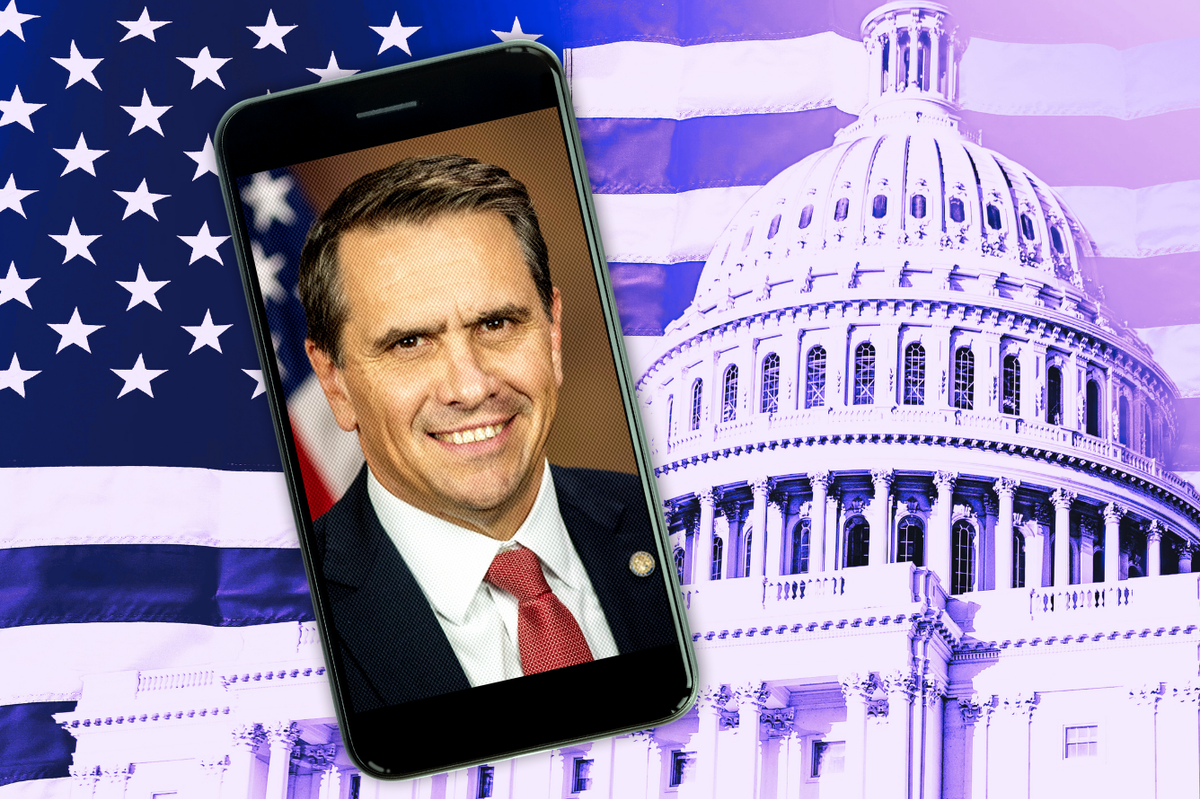
Federal news
If Todd Blanche was trying to win over conservatives, it seems to have worked: Around 4am Saturday, the Senate confirmed him as Attorney General by a vote of 50 to 49. As we’ve covered, Blanche has courted the votes of anti-abortion lawmakers for weeks, most notably by committing to review the Justice Department’s stance on the Comstock Act, a 19th-century law conservatives hope to use to ban the shipment of abortion pills nationwide, if not all abortion supplies. About five Republican Senators were on the fence about him. Two retiring Senators, John Cornyn and Thom Tillis, finally backed his confirmation last Monday. Then, the purportedly pro-choice Susan Collins and Lisa Murkowski both said they would vote no. It came down to Bill Cassidy, who will also leave Congress in January and would ostensibly have nothing to lose for finding his spine. On Friday, he gave a pathetic speech to try to explain why his vote was a “yes.”
Speaking of Comstock, a top anti-abortion group that had stayed relatively silent on the law is now calling on the Trump administration to interpret it as a ban on shipping any item used for abortions. On Friday morning, Susan B. Anthony Pro-Life America signed a coalition letter urging Blanche to review a 2022 Justice Department opinion on the law that cleared the postal service and other shipping companies to deliver abortion pills into states with bans. This is the first public statement we can find where SBA has directly supported enforcing Comstock as an abortion ban. Experts don't believe the Trump administration will make any changes to abortion pill access until after the midterm elections. However,if Blanche goes for Comstock, that could endanger not only the abortion drug mifepristone, but also misoprostol-only abortions—the planned backup in case mifepristone is restricted—and even in-clinic procedures. We’ll have more on this soon.
Our clueless president signed an executive order that attempts to override the childhood vaccination schedule set by the Centers for Disease Control and Prevention (CDC). The order also calls for the measles, mumps, rubella (MMR) vaccine to be split into three separate shots, which isn’t currently possible in the US as the vaccines aren’t separately licensed and the licensing process takes years. Executive orders do not have the force of law, but this one tasks the Attorney General with challenging state laws that conflict with Trump’s desires. This could create “political pressure” on states to change their school vaccine requirements, one expert said. The Wall Street Journal recently reported that Trump had been pressuring Robert F. Kennedy Jr. on vaccines—not the other way around—even though his advisors warned him not to make changes before the midterm elections.
In more CDC news: Dr. Erica Schwartz, who served as Deputy Surgeon General during Trump’s first term, was confirmed as the agency’s new director. Unlike many Trump nominees for health posts, Schwartz actually has a public health background and experience working in government. But at her July confirmation hearing, in response to a question from none other than Missouri Senator and abortion hater Josh Hawley, Schwartz said she considers abortion surveillance—meaning counting the number of abortions that happen in the U.S.—to be “critical.” She also said that she wanted “to make sure that certain states are not conflating emergency services and hiding abortions in that emergency services case definition,” an alarming comment given that abortion is the treatment for many emergencies in pregnancy, and doctors in ban states are already too hesitant to offer it. As Hawley noted at the hearing, not all states report their abortion statistics to the CDC. One of the many anti-abortion policies included in Project 2025 was a scheme that would force all states to report abortion data, including granular information like why a patient had an abortion.
In February, Garnet reported that the Food and Drug Administration had quietly placed new restrictions on Nexplanon, the birth control implant. Like the abortion drug mifepristone, Nexplanon is now regulated under an FDA program known as Risk Evaluation and Mitigation Strategies (REMS), which allows the agency to place additional restrictions on a drug’s prescription or distribution. The FDA always required that providers be trained to place Nexplanon. Now, they have to undergo training and sign up for a REMS registry. The deadline for providers to get REMS-certified is coming up on August 23.
Republican Senators voted unanimously against a proposal that would have expanded access to in vitro fertilization for members of the military. This is a significant shift—in recent years, a majority of Republicans in both chambers supported such a plan, but anti-abortion groups have been demonizing IVF.
State news
Massachusetts Governor Maura Healey signed the Prioritizing Patient Access to Care Act into law, officially repealing the state’s ban on abortions after 24 weeks. She cited stories of people forced to leave the state for care. Predictably, anti-abortion groups are freaking out. It’s a reminder that, for them, the Dobbs decision wasn’t actually about “sending abortion back to the states,” but rather a necessary step on the path to banning abortion nationwide.
Hours before being sworn in as a Kansas Supreme Court justice, Christopher Jayaram wrapped up one of his final cases as a district judge, overturning a biased “informed consent” law for abortion that dates back to 1997. Garnet covered this trial—in which Christian nationalist law firm Alliance Defending Freedom stepped in to help represent the state—late last year. The legislature repeatedly expanded the law, which required abortion providers to give patients medically inaccurate “counseling” materials that falsely claimed abortion can cause breast cancer and infertility. It imposed a 24-hour waiting period following this “counseling” and an additional 30-minute delay between a required ultrasound and an abortion. Recent updates to the law would have forced providers to tell patients about unproven and potentially dangerous abortion pill “reversal” treatments at least five times, and required them to ask a patient’s reason for seeking an abortion.
An Oklahoma law that makes possession of abortion pills a felony goes into effect this week. HB 1168 doesn’t allow criminal charges for a pregnant person intending to take abortion pills, but anyone who helps them could face 10 years in prison or a $100,000 fine.
A Colorado initiative to repeal the state’s constitutional right to abortion failed to get enough signatures to make the November ballot. Voters passed the protective amendment in 2024 with 62 percent support.
Elections
Voters in Kansas and Missouri soundly rejected constitutional amendments that could have threatened abortion access. The job isn’t done yet for Missourians, who still need to vote in November on an amendment that could reinstate an abortion ban they overturned in 2024. The campaign opposing the ban recently received a $1.25 million donation from former New York City Mayor Michael Bloomberg.
Former Missouri Rep. Cori Bush lost her primary challenge to Rep. Wesley Bell, who defeated her two years ago.
Personhood watch
Two North Carolina teenagers were arrested after an alleged attempted medication abortion at 31 weeks. Police claim that after the young couple discovered that the girl was pregnant, she ordered mifepristone online. She was arrested on charges of assault with a deadly weapon, assault inflicting serious bodily injury on an unborn child, and negligent child abuse, while the father was arrested for negligent child abuse. Though abortion is banned after 12 weeks in the state, it’s not a crime to self-manage an abortion—in fact, only one state, Nevada, explicitly criminalizes self-managed abortion, and only after 24 weeks. The other charges show how law enforcement will punish people for abortion and pregnancy loss, often misusing the law to do so. Durham County District Attorney Satana Deberry told a local news outlet that her office was still deciding whether to pursue the charges. "I’ve been on the record, over and over again, saying that I believe a woman has the right to choose and has the right to make decisions about her own body," Deberry said. "And we will review the evidence in this case in that light." A judge set their bonds at $1,000 each, saying that neither teen posed a danger to the community. They shouldn’t be in jail in the first place.
First Amendment watch
We already told you that South Dakota appealed a ruling that blocked the state from enforcing a medication abortion law that makes it a felony to dispense, distribute, or advertise the pills but we need to talk about the language in the appeal, where the Attorney General compared abortion pills to meth. Abortion pill information nonprofit Mayday Health sued over HB 1274, arguing that the law violates the First Amendment. Attorneys for the state argued that the ruling “could just as easily protect the solicitation and aiding and abetting of online methamphetamine sales by groups who claim to simply ‘provide information’ about methamphetamine and offer consumers the ‘choice’ to commit an illegal act.” Yeah, no.
Assaults on queer people
The Human Rights Campaign and a group of federal employees are suing the Trump administration for cutting off insurance coverage of gender-affirming care for employees and their family members. A prohibition on coverage for any gender-related care other than mental health treatment has been in effect since January. Initially, there was a vague exception for people who were already in ongoing treatment, but that exception was eliminated in March.
Amid the administration’s ongoing effort to exclude transgender people from the military, the Pentagon is using secretive separation hearings to kick trans members out. The public isn’t allowed to attend, and in some cases, the soldiers themselves have been barred from the process, sometimes because they refused to appear in the uniform matching their sex assigned at birth. Such hearings are normally used when service members have committed crimes.
The Eleventh Circuit Court of Appeals upheld the Florida law that bars children from drag shows.
Extremism
Across the country, police officers are using Flock license plate cameras to stalk their ex-partners. A recent Washington Post report includes one incident in which a Wisconsin cop used Flock cameras to check whether his girlfriend had gone to an abortion clinic. This follows reporting from 404 Media last year which found that a Texas cop used cameras in states as far away as Washington and Illinois to search for a woman at the behest of her family after she’d had an abortion.
Quick hits
- According to the National Women’s Law Center, the U.S. economy lost a net 23,000 jobs in July—and women accounted for 100 percent of the losses. Despite making up half of the workforce, women lost 32,000 jobs, while men gained 9,000 jobs.
- Hospitals are trying a low-tech way to help emergency workers stay vigilant about the health risks that postpartum people face: giving them silicone wristbands that say “I gave birth.”
- A new study reviewed nearly 60,000 contraceptive visits across five Planned Parenthood affiliates. It found that telehealth care was just as safe, effective, and person-centered as in-person care. Telehealth patients also had shorter wait times and quicker visits.
- Another new study confirms that patients are traveling farther from home to get abortion care at or after 14 weeks since the Dobbs decision. The study also found significant regional disparities, with travel times decreasing slightly in the Northeast—likely due to relaxed restrictions and new clinics opening—while travel times significantly increased for patients in the South.
Palate cleanser
It’s important to know your boundaries.
@phoebeday71 My spirit animal 💘
♬ Just A Girl - No Doubt
Follow Autonomy News on Instagram, Bluesky, TikTok, Threads, and LinkedIn.