Table of Contents
Autonomy News is a reader-funded, independent publication. Our reporting isn't possible without your support. Become a paid subscriber or make a tax-deductible gift today.
Welcome to the latest edition of our weekly roundup. Every Monday, we’ll send you a summary of the biggest stories about bodily autonomy. We’ll also include links to pieces that Garnet or Susan have published.
If you’d prefer to receive a single email every week, you can do that—we love autonomy. You can manage your subscriptions by navigating to the site, clicking on “Account” in the upper right, then under “Emails,” select “Manage.” You can toggle off “Autonomy News” to receive only the roundup, or vice versa.
Let’s dive in.
On Autonomy News
The abortion drug mifepristone is being tested as a treatment for everything from PTSD to leukemia to alcohol addiction to uterine fibroids. But the Dobbs decision has complicated and slowed research, as Politico reporter Alice Miranda Ollstein writes in this excerpt from her new book, Side Effects: How Abortion Bans Impact Everyone's Health. (Share this story on Bluesky.)
 Alice Miranda Ollstein

Federal news
A panel of judges from the Ninth Circuit Court of Appeals lifted a lower court injunction that would have allowed Idaho physician Stacy Seyb to provide abortion care if a patient’s health is at risk. Presently, the ban has an exception only to save the patient’s life. Seyb and his attorneys have argued that the U.S. Constitution protects access to medically indicated abortions as part of our fundamental rights to life and health. Initially, a federal judge ruled in Seyb’s favor, issuing an injunction that would have allowed any doctor in the state to provide health-preserving abortion care. He later narrowed that injunction to apply only to Seyb following a request from Attorney General Raúl Labrador, who then appealed even that downsized ruling to the Ninth Circuit. A lawyer from Christian nationalist law firm Alliance Defending Freedom stepped in to help represent the state at oral arguments. Voters have a chance to overturn the ban tomorrow, see “Elections” section.
Judge Kim McLane Wardlaw, a Clinton appointee, wrote that the Dobbs decision closed “the door on finding any constitutional right to an abortion—particularly one as vague and ill-defined as the right pressed here.” One of the three judges—Marsha Berzon, another Clinton appointee—dissented, writing that “Dobbs left open for future consideration the life-or-health abortion right separately recognized in Roe and Casey.” Seyb could ask for a rehearing from a larger panel of judges at the Ninth Circuit, or appeal to the Supreme Court. This ruling was only about the temporary injunction, and the case has yet to be decided on its merits. However, the judges’ comments here don’t bode well for the final outcome in the case, which will almost certainly end up back in front of the Ninth Circuit.
The Fourth Circuit Court of Appeals heard arguments in a case challenging North Carolina’s restrictions on mifepristone, including a ban on telemedicine prescriptions. The plaintiff, Dr. Amy Bryant, argues that states can’t place restrictions on a drug above and beyond those outlined by the Food and Drug Administration under a legal theory called preemption. The North Carolina Attorney General’s office argued that state lawmakers are seeking to enforce restrictions “that the FDA once itself imposed and then made a deliberate choice to withdraw.” Republican lawmakers who helped pass the restrictions intervened in the case and are represented by Erin Hawley of Alliance Defending Freedom. At arguments, Hawley claimed that siding with Bryant would “handcuff” states from regulating drugs like fentanyl and opioids. Bryant’s lawyer countered that there isn’t a single state opioid regulation that conflicts with an FDA determination. Unfortunately, the three-judge panel seems poised to let the restrictions stand, especially since the same circuit rejected a mifepristone preemption challenge last year, allowing West Virginia to ban the FDA-approved drug.
South Carolina OB/GYNs argued in federal court that the exceptions to the state’s near-total abortion ban are too vague to be workable and the law should be struck down. During the three-day bench trial, one obstetrician said she has referred patients out of state for abortion care because she feared prosecution if state officials didn’t think pregnancy posed a “serious risk” to her patients’ health. “Is it serious if it causes a 20 percent chance of death, or does it have to be a 50 percent chance?” she asked. A ruling isn’t expected for several weeks.
A federal judge set a deadline of December 31 for nearly 30 telehealth abortion providers to respond to the lawsuit that the states of Louisiana, Alabama, and Arkansas filed against them in September. The states allege that the providers are violating their abortion bans by sending medication abortion to their residents. The services operate under telehealth “shield” laws that protect clinicians who write prescriptions across state lines. The three-state coalition also asked the Supreme Court for permission to directly sue New York, Massachusetts, and California to challenge those laws; the Court has yet to respond.
A federal judge in Boston blocked the Trump administration’s requirement that disabled people prove they are unable to work in order to be exempted from new work requirements for Medicaid health insurance. This ruling came in a lawsuit filed by a coalition of 25 states and Washington, D.C.; there’s also another lawsuit filed by five individuals and numerous medical societies. Unfortunately, the broader work requirements have not been blocked and are still set to go into effect January 1.
For the first time in more than a decade, the American College of Obstetricians and Gynecologists has updated its guidance on management of menopause symptoms. It includes detailed information about various hormone therapy options, as well as new, nonhormonal medications that can help with symptoms like hot flashes and night sweats, and how other interventions like mindfulness and acupuncture can work in combination with prescription treatment.
State news
The latest KFF Women’s Health Survey found that, while two-thirds of women of reproductive age know about abortion pills, only 18 percent were aware that people in their state can get medication abortion online. More than half of women living in states with abortion bans said they wouldn’t know where to go for information if they needed an abortion. One in eight women nationwide said they or someone they knew had trouble getting an abortion after Dobbs. Nearly 60 percent of women said they were worried abortion bans would affect the safety of a future pregnancy for them or someone close to them.
The Guttmacher Institute has published its first-ever data on advanced practice clinicians—like physician associates, nurse practitioners, and certified nurse-midwives —providing abortion care. In 2025, APCs provided more than 360,000 abortions across the country, almost a third of all clinician-provided abortions. This included procedural abortions and medication abortions, provided both in person and via telehealth. Twenty-five states and Washington, D.C. allow APCs to provide abortions, while 25 other states bar them from doing so. In the jurisdictions where APCs were permitted to provide abortion care, they provided 43 percent of abortions.
An Ohio judge permanently blocked the state from enforcing “ancillary provisions” of its six-week abortion ban, which was already permanently blocked. The state argued it should still be able to enforce some elements of the law despite the fact that the ban was thrown out because of the 2023 constitutional amendment protecting the right to abortion until fetal viability. The provisions include a requirement that abortion providers report tests for embryonic or fetal cardiac activity to the state health department; a mandate that doctors keep certain medical records for seven years or risk disciplinary action from the state medical board and fines that would support adoption and foster care; and a rule allowing patients to file $20,000 wrongful death suits against abortion providers if the doctor doesn’t get their signature on a form acknowledging cardiac activity. The judge said these provisions can’t be severed from the six-week ban; the state said it’s deciding whether to appeal.
Massachusetts abortion opponents say they’ve collected enough signatures to block a law intended to expand access from taking effect on November 8, and to force a referendum on the matter on the 2028 ballot. The Prioritizing Patient Access to Care Act repeals the state’s ban on abortions after 24 weeks. The signatures still need to be filed and certified by the Secretary of State, but Governor Maura Healey has the ability to block the suspension by attaching an emergency preamble to the law to make it take effect immediately. A spokesperson said the governor "continues to monitor the referendum process and evaluate options."
New data from Virginia’s Blue Ridge Abortion Fund confirms what we’ve already reported here at Autonomy News: As bans force people to travel and the cost of living continues to rise, more people need help paying for their abortions. BRAF says that, before Dobbs, it gave an average of $338 per caller for abortion care. Now, that number is $529—a 61 percent increase. Funding for practical support needs like transportation, lodging, and childcare has increased even more. In 2022, the fund spent $9,700 total on practical support. In 2025, it spent $102,645. In total, BRAF spent nearly $1.2 million to support abortion seekers between June 2025 and June 2026.
Brooklyn public defenders testified before the New York City Council, urging members to adopt new strategies to keep pregnant people out of jail. They called on Council members to adopt a resolution encouraging Governor Kathy Hochul to sign the bill that would prevent police from shackling pregnant people in custody. The state legislature passed the bill after a woman was forced to give birth while shackled in an open Brooklyn courtroom in May. Hochul has until the end of the year to sign the bill. She also has yet to sign another bill that would require health insurers to pay for birth control-related services provided by pharmacists. New York already allows pharmacists to provide birth control, but while pills and other contraceptive methods are covered with no cost-sharing thanks to the Affordable Care Act, insurance plans are not currently required to cover pharmacist interactions, which could result in patients being charged a fee.
Elections
Candidate news
Embattled Kansas Senator Roger Marshall spoke at an event alongside Troy Newman, the president of violent anti-abortion group Operation Rescue. Newman's organization spent decades targeting Kansas abortion provider Dr. George Tiller, with Newman even relocating to Tiller’s home state of Nebraska in order to harass him. Tiller was ultimately assassinated in church by an Operation Rescue supporter in 2009. Newman was also a board member of the Center for Medical Progress when it produced doctored “sting” videos purporting to prove that Planned Parenthood profits from the sale of fetal tissue; the videos were referenced by a mass shooter who killed three and injured nine at a Colorado Planned Parenthood clinic in 2015. Marshall’s event was held in a church connected to Christian Nationalist pastor Doug Wilson, who wants to repeal the 19th Amendment. Marshall also went against the advice of his campaign team to film a 60-second ad responding to a damning report that, when he was a practicing OB/GYN, he sued more than 700 patients for overdue balances, 81 of whom were later arrested for missing court dates.
Mike Rogers, the Republican nominee for Michigan’s Senate seat, said in a recent radio interview that evangelical voters can count on him being on their side when it comes to abortion and youth gender-affirming care. “You don’t even have to think about it twice,” he said. “I mean, I feel I’ve been very open about all of those issues, including for the time I was in Congress having a 100% pro-life rating.” While in Congress, Rogers voted for bills that would have banned abortion after 20 weeks and from the moment of fertilization. Now, Rogers is desperate to make people think he wouldn’t ban abortion, and even released a soft-focus video sitting next to his wife where he claims he wouldn’t overturn the will of Michiganders who voted to codify abortion rights in 2022. Democratic nominee Abdul El-Sayed, on the other hand, wants to enshrine reproductive freedom into federal law. On Sunday, Democratic primary loser Haley Stevens shamefully endorsed Rogers.
A Texas man named Hope Ngumezi lost his wife Porsha in 2023 after she was denied emergency medical care for a miscarriage at 11 weeks pregnant. Hope wrote an op-ed in the Houston Chronicle titled “Ken Paxton champions the abortion ban that killed my wife.” Paxton is trailing Democratic nominee James Talarico in most polls. Hope writes: “Families like mine are torn apart because of the policies [Paxton has] staunchly backed and defended. That’s why supporting public servants like James Talarico matters.”
Liked this post?
Ballot measure news
As Idaho voters consider Proposition 1, a ballot initiative that would restore abortion access prior to fetal viability, former model Chrissy Teigen traveled to the state to discuss her 2020 abortion and rally support for the measure. Teigen, who lived in Idaho Falls in the early 1990s, had a placental abruption at 20 weeks and doctors needed to induce labor. She spoke with women who were denied abortion care in the state. Teigen also campaigned for a 2024 ballot measure in Arizona.
Missouri conservatives are pulling out all the stops to try to pass Amendment 3, which would reimpose an abortion ban in the state—two years after voters overturned a previous ban—as well as ban youth gender-affirming care. A recent rally featured detransition activist Chloe Cole and former gender clinic staffer Jamie Reed alongside Attorney General Catherine Hanaway and former AG Andrew Bailey. Meanwhile, NPR covered the canvassing efforts of PROMO, the state’s largest LGBTQ+ organization, which is trying to humanize trans people in the eyes of their neighbors. The outcome wouldn’t just affect Missourians as some people in Arkansas have been traveling there for abortion care.
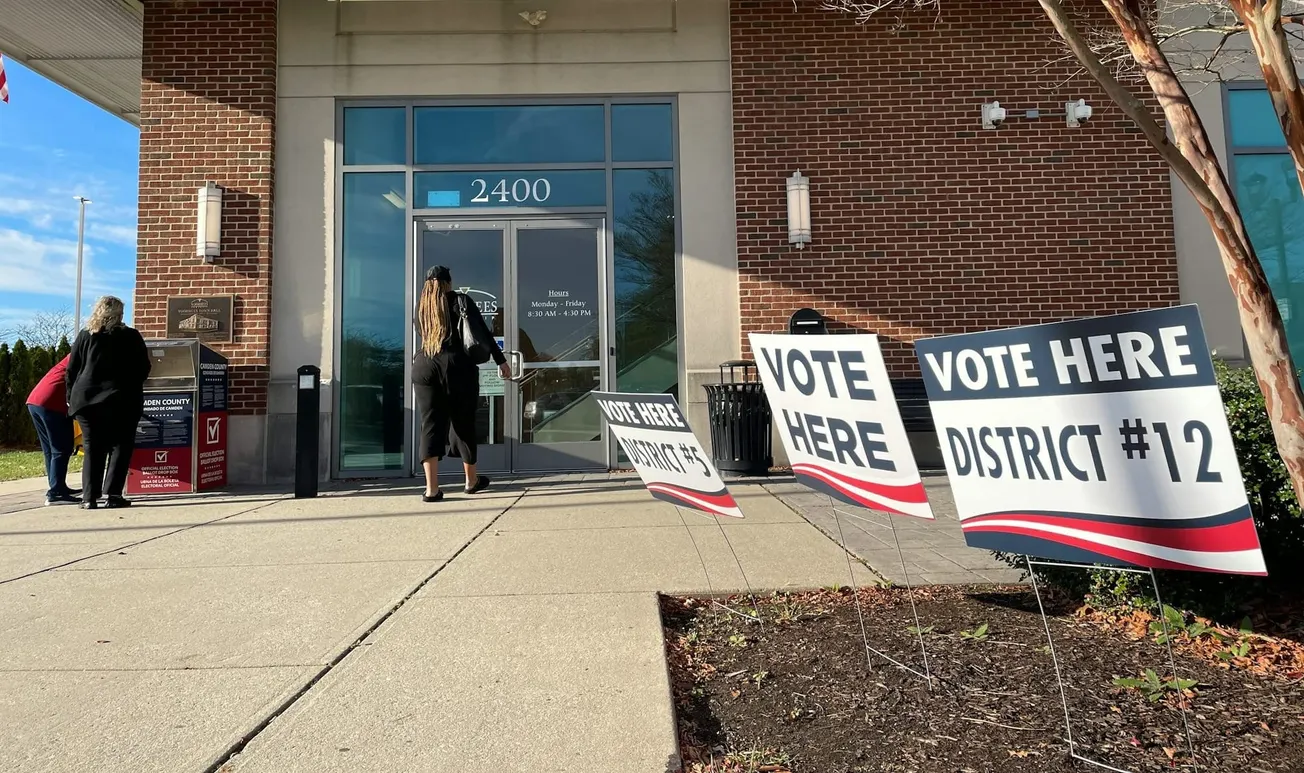
If Virginia voters approve a ballot measure that would protect abortion access until the third trimester, there’s already a court hearing in a legal challenge scheduled for next Friday, November 13. Founding Freedoms Law Center is seeking a preliminary injunction to block certification of the results based on an argument that the clerk of the House of Delegates missed a procedural step by failing to send copies of the amendment to every circuit court clerk in the state.
A North Dakota ballot measure could make it harder to protect reproductive rights in the future by raising the threshold to amend the state constitution from a simple majority to 60 percent. At least one Republican state lawmaker believes abortion rights campaigners will pursue an amendment to overturn the state’s total ban in 2028. Ballot initiative group The Fairness Project has spent more than $1.6 million to defeat the threshold change, known as Measure 1. Florida has this same higher bar, which thwarted passage of a 2024 abortion amendment that got 57 percent of the vote.
Personhood watch
In August, we covered the arrest of an 18- and 19-year-old couple in North Carolina, following an alleged attempted medication abortion at 31 weeks of pregnancy. Charges included assault with a deadly weapon and negligent child abuse. Fortunately, those charges have now been dropped. At the time of the arrest, Durham County District Attorney Satana Deberry said she believed that “a woman has the right to choose and has the right to make decisions about her own body,” and that her office would review the charges and decide whether to pursue them “in that light.” In a letter about her decision to drop the charges, Deberry said that several were unlawful because of explicit exceptions for pregnant people, and because fetuses are not children under state law. Plus, while the young man told police his partner took mifepristone in an attempt to end her pregnancy, no one was actually sure what medication she took and at what dose, meaning it’s not even certain what caused her preterm delivery. The infant, who was resuscitated by first responders, is currently in the custody of the teen girl’s mother.
A New York woman who has already given birth to one child conceived via in vitro fertilization with her estranged husband—over his objections—is seeking a court’s permission to implant the couple’s second and last remaining embryo. Erin Millender and Adam Rubin underwent IVF when they were still together, ending up with just two healthy embryos. The couple split before attempting to transfer either of the embryos, and Rubin revoked his consent for Millender to use them for pregnancy. Last year, a court ruled in Millender’s favor and granted her possession of the embryos. She had one transferred, became pregnant, and gave birth in September. However, their divorce is still ongoing, and a court will now determine whether Millender can keep the second embryo and attempt to get pregnant again. Rubin has said he wants the embryo donated to science. His lawyer says the case could set a dangerous precedent. “In New York, you're allowed to get an abortion,” attorney Morgan Mazor said. “If we start saying 'We have to give it special consideration because there's going to be a child,' we are creating a platform for somebody to say, 'If it's a child in a divorce situation, why isn't it a child for an abortion situation?'”
First Amendment watch
We’ve covered the lawsuit in which South Dakota is fighting to enforce its ban on even advertising information about abortion. South Dakota isn’t the only state that has a law that limits speech about abortion. This is bad for the obvious reason that it will make it harder for people to find accurate, reliable information, and possibly scare people out of providing such information in the first place. But legal scholar Mary Ziegler points out that these policies could also tee up a “back-door challenge” to the “shield” laws that protect medical providers who prescribe abortion pills across state lines. South Dakota argues that its law bans “speech integral to criminal conduct”—a type of speech not protected by the First Amendment. If courts follow this logic and agree that states can ban speech about things that are legal elsewhere—like abortion care—that could weaken shield law protections.
Assaults on queer people
Speaking of “shield” laws: The Federal Trade Commission says New York’s shield law is interfering with its attempts to get records related to youth gender-affirming care from Mount Sinai Hospital. In a court filing, the agency said that Mount Sinai agreed to comply with a subpoena stemming from the FTC’s suit against the World Professional Association for Transgender Health (WPATH). But then, the hospital received a letter from the state Attorney General’s office, which said the shield law requires the hospital to wait at least 30 days before responding to the subpoena, and to obtain an affidavit from the FTC saying it won’t use the documents to pursue legal proceedings against anyone involved in providing the care. The FTC argues these requirements are preempted by federal law, and is asking a New York judge to transfer the matter to the Texas jurisdiction where it first filed suit against WPATH. We’ve seen how badly conservatives want to take down shield laws in order to end access to telehealth abortion in ban states, but many of these laws also protect providers of gender-affirming care—so expect to see more fights like this.
Extremism
Former Alliance Defending Freedom attorney Erik Baptist has joined Susan B. Anthony Pro-Life America as its senior vice president of legal strategy. While at ADF, Baptist was the director of the organization’s “Center for Life.” He worked on many of its anti-abortion cases, including challenges to medication abortion, and most recently, was one of the attorneys representing gestational surrogate McKenna West, who is still fighting for custody of Rumi, the child she carried.
Quick hits
- The Trump administration is reportedly preparing to roll back workplace accommodations under the Pregnant Workers Fairness Act, by narrowing the list of conditions that make people eligible for protection. Conservatives were furious when the Biden administration interpreted the law to include abortion, fertility treatments, menstruation, and more.
- The team behind a film called “Elastic Hearts” said it was denied a tax credit for shooting in Texas because of an abortion storyline. The director said that someone from Governor Greg Abbott’s office said to him, “You made a film about abortions in Texas. What did you expect?”
- Winx Health, which makes sexual and vaginal health products, has launched a telehealth birth control service. There are fees of $35 for your initial prescription and $10 per month after that, but your prescription can be sent to your preferred pharmacy, where it should be covered with no copay if you have insurance.
Palate cleanser
The sun for the foreseeable future.
@ry_sic “working right now just isn’t my top priority” 🌞 #winter #kardashians #relatable #popculture ♬ original sound - Ryan Sichelstiel
Follow Autonomy News on Instagram, Bluesky, TikTok, Threads, YouTube, and LinkedIn.