Autonomy News is a reader-funded, independent publication. Become a paid subscriber or make a gift from a donor-advised fund today.
The following is an excerpt from the new book Pregnancy Interrupted: The Science and Stories of How Pregnancies Really End, an evidence-based look at pregnancy loss—and how the science has been affected by sexism, anti-abortion rhetoric, and eugenics.
In February 2025, Adriana Smith, a 30-year-old mother and nurse in Georgia, sought treatment for severe headaches, but was sent home only with medication and no testing. That night she was struggling to breathe, and her boyfriend rushed her to the hospital. They found blood clots in her brain, but it was too late: Adriana would be declared brain dead.
She was also eight weeks pregnant. The hospital would then keep Adriana’s body on life support, against the wishes of her family, for almost four months.
The media reported breathlessly on this tale, using an image of Adriana heavily pregnant from her previous pregnancy with her now seven-year-old son. In truth, when she was declared brain-dead, she would not yet have been showing, still weeks away from completing even the first trimester.
While the hospital initially claimed that they were required to keep Adriana on life support to remain in compliance with their state’s “heartbeat bill,” by May of 2025, the Georgia Attorney General’s office issued a statement that “there is nothing in the LIFE Act that requires medical professionals to keep a woman on life support after brain death. Removing life support is not an action with the purpose to terminate a pregnancy.” The sponsor of the bill, state Senator Ed Setzler, sided with the hospital, saying, “I think the hospital is acting appropriately.” By this point, doctors had been forcing Adriana’s brain-dead body to incubate a fetus for three months, constantly assessing its fluid balance, inflammation, and heart and lung function—and, of course, its degradation. Because Adriana Smith was dead.
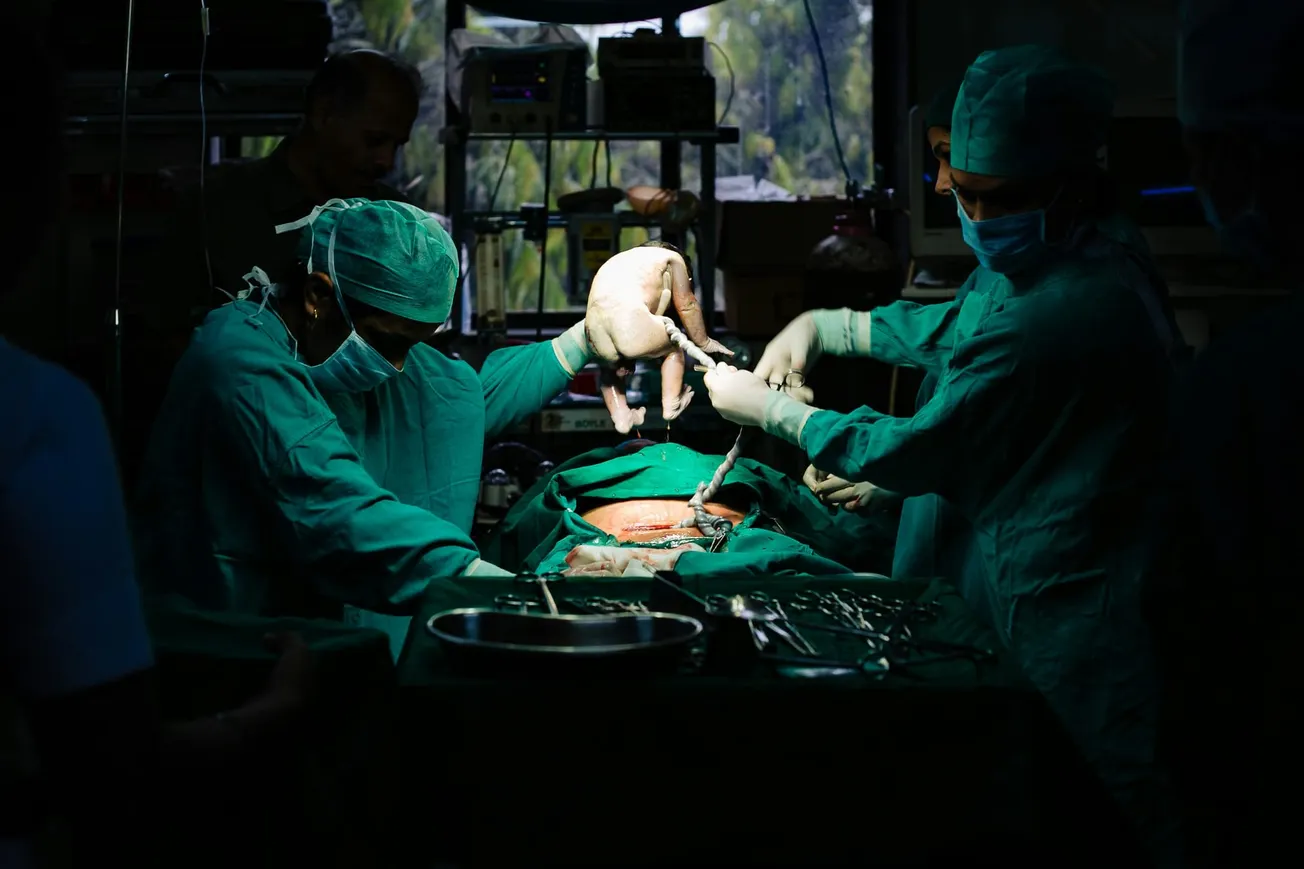
On Friday, June 13, 2025, baby Chance was born by emergency C-section at Emory University Hospital—at about 24 weeks’ gestation. He weighed one pound, 13 ounces and there remains a GoFundMe to help with his considerable medical care.
Adriana Smith’s birthday was on June 15, just two days after Chance was born. She would have been 31. On June 17, 2025, doctors finally removed her body from life support, and allowed Adriana to rest.
The pregnant person and fetus are entangled. They fundamentally cannot be neatly separated nor rank ordered. Yet across the history of medicine, we sure have tried. In her book Surgery and Salvation, the historian Elizabeth O’Brien explains how since its inception, the purpose of cesarean section has alternated between saving the life of the baby, saving the life of the mother, and saving both.
These documented shifts in popular and scientific understanding, which date from 715 B.C.E., reveal the fluctuating priority given to the fetus and the pregnant person. For instance, by the 16th century, there were two available ways to manage what was seen as a “hopeless” labor, in which both the parent and child were likely to die: cesarean section, which gave the fetus a chance at life, or what was called embryotomy, where the fetus was killed while still in the uterus and pulled through the cervix, giving the parent perhaps a greater chance to live. On living patients, cesareans were uncommon. In part, this was because there was no way to manage the pain inflicted by surgery. But more fundamentally, into the 18th century, canon law—the body of laws made by the Catholic church—held that one was forbidden from cutting into a person.
If the mother was dead or dying, however, legal frameworks frequently held that to forgo a cesarean section was akin to homicide. Indeed, for some, refraining from a cesarean in such cases represented an even graver sin. O’Brien explains that in the influential Sacred Embryology, first published in 1745, Jesuit priest and inquisitor Francesco Emanuele Cangiamila argued that baptized people experienced three births: ensoulment, birth, and regeneration. Ensoulment was the “real” birth “because it represented the child’s spiritual creation.” Biological birth, by contrast, simply marked the moment the ensouled child left the womb. Regeneration referred to the spiritual rebirth that occurred from baptism itself.
As O’Brien writes, “This meant that women did not give birth; rather, birth was given by God and facilitated either by nature (natural birth) or science (cesarean operation).” When it came to physical emergence into the world, Cangiamila dismissed the role of the birthing person as immaterial; as he described the process, “men, so vigorous and healthy, climb out of the prison of their mother’s wombs without any assistance.”
According to Cangiamila’s view, because the child is ensouled before birth, and because “the child is not truly part of the mother,” the child—even as a fetus—required a separate baptism. By 1749 Catholic laws throughout the Spanish Empire, influenced by such ideas, required priests to perform cesareans on dead or dying women in order to baptize the fetus. These laws transformed the cesarean section, once intended to save physical lives, into a “salvation-based surgery” intended to save souls. Priests would cut into the newly dead at any stage of pregnancy, arguing for the importance of saving the souls of even the tiniest products of conception.
In a foundational case in Spain in 1750, one doctor hoped to revive the earlier purpose of the surgery. In consultation with a midwife, the doctor believed that performing a cesarean on a living patient might save the life of the mother. To sidestep the dictates of canon law, the doctor argued to authorities that the uterus constituted a “natural cavity”—the womb, in other words, was its own compartment open to the world, so cutting into it wasn’t the same thing as cutting into a person. The doctor successfully pleaded his case; the cesarean was performed; and the next day the mother died. Records show that the child survived at least as long as their mother, as they were baptized right after her death.
In each of the arguments from this period—that the process of birth isn’t really birth, that the fetus is an individuated soul from the mother, and that the uterus is a “natural cavity”—there is a common element: the pregnant person disappears from view. And as Adriana Smith’s case makes clear, this remains a deep legacy within Western medical practice.
The conversation around pregnancy and pregnancy loss tends to focus on the health of the fetus, rather than the health or even the wishes of the pregnant person. Indeed, even while the majority of people around the world support a pregnant person’s autonomy and right to abortion care, we nevertheless struggle to think through or prioritize that person’s health, well-being, and right to a dignified life if they are carrying a wanted pregnancy.
"The message that our society consistently conveys is that pregnant people are supposed to value the fetus over their own well-being."
The message that our society consistently conveys is that pregnant people are supposed to value the fetus over their own well-being. You can see it in how risk is communicated to them: they are expected to give up certain foods, medications, and activities to prioritize their fetuses. You can see it in storytelling: the dead mothers in Victorian, Gothic, and contemporary fiction, many of whom are characterized as good, sacrificial mothers. Once the pregnancy is seen as wanted, the pregnant person disappears. Sometimes, they disappear psychically, as they subsume their needs to another; sometimes physically, as they die from complications of pregnancy or the birthing process; and sometimes literally, obscured under mountains of machines intended for life support.
In the United States, childbirth is over 14 times more deadly than legal abortion. When a pregnant person dies from abortion, it is often due to complications from anesthesia, an infection, or a hemorrhage; in about 20 percent of these cases, the abortion was part of broader efforts intended to save the pregnant person’s life. Global analyses support this trend as well. In 2014, the World Health Organization (WHO) released a systematic analysis of 60,799 deaths across 115 countries, which showed that most maternal deaths are from direct obstetric complications (nearly 75 percent) compared to very few from abortion (less than 8 percent). Even in sub-Saharan Africa, where abortions are illegal and can involve unsafe methods, pregnancy mortality is still higher than abortion mortality.
According to the WHO analysis, the three most frequent causes of death for pregnant people, which have been identified in study after study, are hypertensive diseases like preeclampsia and eclampsia, postpartum hemorrhage, and sepsis, a deadly and difficult-to-treat response to infection. These dangers have been well-known for some time and, increasingly, there are treatments and procedures in place to support pregnant people dealing with these conditions.
For example, thanks to birth activists, midwives, and investigative journalists, hemorrhage carts—a specific, rolling cart containing the lifesaving medications needed to stop bleeding—are now part of standard obstetric practice in many parts of the world. Sepsis bundles, which involve proper screening, diagnosis with cultures, and broad-spectrum antibiotics, are now being deployed and tested as part of the rapid response to obstetric sepsis, a medical emergency that has a far higher likelihood of survival if the patient is treated within the first hour of diagnosis. After years of what felt like a collective shrug around pregnancy mortality, people are starting to pay more attention to obstetric emergencies.
Hemorrhage carts and sepsis bundles are amazing interventions that have saved many lives. I myself was saved by a hemorrhage cart in my second pregnancy. Bleeding out, unable to maintain consciousness for more than moments at a time, I remember the bustle of my midwives as they fought for my life, and the incredible feeling of love and safety as they stayed by my side, treating me again and again through the night until I stabilized. Once I finally started to improve, I was able to hold my enormous, hale, redheaded baby while I lay in bed, the two of us gazing at each other, awake into the early hours of the morning. Yet I also recognize the background social conditions that made this intervention possible: I am upper middle class; I was at a birth center; I was attended by two midwives and a doula who did not leave for a second to tend to other patients. I am alive today thanks to fortune, privilege, and their skill.
People without the same fortune, privilege, and access to skilled midwifery die of postpartum hemorrhage every single day. They suffer and die due to a lack of access to lifesaving care and medicine—many of which are under constant attack because they are also medicines used in abortion care, like mifepristone and misoprostol—but also because of the assumptions and biases baked into our systems of care.
We need to reckon with how obstetrics training and care normalize dehumanizing the pregnant person in order to excuse violence against them, often in the name of saving the baby.
Pregnancy Interrupted, 2026, published by Princeton University Press and reprinted here with permission.
Follow Autonomy News on Instagram, Bluesky, TikTok, Threads, and LinkedIn.