Table of Contents
Autonomy News is a reader-funded, independent publication. Our reporting isn't possible without your support. Please consider becoming a paid subscriber or making a tax-deductible gift today.
Welcome to the latest edition of our weekly roundup. Every Monday, we’ll send you a summary of the biggest stories about bodily autonomy. We’ll also include links to pieces that Garnet or Susan have published. You’re getting this one on a Tuesday because we had breaking news yesterday—more on that below.
If you’d prefer to receive a single email every week, you can do that—we love autonomy. You can manage your subscriptions by navigating to the site, clicking on “Account” in the upper right, then under “Emails,” select “Manage.” You can toggle off “Autonomy News” to receive only the roundup, or vice versa.
Let’s dive in.
On Autonomy News
We’ve been busy! Here are three stories we published in the past week.
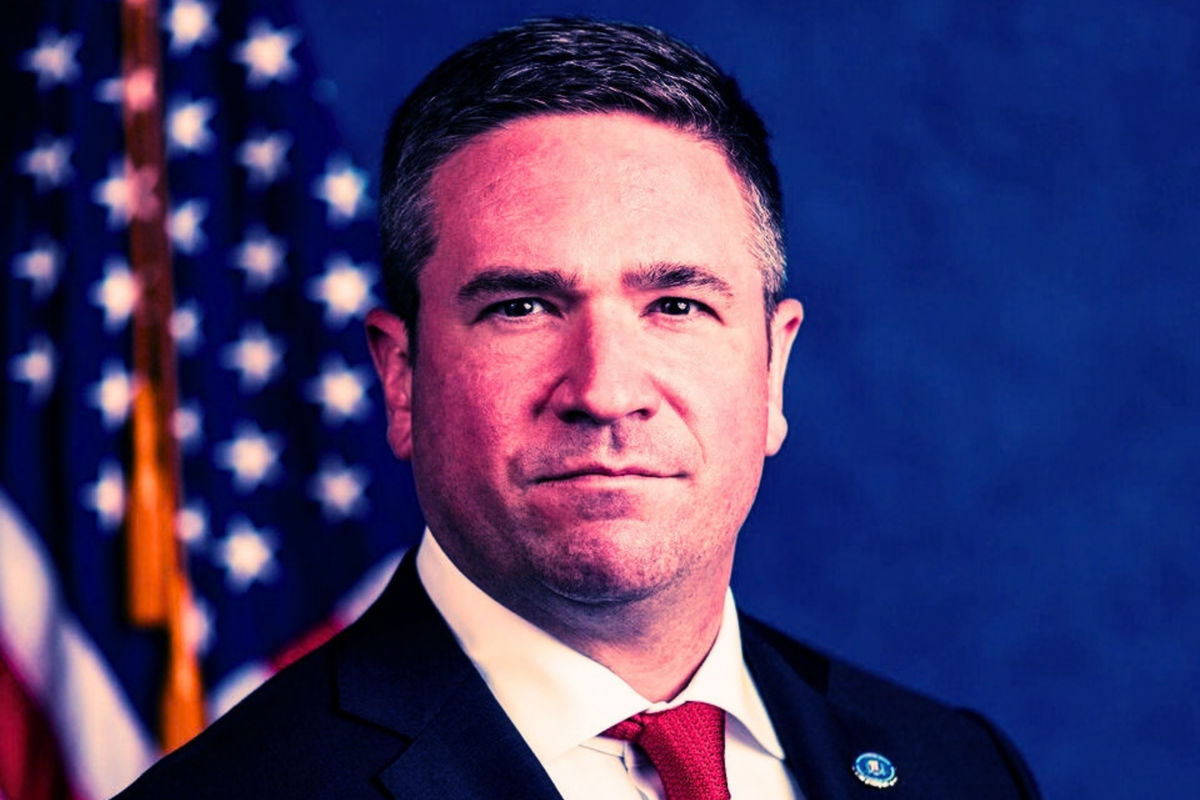
Yesterday, the FBI’s number two man resigned. Andrew Bailey was previously the Attorney General of Missouri, where he aggressively investigated providers of abortion and gender-affirming care. We spent months reporting on Bailey’s past in Missouri, and what he might have been doing at the FBI. The bottom line: An abortion pill crackdown is likely on the way, even after Bailey’s departure. (Share this story on Instagram, Bluesky, or TikTok.)
 Garnet Henderson
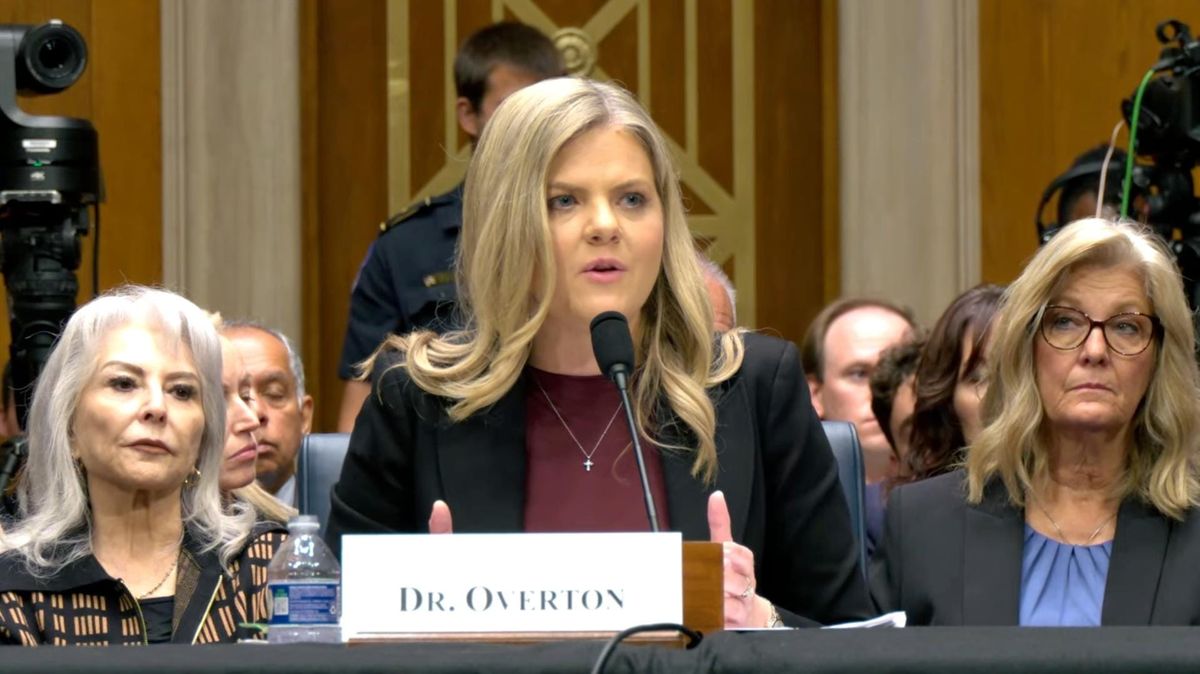
Heidi Overton, Trump’s pick to run the Food and Drug Administration, had her confirmation hearing on Thursday and it was a doozy. Overton refused to say that the abortion drug mifepristone is safe and effective and even declined to say that IUDs are birth control, not abortifacients. Next comes a committee vote and a full Senate vote. (Share this story on Instagram, Bluesky, or TikTok.)
 Garnet Henderson
In less soul-crushing news, Susan wrote about how advocates in multiple states are challenging abortion laws under the rights to life and liberty enshrined in state constitutions. The refreshing argument is that restrictions violate the constitutional rights of pregnant people. (Share this story on Instagram or Bluesky.)
 Susan Rinkunas

Federal news
Wednesday marks the 50th anniversary of the racist, classist Hyde Amendment, which banned federal funds from being used to cover abortion care in the Medicaid health insurance program for low-income people. Medicaid enrollees are disproportionately Black, Indigenous, and Latina. Hyde has never been codified into a standalone law; it’s a rider that has been attached to federal spending bills since 1976, including in years when Democrats controlled Congress and the White House. Just months after Hyde first went into effect, a 27-year-old single mother named Rosie Jimenez died. She had previously been able to use her Medicaid benefits to obtain safe abortion care, but was forced to seek care from an unsafe provider because of Hyde. Over time, the policy has been expanded to apply to every federally funded health program, including the Children’s Health Insurance Program, the Indian Health Service, Tricare—the health insurance program for active duty military members—and health coverage programs for federal employees.
Supreme Court Justice Elena Kagan denied a gestational surrogate’s emergency request for the high court to block a California court order determining that the genetic parents of the baby she carried are his legal parents. McKenna West and her attorneys at the Christian nationalist law firm Alliance Defending Freedom had argued that Nausheen Gilkar and Omar Ahmed intended to move baby Rumi—who was born in Texas after West absconded there—to California to place him in hospice care. Gilkar and Ahmed said this was false, and that Rumi’s doctors in Texas approved a move to California for further treatment. Kagan did not refer the matter to the full court, nor did she write anything about her decision to reject the appeal. However, the fight over baby Rumi’s guardianship, which has played out in three states, starting in West’s home state of Alaska, will continue, and the case is likely to work its way back to the Supreme Court eventually.
Related to our story on possible federal charges related to abortion pills, conservatives are pushing the Department of Justice to consider investigating an Ohio doctor who coerced his partner to take the drugs. Dr. Hassan Abbas pleaded guilty to four felonies and was recently sentenced to six months in jail and two years’ probation. Last week, Ohio Senator Bernie Moreno urged Attorney General Todd Blanche to review the sentence and consider federal charges. Moreno also asked Blanche to “act quickly to conclude” a lawsuit that Louisiana filed against the FDA that seeks to reimpose in-person appointments for mifepristone nationwide. Top anti-abortion group Susan B. Anthony Pro-Life America has also called on the DOJ to settle the lawsuit with a consent decree that ends telemedicine prescriptions. Reproductive coercion is abhorrent and it is also not a reason to force every medication abortion patient across the country to travel to a clinic for care. (The FDA owes the Louisiana judge an update on its bogus safety “review” next week.)
A panel of judges from the Ninth Circuit Court of Appeals heard arguments in the case that could somewhat broaden exceptions to Idaho’s total abortion ban. In August, a federal judge ruled that the state couldn’t enforce the ban against doctors who provide abortion care to protect a patient’s health, including mental health. Following an appeal by the state Attorney General, the judge narrowed his ruling so that it only applied to the doctor who filed the challenge, Stacy Seyb. The Ninth Circuit then put even that narrow ruling on hold. At the hearing, an Alliance Defending Freedom attorney representing Idaho argued that the ban should be enforced as written, with an exception only to save a pregnant person’s life. The panel included two Democratic appointees and one Republican appointee. If Idaho loses, it could either ask for an en banc hearing—meaning a hearing before 11 justices instead of three—or appeal to the Supreme Court.
On the day of Heidi Overton’s confirmation hearing, Students for Life threatened to sue the Food and Drug Administration. SFL has been the leading proponent of the unfounded conspiracy theory that abortion pills are polluting our drinking water, and recently notched a big win when the Environmental Protection Agency announced it would test water for the medications for the first time. But that’s not enough for this wackadoo group that is increasingly becoming mainstream within the anti-abortion movement. Now, SFL says it wants to sue the FDA, alleging that when the agency first approved the drug back in 2000, it failed to study its potential effects on the environment and endangered species.
The Trump administration booted 750,000 people off of health insurance plans they purchased on Affordable Care Act marketplaces, alleging fraud. Specifically, the administration claims some of these people were receiving subsidies they weren’t eligible for, and that others weren’t real people. Experts say that fraud is a real issue, but that it’s not clear whether the administration followed appropriate procedures for determining whether the enrollments it canceled were legitimate or not. Plus, Trump health officials recertified about 200 insurance brokers that the Biden administration had banned over alleged fraud.
First Amendment watch
Tennessee Attorney General Jonathan Skrmetti—yes, he of the Supreme Court case that greenlit bans on youth gender-affirming care—sent sweeping legal demands to Abortion Care Tennessee, an abortion fund, and Planned Parenthood of Tennessee and North Mississippi, the affiliate serving the state. He ordered the organizations to hand over internal communications, documents, website and social media copy, donor records, patient records, information about healthcare providers, and more. The probe seeks information about gender-affirming care and the organizations’ work to help people access abortion, especially self-managed abortion and abortion via telemedicine. Both organizations have filed legal challenges that ask courts to shield them from the AG’s investigation.
In somewhat better news out of Tennessee, the Sixth Circuit Court of Appeals upheld a lower court’s ruling that a state law prohibiting adults from giving information to minors about legal, out-of-state abortion care is a violation of the First Amendment. The law will remain blocked, though the state could appeal to the Supreme Court.
State news
On Monday, an Arkansas judge held a hearing on the state’s motion to dismiss a lawsuit filed by six women who were denied abortions under a total ban. This is one of the right to life and liberty challenges that Susan wrote about. Arkansas claims it’s immune from lawsuits and that the case should be thrown out. The plaintiffs in Waldorf v. Arkansas had previously asked for a preliminary injunction to halt the ban as the case proceeds, but if the judge agrees with the state, the suit could end before a single piece of evidence is considered. Circuit Judge Cara Connors didn’t say when she expected to rule.
Massachusetts Governor Maura Healey said she will ask the state legislature for $2 million to improve postpartum healthcare. The proposal comes after a hung jury led to a mistrial in the Lindsay Clancy case; Clancy killed her three children then tried to take her own life while experiencing postpartum psychosis. Healey wants to expand eligibility for home visits with maternal and child health nurses to all new parents in the state. The voluntary program serves about 3,000 families per year, and the investment would make it available for all 68,000 annual births. The governor is also asking the health department to update regulations on perinatal mental health screenings.
Elections
Voters in Missouri will decide whether to reimpose an abortion ban in November, and it turns out that some anti-abortion groups oppose this ballot measure because they don’t think it goes far enough. Amendment 3 would repeal protections voters enshrined in 2024 and ban nearly all abortions, with exceptions in cases of medical emergencies, fetal anomalies, and pregnancies under 12 weeks gestation that result from rape or incest. It would also constitutionally prohibit gender-affirming care for transgender youth, even though state law already bans such care. So-called abortion “abolitionists” and state Senator Mike Moon object to the abortion exceptions and have been urging people to vote against the amendment. This faction wants a total ban and criminal penalties for abortion seekers.
Meanwhile, the pro-choice “no on 3” campaign, called Stop the Ban, has outraised the anti-abortion side by a margin of nearly 7 to 1. The raw numbers are about $13 million versus $1.8 million. The biggest donor to Stop the Ban at $5.3 million is The Fairness Project, a group that was instrumental to the passage of the state’s 2024 reproductive rights amendment. The final vote on Amendment 3 could be very close: A St. Louis University/YouGov poll from August found that 44 percent opposed the amendment, while 43 percent supported it, and 13 percent were unsure.
Planned Parenthood Action Fund endorsed an Independent candidate in the Montana Senate race over the Democratic nominee. The organization’s political arm endorsed Seth Bodnar, who is polling well ahead of Democrat Alani Bankhead. In a recent poll, Republican Kurt Alme earned 38 percent support, followed by Bodnar at 30 percent, and Bankhead at 16 percent. Montana has no Democrats serving in statewide office or in Congress, though it had a Democratic governor from 2013 to 2021. Abortion rights are already enshrined in the state constitution.
Liked this post?
Personhood watch
A woman who had an abortion in 2020 filed a wrongful death lawsuit against a New Mexico abortion clinic on behalf of the estate of her fetus. She says she was using methamphetamine at the time and therefore couldn’t properly consent to abortion care. The clinic settled, paying her $200,000. Anti-abortion group Live Action says this is the first wrongful death settlement with a fetus’ estate. It is certainly the first case like this we’ve heard of, and could set an alarming precedent—not only in terms of further establishing fetal personhood, but because it could make providers hesitant to care for people with substance use disorders, who already face discrimination in healthcare settings.
Florida Governor Ron DeSantis named a pro-fetal personhood judge to an appeals court seat. Marlon Weiss presided over the case in which Attorney General James Uthmeier intervened to argue that surrogacy is akin to slavery, and used the parentage order he wrote in that case—which is supposed to be confidential—as a writing sample in his application package for the job.
Assaults on queer people
Gender-affirming care provider QueerDoc has asked for an en banc rehearing—again, meaning a panel of 11 judges—at the Ninth Circuit, after a three-judge panel ruled in favor of the Trump administration and overturned a lower court’s order blocking a Justice Department subpoena that demanded patient records, personnel files, and more. All the other known recipients of these invasive subpoenas targeting providers of gender-affirming care are large children’s hospitals. QueerDoc, by contrast, is a small, telehealth practice.
Sorry to mention Alliance Defending Freedom again, but the far-right firm recently dropped a case in which its clients, two Michigan parents, accused a school district of using different pronouns for their child without their consent. ADF argues that schools using the correct pronouns amounts to “secret transition policies.”
Here it is, a fourth Alliance Defending Freedom mention in one newsletter: In back-to-back hearings, a federal judge in Minnesota considered two lawsuits, one filed by ADF on behalf of a group of female softball players, and another filed by the federal government, which argue that the state is violating Title IX by allowing transgender girls to participate in girls’ sports.
Actual good news
The World Health Organization officially recommends mifepristone as a method of emergency contraception, “taken as soon as possible and within five days of unprotected sex. The evidence shows that mifepristone at doses of 10 to 50 mg is likely to be as safe and effective as other emergency contraceptive methods.” For reference, this is significantly lower than the dose of mifepristone used for abortion and miscarriage care, which is 200mg.
Quick hits
- The Trump administration released a final rule on Title IX, rescinding Biden-era guidance that said LGBTQ students are also protected from sex discrimination in education. The rule also narrows the range of sexual harassment complaints that schools must investigate.
- Increasing evidence suggests that the HPV vaccine is effective with just one dose given to preteens, rather than two, and experts are discussing the possibility of updating clinical recommendations.
- In other future-looking updates, researchers created a mock-up of what over-the-counter medication abortion could look like. The concept product is called MiMi, short for the medications the kit contains: mifepristone and misoprostol. The product is being used in studies to test how well people understand the labeling, which is the kind of research required to get OTC approval.
- A working group in New Mexico is starting a study on the impact of forced sterilization. The legislature passed a resolution ordering the report to be completed by the end of 2027.
- Pregnant people in rural communities who had cesarean sections were more likely than women in urban areas to receive prescriptions for opioid painkillers to take at home.
Palate cleanser
Billionaire poet loves football man.
@deadeyebrakeman uh oh she’s back
♬ original sound - kylie brakeman
Follow Autonomy News on Instagram, Bluesky, TikTok, Threads, and LinkedIn.