Table of Contents
Welcome to the latest edition of our weekly roundup. Every Monday, we’ll send you a summary of the biggest stories about bodily autonomy. We’ll also include links to pieces that Garnet or Susan have published.
If you’d prefer to receive a single email every week, you can do that—we love autonomy. You can manage your subscriptions by navigating to the site, clicking on “Account” in the upper right, then under “Emails,” select “Manage.” You can toggle off “Autonomy News” to receive only the roundup, or vice versa.
Let’s dive in.
On Autonomy News
A lawsuit filed by an Arizona man angry over his ex-wife's abortion could upend access in the state—despite voters passing constitutional protections in 2024. His lawyer told Susan that, if they win the case regarding an 8-week embryo, “it will throw a huge monkey wrench into reproductive rights in Arizona. Everybody assumes they're settled.” (Share this story on Instagram, Bluesky, or TikTok.)
 Susan Rinkunas
Federal news
The White House pulled two nominations last week, the first of which was Trump’s pick to lead the Food and Drug Administration. A Senate committee was set to vote on advancing the nomination of anti-abortion physician Heidi Overton on Wednesday, but the administration withdrew her nomination the night before the vote. We told you that Overton was on the ropes with the MAHA movement. Senator Bill Cassidy claimed in a social media post that the White House withdrew her rather than make assurances to anti-abortion lawmakers, but Missouri Senator Josh Hawley—who is staunchly anti-abortion—told reporters he was satisfied with Overton’s pledges. As for a replacement, Trump may nominate outgoing Kansas Senator Roger Marshall, another anti-abortion physician who just lost his reelection bid amid scrutiny for suing more than 700 of his OB/GYN patients over medical debt.
The other yanked nomination was for a lifetime judicial appointment: Days after the midterm elections, Trump selected Elliot Gaiser, head of the Justice Department’s Office of Legal Counsel, for a seat on the federal bench in Texas. But Gaiser is from Ohio, with very few connections to Texas, and outgoing Senator John Cornyn objected by refusing to return his “blue slip,” using what’s effectively veto power over nominations. Gaiser was set to testify at a confirmation hearing on Wednesday, but then his name did not appear on the schedule. (To no one’s shock, all of Trump’s pending judicial nominations are men and nearly all of them are white.)
Cornyn said he objected on process grounds because Gaiser was being fast-tracked, not due to the nominee’s views. But before the nomination was pulled, Bloomberg published an alarming story revealing that Gaiser pitched then-Deputy Attorney General Todd Blanche on reinterpreting the federal Comstock Act as a ban on mailing abortion pills—and even clinic supplies—nationwide. Blanche reportedly told him to table the idea because the Trump administration didn’t want to make any waves on abortion before the midterms. The fact that Gaiser won’t become a judge is cold comfort not only because he remains in his Justice Department role, but because Blanche himself pledged to review the government’s stance on Comstock during his confirmation hearing to be Attorney General. However,one of Gaiser’s DOJ allies will leave the office this month: Josh Craddock, a fetal personhood proponent who wrote the memo that reimplemented a total abortion ban at the Department of Veterans Affairs. Bloomberg reports that Craddock was an “ardent supporter” of Gaiser’s Comstock push.
While Donald Trump has mostly avoided the subject of abortion for strategic reasons during his second term, we can be pretty sure he won’t sign pro-abortion rights legislation. But Democrats should use their newfound Congressional power to force votes on these measures, anyway, argue legal scholars Rachel Rebouché and Mary Ziegler, who say it’s time for the party to “put up or shut up” on abortion rights. They could push a federal “shield” law to protect abortion providers who prescribe pills via telehealth to patients in ban states. Even if it gets vetoed, passing such a law could tee it up for success under a Democratic president. And they could use their power to undercut federal agencies’ ability to restrict access, for example by using budget bills to prohibit the Department of Justice from spending federal funds to enforce the 1873 Comstock Act as an abortion ban. “It could cost Trump politically for refusing to sign must-pass legislation because of an abortion-related provision, and thus shutting down the government,” they write.
The Trump administration has offered states the option of a six-month delay on new work requirements for Medicaid health insurance, which were set to take effect January 1. However, Montana and Nebraska have already implemented work requirements, and Iowa is scheduled to do so starting December 1. Arkansas, Kentucky, and Indiana have also declined to delay, while Colorado, Connecticut, Louisiana, Nevada, New York, Washington state, and Washington, D.C. have elected to take the six-month extension. Virginia is also expected to take the extension.
Lawsuits
Texas Attorney General and all-around menace Ken Paxton may be on his way out of office, but thanks to the Fifth Circuit Court of Appeals, he’ll leave at least one nasty parting gift. On Friday, the Fifth Circuit ruled in his favor and found that the 2022 Pregnant Workers Fairness Act was unconstitutionally enacted. The law protects pregnant people by requiring employers to give them time off for prenatal care, provide water and bathroom breaks, and relieve them from duties like heavy lifting. Technically, this ruling only blocks the law in Texas, but will effectively invalidate it in Louisiana and Mississippi—the other two states the appeals court covers—and is likely to reach the Supreme Court. Specifically, the court found that Congress violated the Constitution’s Quorum Clause by counting proxy votes toward quorum, or the number of members who have to be present for official business, during the Covid-19 pandemic. However, as Chris Geidner notes at Law Dork, the Constitution doesn’t say anything about representatives needing to be physically present for quorum to be reached. In other words, the Fifth Circuit has written new words into the Constitution, as it loves to do.
A federal judge in Virginia granted an abortion provider’s request to retain jurisdiction in a case where he ruled that the FDA has maintained too many restrictions on the abortion drug mifepristone. In July, Biden appointee Robert Ballou found that, when the agency updated its rules to allow telemedicine prescriptions and retail pharmacy dispensing in 2023, it didn’t sufficiently justify keeping other restrictions like requiring providers and pharmacies to register with the drug manufacturer. Ballou ordered the FDA to reconsider these policies, but Whole Woman’s Health asked him to retain jurisdiction—basically, keep an eye on the process—after Attorney General Todd Blanche suggested on a private call that he wanted to end telehealth availability of the drug. The abortion provider argued that the FDA could face political pressure while it completes its ongoing “review” of the medication’s safety.
State news
A Wisconsin woman lost both her fallopian tubes after an anti-abortion crisis pregnancy center (CPC) failed to diagnose her ectopic pregnancy. Codyone Cameron, 32, had recently lost her job and needed a low- or no-cost ultrasound to rule out an ectopic. She’d had one before, which, unfortunately is a risk factor in and of itself. A resource listed on her Medicaid policy referred her to a CPC, which falsely said the pregnancy was implanted in her uterus. Cameron later got the correct diagnosis at Care for All, a reproductive health clinic that serves patients regardless of the ability to pay, but by then she needed emergency surgery. After Cameron told the CPC what happened, a worker said they would “pray for her.” If she wants to have more children, she’ll need to use IVF, which isn't covered by Medicaid. Cameron is now represented by the Center for Reproductive Rights, which is asking the state Attorney General's office to investigate CPCs. The center is listed in a directory promoted by Trump’s pronatalist website Moms.gov, because of course it is.
Relatedly, Texas Governor-elect Gina Hinojosa said she would review and possibly veto state funding for crisis pregnancy centers. The Thriving Texas Families program currently receives $100 million per year. This money goes to CPCs, adoption agencies, and maternity homes. “My understanding is a lot of that funding was not going to actually provide health care services for women,” Hinojosa told the Washington Post. “If it is not serving Texans, not serving their health care needs, not serving families, then, yeah, I would veto that funding.” Unfortunately, in the same interview she also suggested that using emergency powers to expand access to abortion and gender-affirming care would be “trying to tackle culture wars.”
Ohio lawmakers sent two anti-abortion bills to outgoing Republican Governor Mike DeWine, hoping he’ll sign them before Democrat Amy Acton takes office in January. HB 347 would require a 24-hour waiting period before an abortion, while HB 324 would ban telemedicine prescriptions of abortion pills. The state had similar provisions previously, but courts blocked them under a reproductive freedom constitutional amendment voters passed in 2023. The American Civil Liberties Union of Ohio has already promised to sue if DeWine signs the bill into law.
Speaking of conservative priorities in Ohio, Republicans blocked a bill that would have ended child marriage by raising the minimum age for marriage from 17 to 18. Senate President Rob McColley said lawmakers decided that the current law, which says 17-year-olds need judicial consent and can’t marry anyone older than 21, offers sufficient protections.
Lawmakers in Georgia, Kansas, and Texas say they will try to expand Medicaid after wins in the midterm elections with gubernatorial candidates who campaigned on the issue. They’re among the 10 states that have yet to expand the program to non-disabled adults living on low incomes. This will be no small task, as Democrats only control one chamber in Georgia and Texas and neither in Kansas—though they did break a legislative supermajority in that state. On top of that, the Trump administration eliminated a bonus for states to expand and is making them pay to enforce the aforementioned new work requirements. Democrats now have a trifecta in Wisconsin, but the campaign of Governor-elect David Crowley said “expansion is no longer viable.”
State lawsuits
Outgoing Texas Attorney General Ken Paxton dropped two lawsuits he filed against abortion providers in California and Delaware for allegedly prescribing medication abortion to Texans. AG-elect Nathan Johnson, a Democrat, had vowed not to pursue the cases. However, Paxton did not drop cases against New York doctor Maggie Carpenter and Texas midwife Maria Rojas, who lost her license and her clinics as a result of Paxton targeting her. Plus, the California physician still faces a different lawsuit from a Texas man who alleges the doctor mailed pills to his ex-girlfriend.
A Michigan appeals court ruled that several abortion restrictions are unconstitutional under the 2024 voter-approved amendment establishing the right to reproductive freedom until fetal viability. The laws include a mandatory 24-hour waiting period and a requirement that only physicians can provide abortions—meaning advanced practice providers like nurse practitioners, certified nurse midwives, and physician assistants are banned from offering the care. Democrats will hold a trifecta next year and the president of Planned Parenthood of Michigan encouraged lawmakers to repeal these statutes entirely rather than rely on court rulings.
Elections
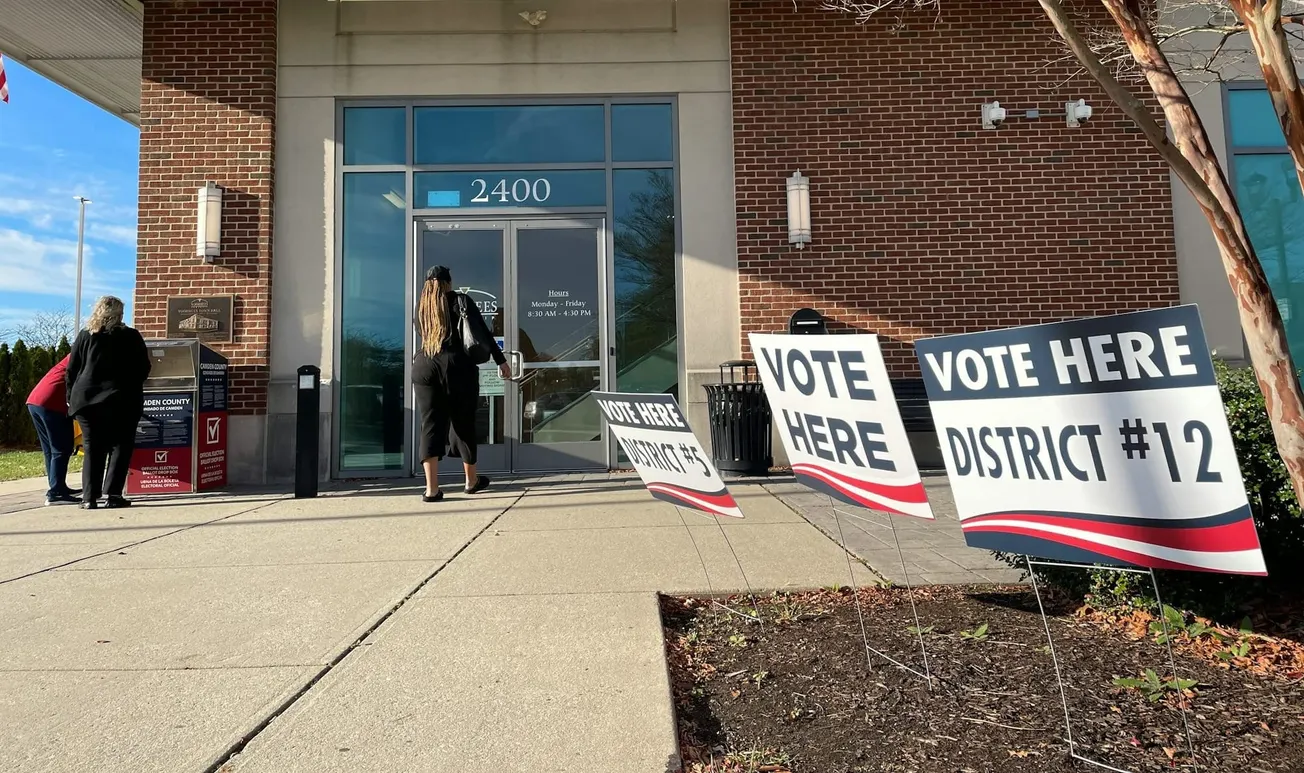
It’s official: Massachusetts voters will decide whether or not to reverse the state’s recent repeal of its ban on abortions after 24 weeks. Anti-abortion organizers turned in more than twice the number of signatures they needed to get a referendum on the 2028 ballot, though the repeal will go into effect in the meantime thanks to an emergency clause added by Governor Maura Healey. Between the law’s passage in August and Healey’s addition of the emergency clause earlier this month, advocacy organization Reproductive Equity Now said that at least nine Massachusetts residents facing pregnancy complications were forced to travel out of state for care.
Personhood watch
A woman is suing the city of Los Angeles and individual detectives after she says she was unlawfully shackled to a hospital bed and interrogated for hours after suffering a stillbirth in 2024. At the time, the anonymous woman was living in a shelter and had an irregular period because of epilepsy medication. She found out she was pregnant but that the fetus had no cardiac activity after visiting the emergency room for abdominal pain. She was incorrectly told that she was in her first trimester, but later found out she was around 29 weeks pregnant. According to the complaint, police pursued a homicide investigation against her for a year, despite being told by the medical examiner that fetal demise occurred in utero. This is the first civil lawsuit filed under California’s Reproductive Privacy Act, which was updated in 2022 to prohibit law enforcement from taking punitive action against people based on their pregnancy decisions or outcomes. She is represented by If/When/How.
Two crisis pregnancy centers and the umbrella organization National Institute of Family and Life Advocates argued before the Eighth Circuit Court of Appeals that their challenge to Minnesota’s abortion laws should be reinstated. Their lawsuit, which was dismissed last year, made an argument based on the 14th Amendment. However, it’s not the argument you’d usually expect from the anti-abortion movement—namely, that fetuses are citizens with rights under the 14th Amendment. Instead, the suit claimed that Minnesota’s relative lack of restrictions on abortion violates another 14th Amendment right, the right to due process, by depriving pregnant people of the opportunity to bond with would-be children without procedures such as court hearings beforehand. “You can’t sue the government just because you want new or different laws,” Assistant Attorney General Margaret Jacot said at the hearing.
Remember the bizarre case in which a Texas woman accused her ex of slipping abortion pills into her hot chocolate, to which he countersued, accusing her of making the whole thing up, then text messages revealed she wanted to “take [him] down”? The latest update is that the man, Christopher Cooprider, filed a motion for summary judgment, meaning he’s asking the judge to conclude the case immediately by ruling that the woman, Liana Davis, can’t prove her wrongful death claim. Davis didn’t see Cooprider put anything into her drink, the filing says, and there was no testing of the drink, so there’s no way to prove whether or not any medications were present. Davis’ attorney, legal activist Jonathan Mitchell, has also tried to invoke the Comstock Act. But this is a civil case, and Cooprider’s filing notes that the Comstock Act has no civil penalties, only criminal ones.
Liked this post?
Assaults on queer people
During his campaign, Iowa Democratic Senator-elect Josh Turek alarmed many with his statements about transgender people. In an ad titled “Stop the Nonsense,” Turek said, “As a kid in a wheelchair, I faced my share of bullying. That’s why I believe that no Iowan should face discrimination. As a Paralympian, I also know it’s important to have rules. It’s why I oppose males competing in female sports, something that is already illegal in Iowa. I’m against taxpayers paying for sex changes, too.” Following his election, a reporter asked Turek about these statements. “I mean, I think it couldn’t have been more clear than what I stated,” he said. “I don’t think that biological males [should] compete in female sports and I don’t think that Medicaid dollars should go to gender-affirming care.” He also said he supports “affordable and accessible healthcare”—just not for everyone, apparently.
A federal judge in Boston blocked a Trump administration policy that would ban grantees of the Ryan White HIV/AIDS Program from acknowledging transgender patients’ gender identities, and from providing them with gender-affirming care. Judge William Young, a Reagan appointee, said the policy would interfere with doctors’ First Amendment rights.
Surprise, surprise: The Trump DOJ filed a brief in support of plaintiffs represented by Christian nationalist law firm Alliance Defending Freedom, who argue that a Colorado law protecting the civil rights of transgender people could force them to participate in gender-affirming care. The plaintiffs include the Christian physician and dentist (yes, dentist) group that sued the FDA in an attempt to reverse its approval of mifepristone in 2022.
Right-wing groups in Oregon are now considering a trans sports ban ballot measure following the success of measures in Washington and Colorado. Speaking of Washington, girls there have just days to prove their “biological sex” in order to participate in school sports. A group of parents, teachers, and advocacy organizations are challenging that policy in court.
Hundreds of students near Syracuse, New York, walked out of class over a new school district policy that would out queer and trans kids to their parents. “I’m queer. Call my Mom!” read one sign.
Extremism
Former NFL quarterback and current NC State head coach Philip Rivers has donated at least $425,000 to the anti-abortion physician who cooked up the pseudoscientific protocol known as abortion pill “reversal.” Through his foundation, Rivers gave the money to Culture of Life Family Services (COLFS), a crisis pregnancy center chain run by George Delgado. Delgado was a plaintiff in a federal lawsuit against the FDA in 2022 that sought to revoke approval of the abortion drug mifepristone nationwide. Rivers even blurbed Delgado’s most recent book, writing “His medical findings and prowess, combined with his love for the human soul and life, have helped save countless lives."
Quick hits
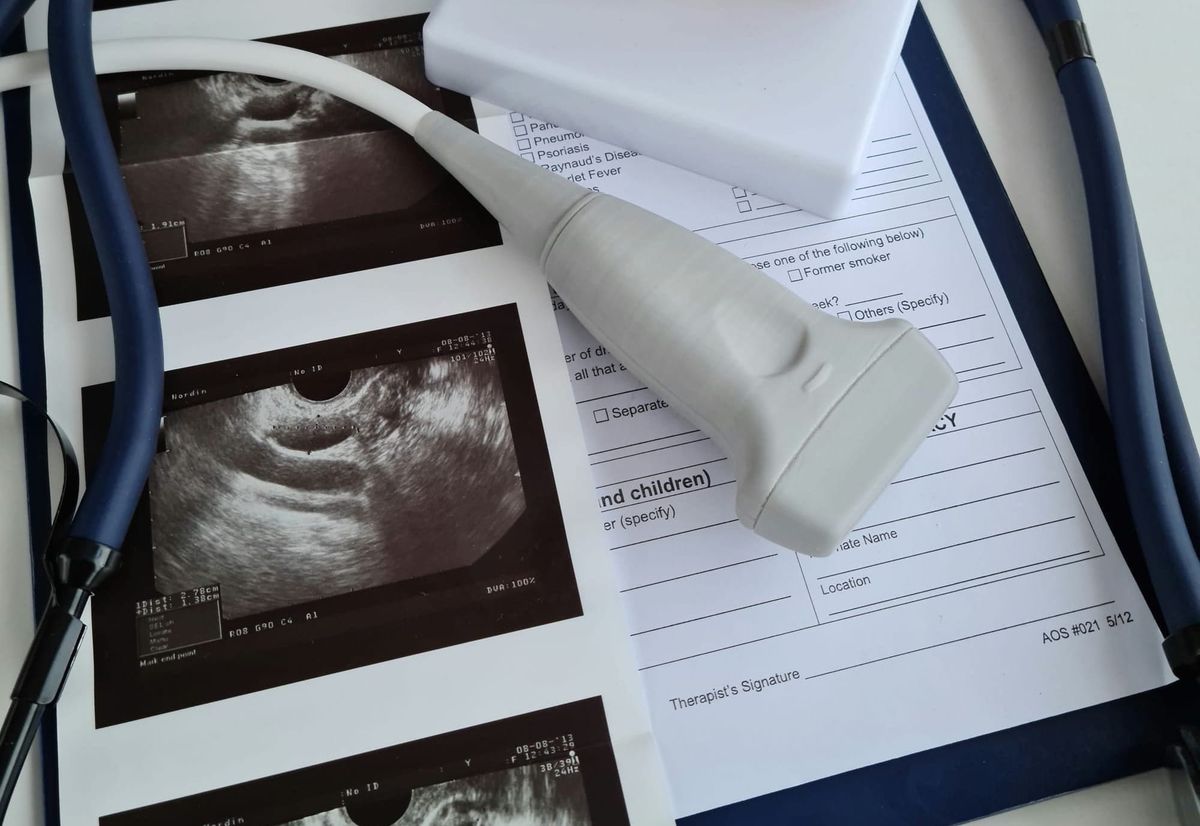
- A recent viral podcast clip suggested that an annual ultrasound could prevent ovarian cancer deaths. An OBGYN explains why this isn’t true.
- A West Virginia medical center will reopen its labor and delivery unit.
- A Georgia woman alleges that she had an affair with a sheriff who in 2024 sent her a $2,000 check to have an abortion—from his campaign account.
- A far-right lawmaker in Poland was criminally charged after he tried to carry out a “citizen’s arrest” of a doctor who had performed an abortion.
Palate cleanser
This is the exact vibe we need in our lives right now.
Follow Autonomy News on Instagram, Bluesky, TikTok, Threads, YouTube, and LinkedIn.