Table of Contents
LIMITED TIME: Support three independent, worker-owned publications with a single subscription. Get a three-month subscription to Autonomy News, The Flytrap, and Mothership for less than $11 a month! Offer ends June 30.
Welcome to the latest edition of our weekly roundup. Every Monday, we’ll send you a summary of the biggest stories about bodily autonomy. We’ll also include links to pieces that Garnet or Susan have published.
If you’d prefer to receive a single email every week, you can do that—we love autonomy. You can manage your subscriptions by navigating to the site, clicking on “Account” in the upper right, then under “Emails,” select “Manage.” You can toggle off “Autonomy News” to receive only the roundup, or vice versa.
Let’s dive in.
On Autonomy News
Late last week, the Federal Trade Commission—joined by Alaska, Iowa, Nebraska, and Texas—sued the World Professional Association for Transgender Health (WPATH), accusing the professional organization of making misleading claims about gender-affirming care for its members’ benefit. The Department of Justice filed this lawsuit in the Northern District of Texas, which has become the Trump administration’s favorite forum for its anti-trans crusade. Autonomy News readers know this is just the latest in the administration’s long line of attacks on providers of gender-affirming care. Garnet spoke with three providers about what they’re doing to continue serving their patients. They described going to great lengths, including deleting social media and putting homes in trusts so they’re not easy to find in public records, mirroring the steps long taken by abortion providers to evade similar threats and harassment. (Share this story on Instagram, Bluesky, or TikTok.)
 Garnet Henderson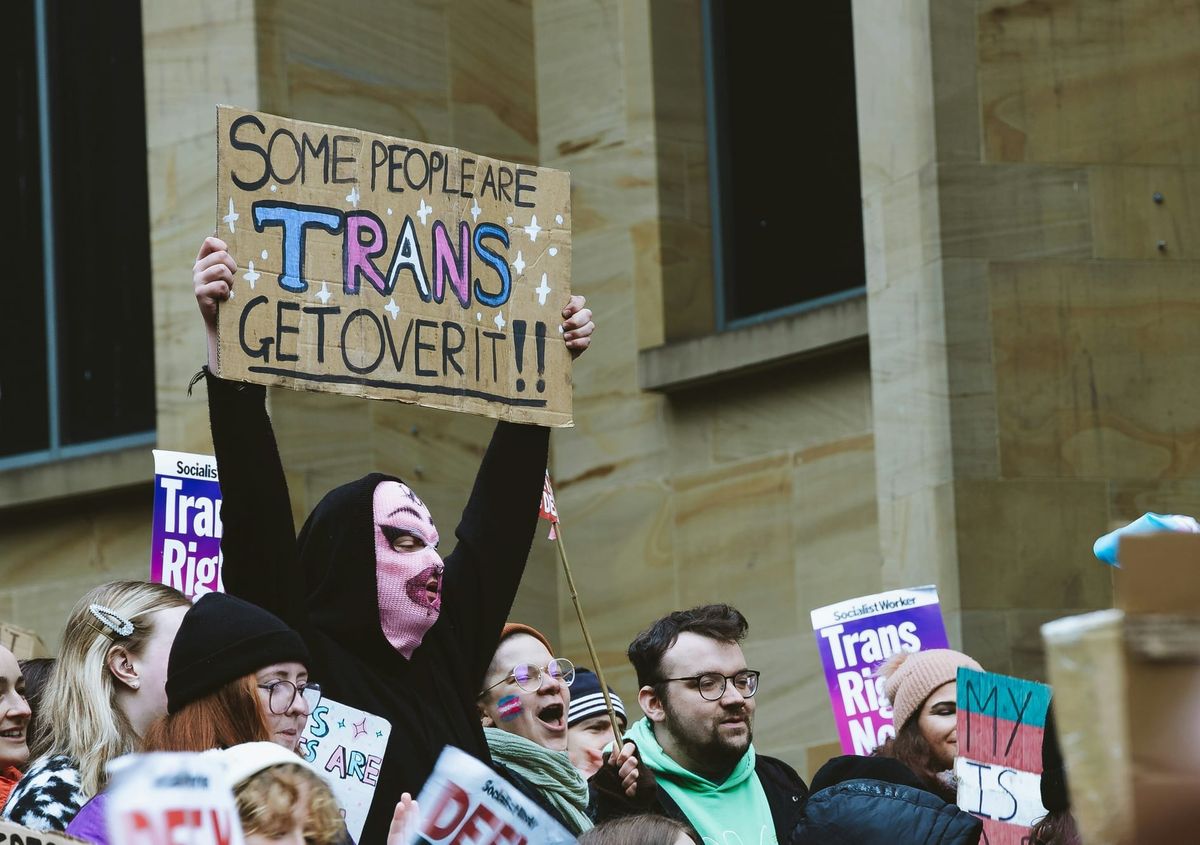
Federal news
Wednesday marks four years since the Supreme Court’s decision in Dobbs v. Jackson Women’s Health Organization, which overturned Roe v. Wade. In addition to all the suffering caused by the decision, which we may never be able to fully document, a new report from the Institute for Women’s Policy Research estimates that abortion bans cost the United States at least $140 billion in lost earnings every single year. That estimate has grown nearly $7 billion since just last year.
The federal Embryo Adoption Awareness and Services program has existed since 2002. But the Trump administration has now embraced full-on fetal personhood in the latest grant application guidelines for the initiative, replacing the word “embryo” with “child” or “children,” and elsewhere referring to embryos as “children who already exist.”
The Fifth Circuit Court of Appeals agreed to expedite a hearing in Louisiana's lawsuit against the Food and Drug Administration over the abortion drug mifepristone. The state, represented by Sen. Josh Hawley's wife Erin, is seeking to end telehealth prescriptions of mifepristone; a key anti-abortion goal. After the Supreme Court denied Louisiana’s request to ban telemedicine abortions while the case proceeds, the state asked the Fifth Circuit to speed up its appeal. Trump’s Justice Department opposed the request, again citing the FDA’s sham “review” of mifepristone. According to the Supreme Court’s May order, any changes will be paused until the very end of the appeals process, which will almost certainly end up back at the high court. But the ultraconservative Fifth Circuit gave Louisiana what it wanted. It didn’t set an argument date, though Louisiana asked for the week of August 31. A top anti-abortion group is calling on acting Attorney General Todd Blanche to settle this lawsuit and two others.
More Congressional Republicans acknowledge that large abortion providers like Planned Parenthood will be eligible for Medicaid again after the federal “defund” provision expires on July 4. Montana Sen. Steve Daines said his party lacks the votes to extend it during an election year: “I think at this point, it’d be unlikely.” But that’s not stopping a pressure campaign from groups who are pushing for a third, party-line budget reconciliation bill. The aforementioned Josh Hawley and the far-right American College of Pediatricians are highlighting Planned Parenthood’s role as a provider of gender-affirming care in a desperate attempt to renew the Medicaid ban.
Two networks of family planning providers are suing the Trump administration over its changes to the Title X program, which pays for birth control, STI testing, and cancer screening for low-income people. Specifically, the organizations are taking issue with rule changes that would shift the focus of the program from contraception to “family formation” and “achieving healthy pregnancies,” and require grantees to “align” with administration stances against diversity, equity, and inclusion programs and what it calls “gender ideology.”
Project 2025 called to eliminate the Department of Education, and the Trump administration continues to follow through on that goal. Its latest move is to shift disability education oversight to the Department of Health and Human Services—putting the education of disabled people under the control of Health Secretary Robert F. Kennedy Jr., who has spent decades peddling harmful misinformation about disabled people, especially those with autism.
State news
A Missouri judge struck down multiple abortion restrictions, citing the constitutional amendment voters passed in 2024 protecting abortion until fetal viability, and clearing the way for clinics to offer abortion pills for the first time since 2018. Circuit Judge Jerri Zhang overturned laws requiring abortion providers to have hospital admitting privileges and provide patients with biased counseling materials, as well as one that banned telemedicine abortion by requiring a doctor to be present when a patient takes abortion pills. But it’s a mixed bag, as Zhang did uphold laws that say only physicians can perform abortions—not advance practice providers—and that patients must have an in-person visit before being prescribed abortion pills. Plus, the plaintiffs did not challenge an insurance coverage ban or the parental involvement law for young people. Planned Parenthood’s Missouri affiliates are scheduling medication abortions at the St. Louis clinic and say the service will soon be available in Kansas City and Columbia. Clinics had previously resumed abortion procedures, but often stopped after 12 weeks rather than at the legal limit. Zhang’s ruling may not be the last word: Attorney General Catherine Hanaway said she would appeal the decision to the state Supreme Court. Plus, Republican lawmakers referred a new amendment to the November ballot that would repeal the 2024 protections and ban abortion once again.
Women’s Law Project is suing a Pennsylvania county jail on behalf of Nicole Lane, who was exposed to extreme heat and denied care for preeclampsia—a life-threatening condition—while incarcerated. Once Lane was finally transferred to a hospital, she was shackled to a hospital bed while she gave birth and for five days afterward. It’s illegal to restrain most pregnant people in Pennsylvania thanks to a law WLP helped to pass in 2010.
Virginia Governor Abigail Spanberger signed the Contraception Equity Act, which requires insurance companies to cover both prescription and over-the-counter birth control without cost sharing, and the Right to Contraception Act, which guarantees a right to birth control in the state and allows people to sue if that right is violated. She also joined the Reproductive Freedom Alliance, a group of Democratic governors that includes California Governor Gavin Newsom, New York Governor Kathy Hochul, Maryland Governor Wes Moore, New Jersey Governor Mikie Sherrill, and others.
Elections
Surprise, surprise: Conservative billionaires are funding ballot measure campaigns that would limit the rights of transgender people.
Personhood watch
Alabama now has medical marijuana dispensaries, but there’s a big catch: Women of reproductive age need to take a monthly pregnancy test in a doctor’s office to fill their prescriptions. The Alabama Board of Medical Examiners wrote the rules, which apply to girls as young as 11. Alabama may be the only state with this requirement, and it stems from a chemical endangerment law that the state has used to put pregnant and postpartum people in jail and revoke custody of newborns from their parents. The law was originally passed to protect children from home methamphetamine labs, but the state Supreme Court said in 2013 that it applies to drug use during pregnancy. Alabama now leads the nation in jailing pregnant people for drug use. “The surveillance apparatus of this is deeply concerning,” said Dana Sussman, senior vice president of Pregnancy Justice, which represents people criminalized during and after pregnancy.
A Texas woman filed a federal complaint against two Austin-area hospitals for failing to treat her miscarriage in October—just months after the legislature passed a law intended to reassure providers that they wouldn’t be punished for treating miscarriages. The complaint alleges that the hospitals violated the Emergency Medical Treatment and Active Labor Act, or EMTALA, and was filed by Amplify Legal.
First Amendment watch
Following the Supreme Court’s ruling that the crisis pregnancy center chain First Choice Women’s Resource Centers could challenge a subpoena from the New Jersey Attorney General in federal court, First Choice has asked a federal district judge to block that subpoena. The 2022 subpoena sought information about the center’s donors, because the AG wanted to open an investigation into whether it was committing fraud by advertising and soliciting donations for unproven medical treatments like abortion pill “reversal.” AG Jennifer Davenport is still pressing forward, trying to get a state court to enforce the subpoena.
Assaults on queer people
A federal judge issued a narrow block on enforcement of an especially cruel bathroom ban in Idaho, which makes it a crime for a person to use a bathroom that doesn’t align with their sex assigned at birth. Violations are punishable by up to a year in prison, or five years for a repeat violation. A portion of the law requiring people to use changing rooms that match their sex assigned at birth will still go into effect, and the judge’s order only protects trans people using single-user bathrooms, or multiple-user bathrooms where no single-user bathroom is available.
After some significant legal back-and-forth, the Trump administration policy that would have effectively ended gender-affirming care for people incarcerated in federal prisons remains blocked.
In another move the administration is almost sure to be sued over, the Department of Veterans Affairs ordered its health facilities to abandon all “gender-identity based” initiatives, and to rebrand its LGBTQ+ Veteran Care Coordinators as simply Care Coordinators. Among other things, these coordinators help queer and trans veterans access mental health services to address discrimination and stigma they may have faced during their time in the military.
The Colorado Supreme Court ordered Colorado Children’s Hospital to resume providing gender-affirming care. The hospital claims none of its providers are willing to actually do so.
Louisiana Governor Jeff Landry signed a law that prohibits state employees from being “required” to refer to anyone by a name other than their legal name, or with pronouns “inconsistent” with their sex.
Actual good news
The Washington law that requires health insurers offering plans on the state exchange to pay a tax that will fund abortion care is now in effect.
Quick hits
- Patients and clinicians are reporting shortages of oral progesterone, a drug used in fertility and menopause treatments. The strain comes amid limited supply of estrogen patches used for menopause and gender-affirming care. Demand for hormone replacement therapy has grown since the FDA removed a black box warning in late 2025.
- Relatedly, the wider adoption of HRT for menopause is leaving one group deeply frustrated: People who can’t take estrogen because of breast cancer or other conditions.
- Speaking of drug shortages, a recall has created one for a medication that prevents pregnant people with syphilis from passing it to their baby. The FDA is temporarily allowing an alternative congenital syphilis treatment to be imported from Portugal as providers are seeing a spike in infections.
- USA Volleyball publicly criticized the International Olympic Committee’s new sex testing policy, saying there has been a lack of transparency when it comes to how athletes’ sensitive health information will be handled, and no clear appeals process.
- In the Dominican Republic, abortion is illegal with no exceptions and fetal personhood is enshrined into the constitution. For decades, advocates have fought to add three exceptions to the law: abortions in the case of rape or incest, when the pregnant person’s life is in danger, or in cases of severe fetal malformation. The mother of a teenage girl who became known as “Esperancita”—who died in 2012 after being refused treatment for leukemia because she was pregnant—is now challenging the ban in the country’s Constitutional Court.
- Ireland’s parliament voted to remove a mandatory three-day waiting period before a person can have an abortion. The procedure is only legal on request up to 12 weeks, and the waiting period, plus doctors’ fear of going past the line, had functionally moved that closer to 11 weeks. The change will become law later this year or in 2027.
Palate cleanser
It's the Statue of Liderby!
@sierra_7383 The statue of Liferby is so cuteeeeee #newyork ♬ original sound - SienaTabacco_Slay🌹🌸 🐱🐶Slay
And a precious angel.
Everyone shut up I finally got a video of Jyn doing her cartoon snoring thing
— abby (sports) (@stabbyabby.bsky.social) June 16, 2026 at 4:58 PM
[image or embed]
Follow Autonomy News on Instagram, Bluesky, TikTok, Threads, and LinkedIn.